Kykar, Wind’s Fury leads a tightly constructed Jeskai spellslinger deck that turns efficient noncreature spells into an expanding aerial board presence. Rather than treating its token package and storm elements as separate strategies, the deck links them together: cantrips generate creatures, those creatures become cards or mana, and the resulting resources allow the deck to continue casting spells until incremental value becomes a decisive turn.
Saheeli, Sublime Artificer reinforces that structure from the planeswalker slot, adding another token engine that rewards the same spell-heavy sequencing. The result is a flexible spellslinger build capable of playing patiently through interaction before transitioning into explosive chains of spells.
Deck Overview
The deck operates as a Jeskai Spellslinger / Token-Storm hybrid, with Kykar providing both token production and an unusual form of resource conversion. Every noncreature spell creates a flying Spirit, and those Spirits can subsequently be sacrificed for red mana. This gives even inexpensive cards such as Ponder, Preordain, Brainstorm, Consider, Opt, and Serum Visions multiple functions: they improve card quality while simultaneously developing the battlefield and feeding later spell sequences.
A deep secondary token package makes the strategy considerably less dependent on keeping Kykar in play. Saheeli, Sublime Artificer, Monastery Mentor, Young Pyromancer, Third Path Iconoclast, Talrand, Sky Summoner, Shark Typhoon, and Storm-Kiln Artist all convert spellcasting into tangible resources. Mondrak, Glory Dominus can dramatically increase that output, while Skullclamp gives expendable creatures another productive use.
Spell Velocity and Card Advantage
The deck is built to maintain a high casting density. One-mana selection spells smooth early draws and become increasingly valuable once the deck's token engines are established, effectively allowing the same cards to advance several parts of the strategy at once.
Archmage Emeritus provides repeatable card advantage as the deck continues casting instants and sorceries, while Whirlwind of Thought broadens that reward to every noncreature spell. Coastal Piracy offers a complementary draw engine by converting the deck's evasive token production into combat-based card advantage.
At the upper end, Treasure Cruise efficiently converts a stocked graveyard into additional cards, and The Mirari Conjecture provides recursion followed by a powerful spell-copying payoff.
Token Production and Resource Conversion
Kykar is the central engine, but the deck contains substantial redundancy. Monastery Mentor, Saheeli, Young Pyromancer, Third Path Iconoclast, and Talrand ensure that repeated spellcasting continues to generate board presence even when the commander is unavailable.
Those tokens are functional resources rather than simply attackers. Spirits can become red mana through Kykar, while Skullclamp can turn small creatures into additional cards. Storm-Kiln Artist adds Treasure production to the same spell chains, allowing the deck to repeatedly transform casting activity into the resources needed to continue casting.
Mondrak, Glory Dominus substantially raises the ceiling of these engines by doubling token creation, allowing a modest sequence of spells to produce a significant battlefield in a single turn.
Storm, Prowess, and Trigger Multiplication
The deck contains several pieces designed to increase the value of individual spell casts. Veyran, Voice of Duality amplifies triggered abilities associated with instant and sorcery casting, while Harmonic Prodigy can similarly increase the output of relevant Wizard and Shaman engines.
Guttersnipe converts sustained spellcasting directly into damage across the table, while Grapeshot provides a natural payoff for turns in which the deck has accumulated a substantial storm count. Jeska’s Will, Seething Song, Simian Spirit Guide, Storm-Kiln Artist, and Kykar's Spirit-sacrifice ability provide bursts of mana that can extend these sequences well beyond the deck's available lands.
Underworld Breach is particularly effective in this structure, allowing previously used cantrips, rituals, interaction, and other efficient spells to be recast from the graveyard during a pivotal turn.
Interaction and Board Control
Despite its proactive engine, the deck retains a substantial interactive package. Counterspell, Arcane Denial, Flusterstorm, Red Elemental Blast, and Narset’s Reversal provide stack interaction, while Swords to Plowshares, Path to Exile, Lightning Bolt, Chaos Warp, Generous Gift, Wear // Tear, and Vandalblast address a broad range of permanent types.
Redirect Lightning and Dualcaster Mage add more flexible interaction by manipulating opposing spells and abilities or copying useful instants and sorceries. Blasphemous Act gives the deck an efficient creature reset, while Farewell provides a more comprehensive answer when graveyards, artifacts, enchantments, or creature-heavy boards demand a full reset.
Because much of the deck's infrastructure exists as spells and repeatable token generators, it can rebuild efficiently after interaction rather than relying exclusively on maintaining a large creature board.
Closing the Game
The deck can convert its accumulated resources into a win through several overlapping routes. Repeated noncreature spells can build a large evasive force through Kykar, Talrand, Saheeli, Monastery Mentor, and the other token engines, allowing the deck to win conventionally through combat.
Alternatively, a sufficiently long spell chain turns Guttersnipe and Grapeshot into direct damage finishers. Veyran and the deck's trigger-amplification effects increase the pressure generated by these turns, while Underworld Breach can provide the recursion necessary to extend a sequence after the initial hand has been exhausted.
This gives the deck an important degree of strategic flexibility: opponents must respect both the visible token army and the possibility that those same creatures and spells are resources for a noncombat finish.
Build Philosophy
This build is designed around resource efficiency and functional overlap. Its cantrips are simultaneously card selection and token generators; its tokens are simultaneously attackers, mana sources, and potential Skullclamp targets; and its spell payoffs provide both incremental advantage and routes toward ending the game.
The mana package supports that sequencing with Sol Ring, Arcane Signet, Fellwar Stone, three Signets, three Talismans, and a balanced Jeskai land base. Dramatic Reversal can further leverage the deck's collection of nonland mana sources during high-velocity turns.
The overall construction favors cards that remain useful at multiple stages of the game, allowing Kykar to shift naturally between controlling the table, developing token engines, and assembling a decisive spell-heavy turn.
Technical Details
100-card singleton Commander deck, legal for EDH
All cards in Near Mint to Lightly Played condition
Professionally sleeved and ready to play
Built for consistent performance and strategic depth
Ideal For Players Who:
Enjoy Jeskai spellslinger decks with token generation and storm-style sequencing
Prefer Commander strategies that reward careful resource conversion and spell ordering
Appreciate cohesive builds with multiple overlapping engines and paths to victory


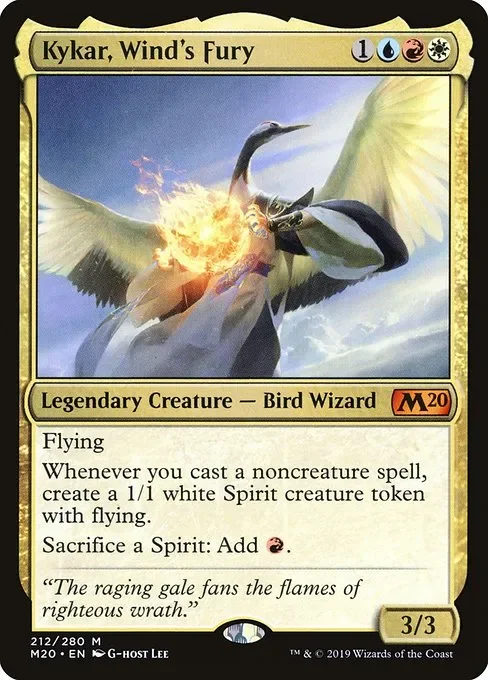 Image 1 of 8
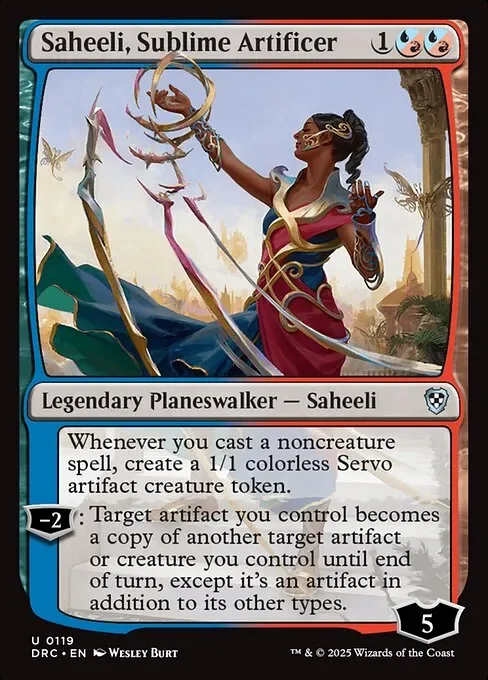 Image 2 of 8
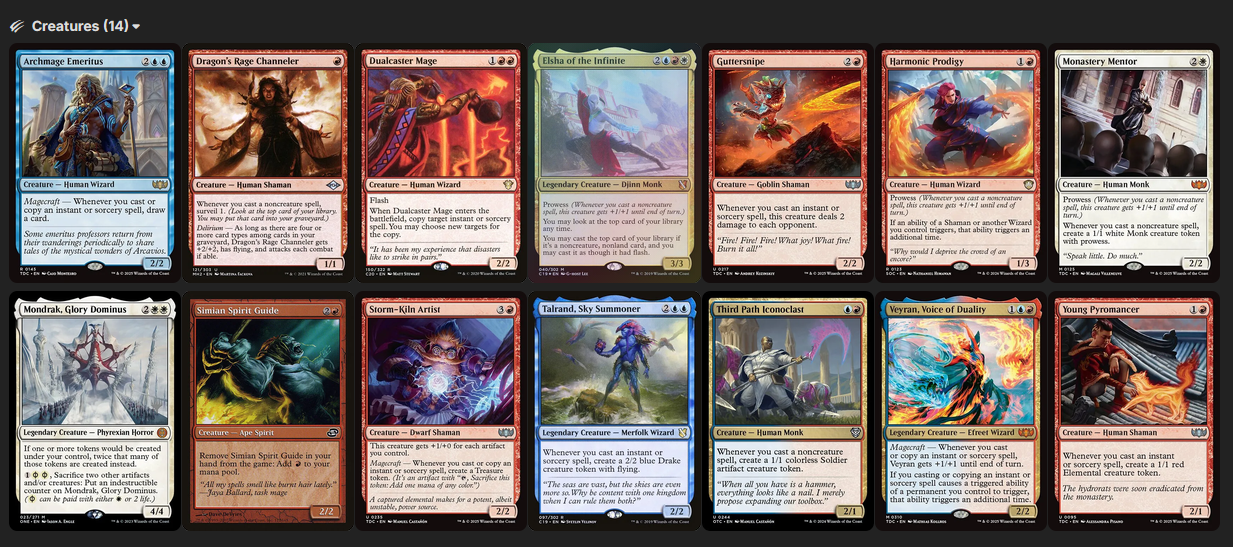 Image 3 of 8
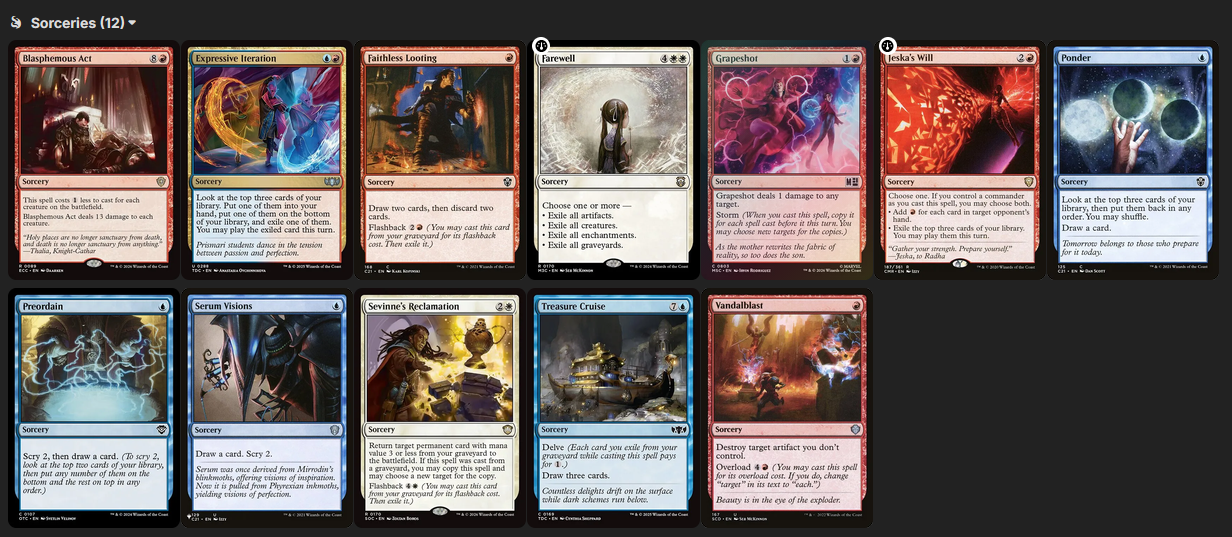 Image 4 of 8
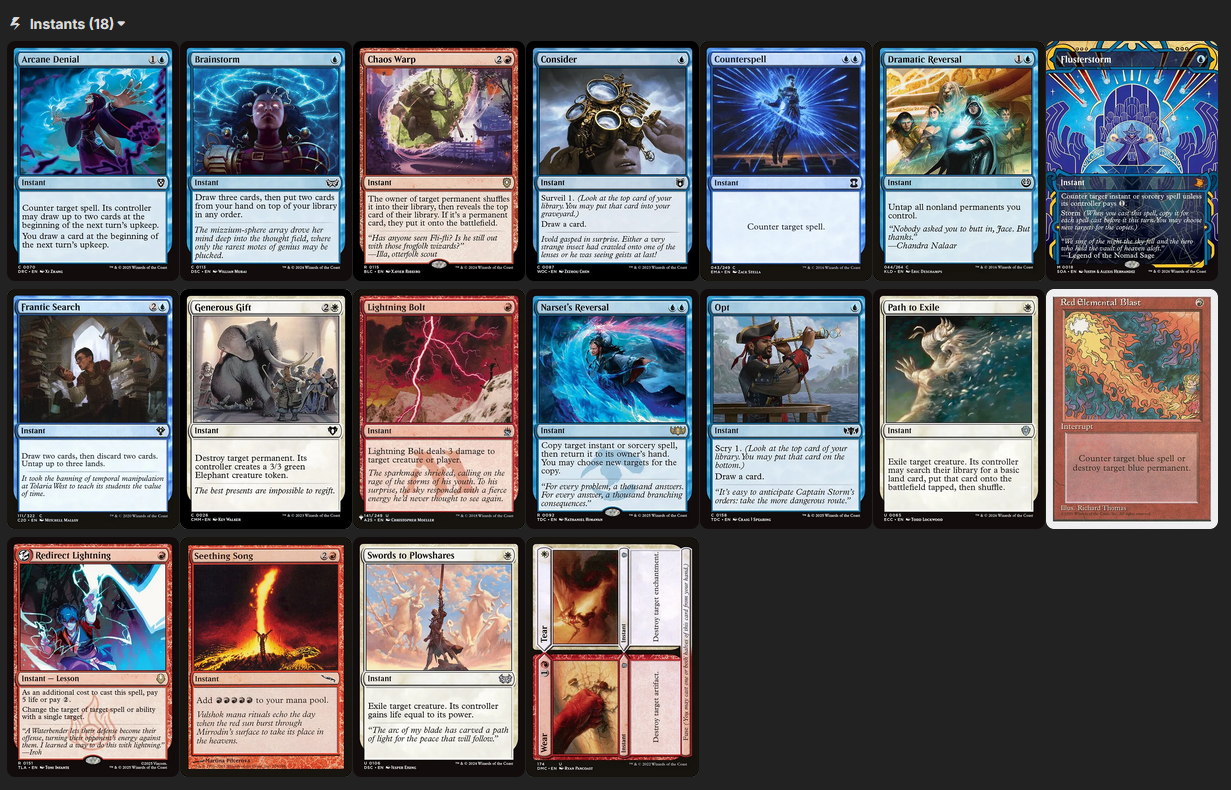 Image 5 of 8
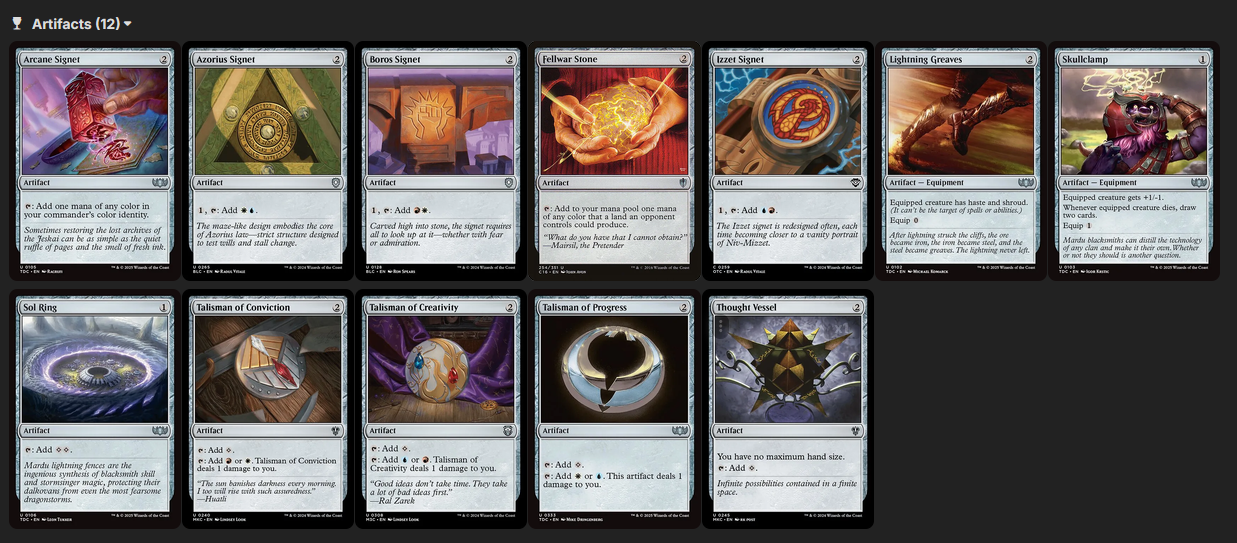 Image 6 of 8
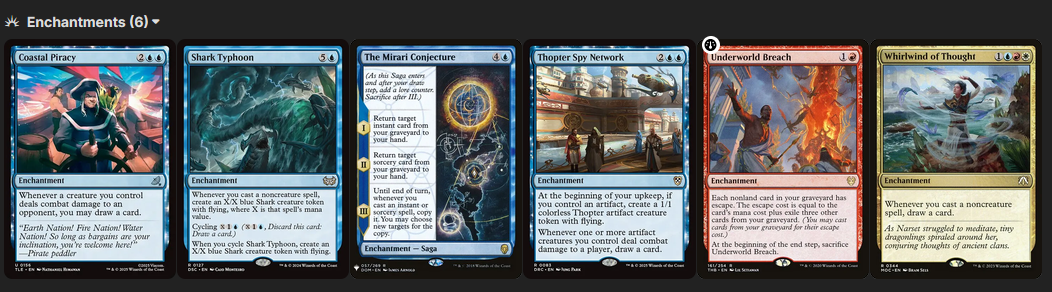 Image 7 of 8
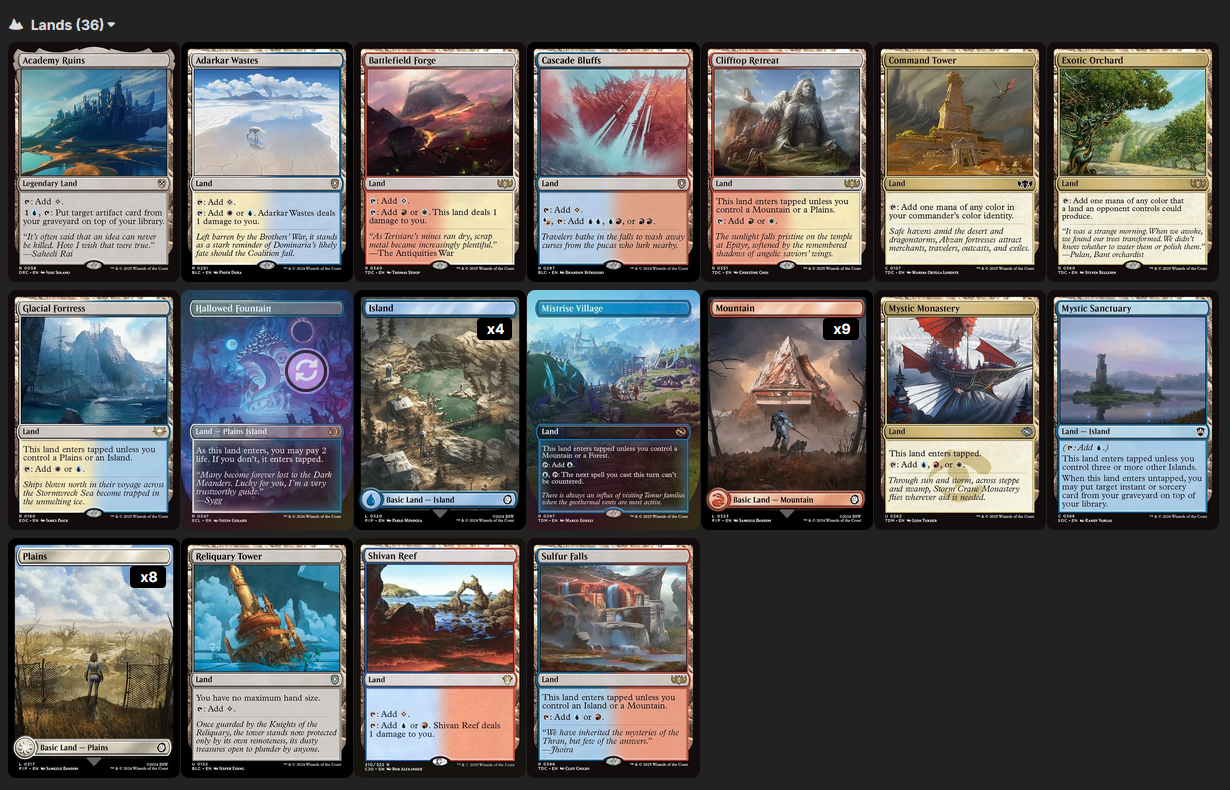 Image 8 of 8