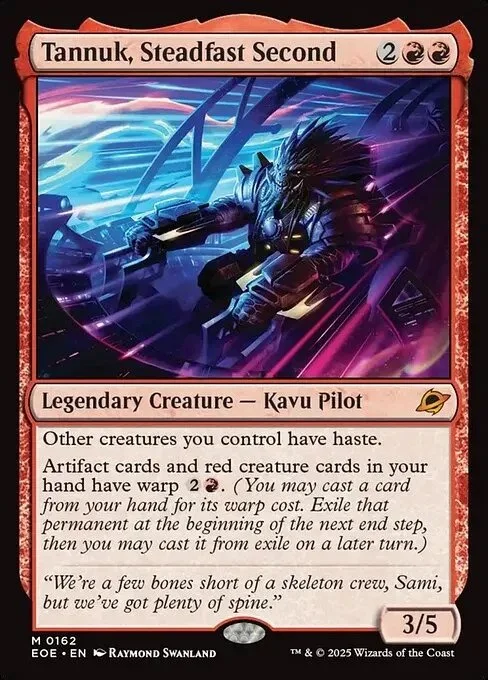

Tannuk, Steadfast Second leads a mono-red Commander deck built around warp casting, explosive mana production, and high-impact artifact and creature threats. Tannuk gives the deck immediate combat pressure by granting haste while allowing expensive cards to enter play early through warp, generating value before returning to exile for later use.
The deck is structured to turn temporary battlefield access into lasting advantage. Enter-the-battlefield effects, attack triggers, artifact synergies, and permanent-copy effects ensure that warped threats contribute meaningful value even when they remain in play for only a single turn.
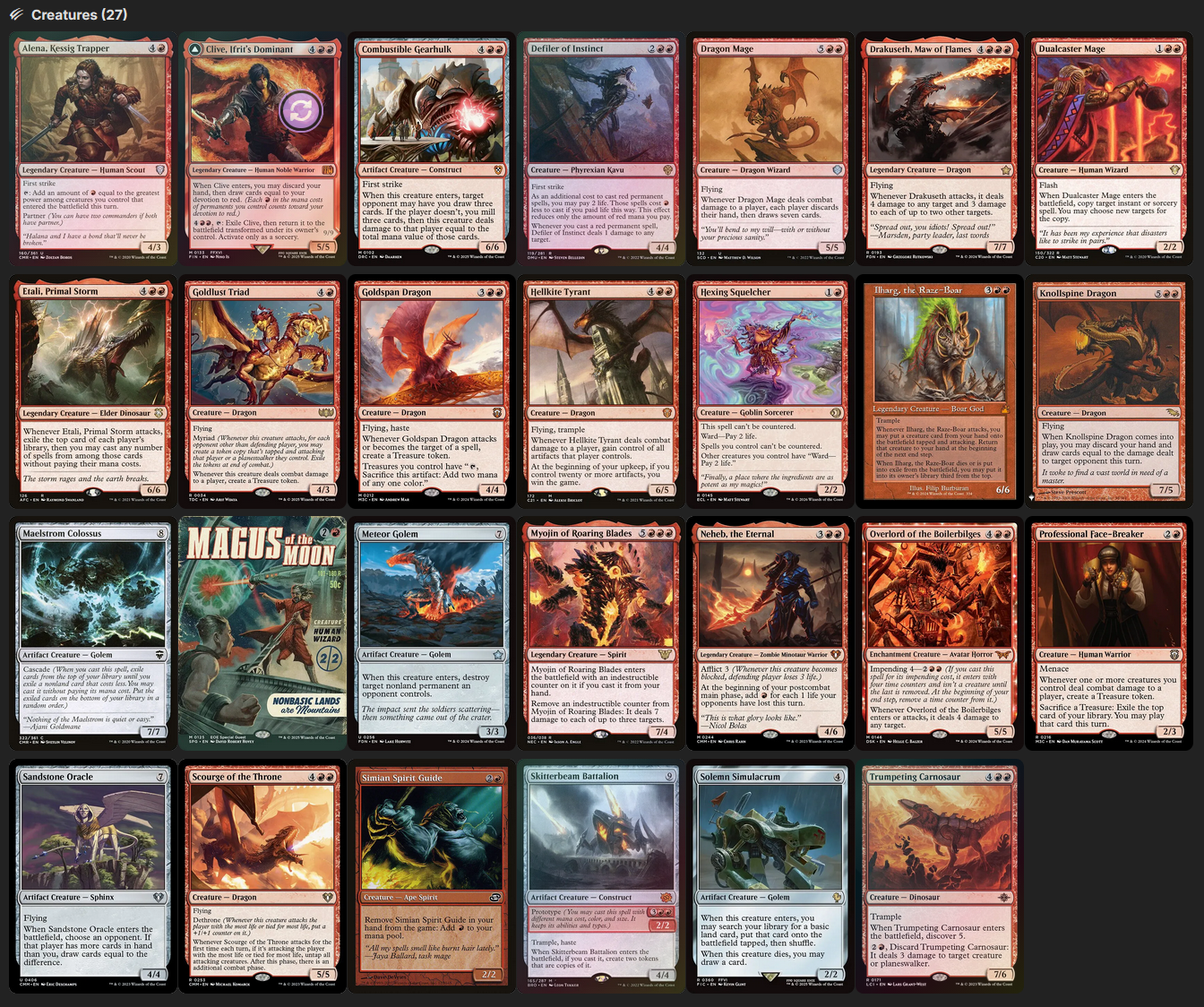
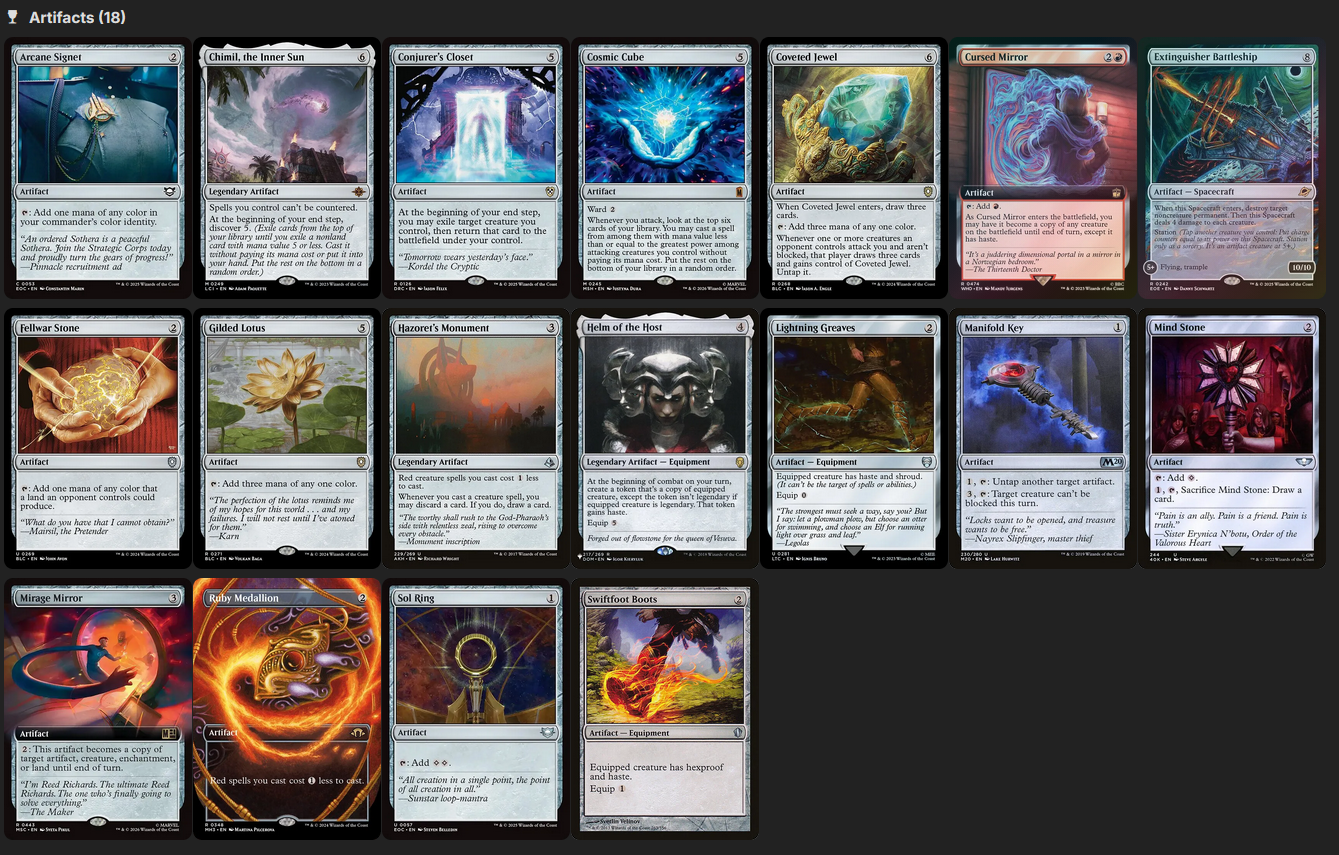
This build functions as a mono-red artifact ramp and warp-value engine. Early mana rocks and cost reducers establish the deck’s foundation, while ritual effects and combat-based mana production support its upper curve. Tannuk then converts cards such as Combustible Gearhulk, Coveted Jewel, Skitterbeam Battalion, and Meteor Golem into efficient short-term plays that can be cast normally from exile later in the game.
The deck’s larger threats are selected for immediate impact. Etali, Primal Storm, Drakuseth, Maw of Flames, Scourge of the Throne, and Ilharg, the Raze-Boar can influence the game as soon as they enter combat, while artifact finishers such as Hellkite Tyrant and Extinguisher Battleship create alternative paths to victory.
Tannuk allows artifact cards and red creatures to be cast from hand for their warp cost, placing expensive permanents onto the battlefield ahead of curve. Because the deck’s creatures have haste, warped threats can immediately attack and generate combat triggers before being exiled.
Cards with powerful entry effects, including Combustible Gearhulk, Meteor Golem, Sandstone Oracle, and Trumpeting Carnosaur, provide value regardless of whether they remain on the battlefield. Once exiled, those cards remain available to be cast normally during a later turn.
Panharmonicon doubles many of the deck’s artifact and creature entry triggers, increasing the output of its temporary threats. Conjurer’s Closet can exile and return a warped creature as a new permanent, allowing it to remain on the battlefield while also repeating its entry ability.
Flameshadow Conjuring creates additional copies of important creatures, while Helm of the Host produces lasting token copies that can compound the value of the deck’s most influential threats. Manifold Key provides further utility by untapping key artifacts or helping an artifact creature attack without being blocked.
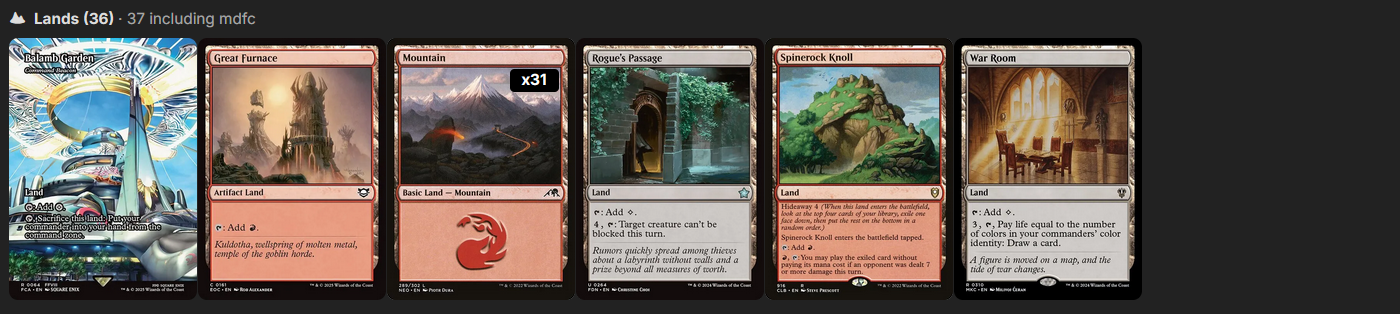
The deck combines conventional artifact ramp with concentrated bursts of red mana. Sol Ring, Arcane Signet, Fellwar Stone, Mind Stone, and Gilded Lotus provide consistent development, while Ruby Medallion and Hazoret’s Monument reduce the cost of the deck’s red spells.
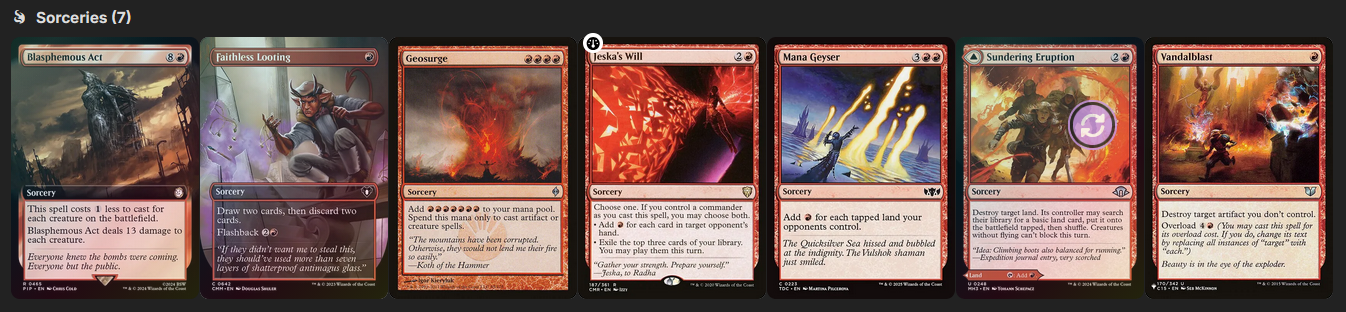
Seething Song, Desperate Ritual, Geosurge, Jeska’s Will, and Mana Geyser support explosive turns. Neheb, the Eternal, Goldspan Dragon, Professional Face-Breaker, and Alena, Kessig Trapper convert combat pressure and creature power into additional resources.
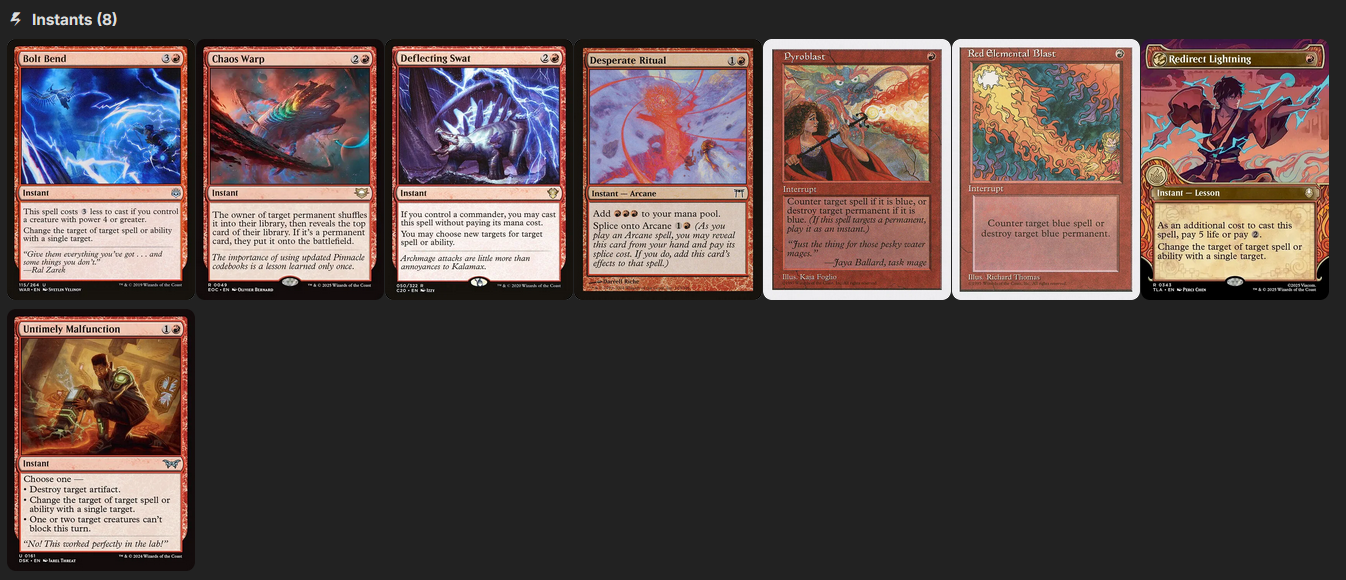
Blasphemous Act provides an efficient answer to developed creature boards, while Vandalblast, Chaos Warp, Meteor Golem, and Sundering Eruption address problematic permanents. Deflecting Swat, Redirect Lightning, and Untimely Malfunction protect important plays while redirecting or disrupting opposing interaction.
The deck also includes focused blue disruption through Pyroblast and Red Elemental Blast. Magus of the Moon can constrain complex mana bases, while Hexing Squelcher limits opposing spell interaction during the deck’s decisive turns.
The deck converts accelerated mana into a sequence of large, hasty threats. Drakuseth, Maw of Flames controls opposing creatures through repeated attack triggers, while Scourge of the Throne creates additional combat phases. Etali, Primal Storm generates card advantage from every opponent, and Myojin of Roaring Blades can distribute substantial direct damage after receiving its indestructible counter.
Hellkite Tyrant serves as both artifact control and an alternate win condition. Skitterbeam Battalion, Goldlust Triad, and Helm of the Host create additional bodies, while Rogue’s Passage helps ensure that a critical attacker can connect.
This deck is designed to maximize Tannuk’s warp ability without relying exclusively on temporary creatures. Each major threat either produces value immediately, creates a meaningful attack trigger, or interacts profitably with the deck’s artifact and duplication package.
The mana base and acceleration suite are structured to support both early warp turns and conventional casting from exile later in the game. Cost reduction, ritual mana, repeatable artifact ramp, protection, and flexible interaction provide a cohesive play pattern across different stages of a Commander game.
100-card singleton Commander deck, legal for EDH
All cards in Near Mint to Lightly Played condition
Professionally sleeved and ready to play
Built for consistent performance and strategic depth
Enjoy mono-red decks built around explosive mana and high-impact creatures
Prefer artifact strategies with enter-the-battlefield and copying synergies
Appreciate Commander builds that reward careful sequencing and temporary-value management
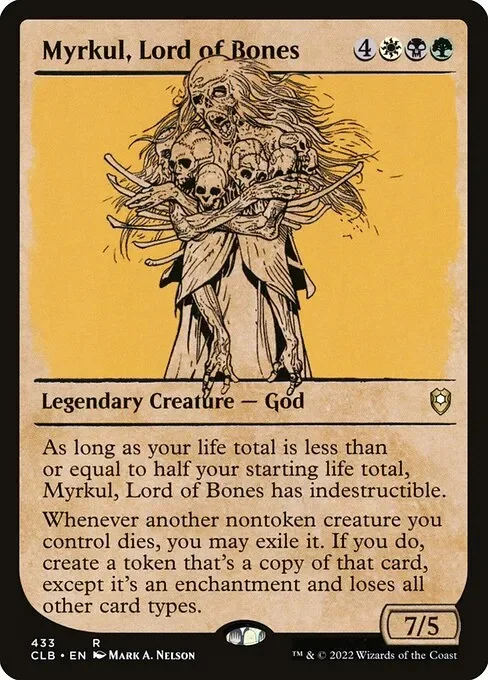
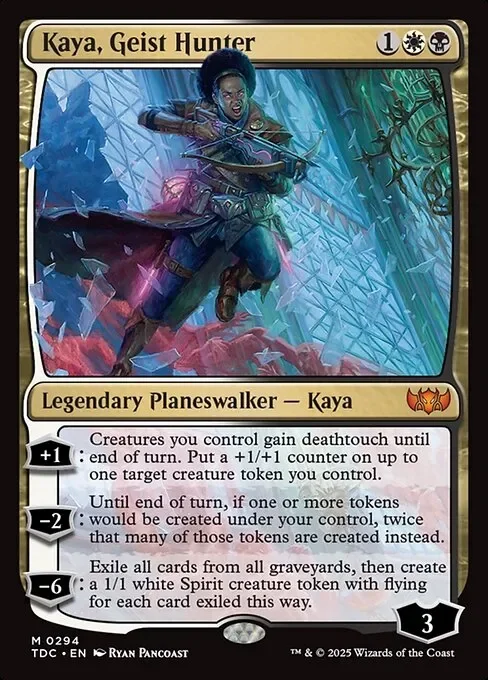
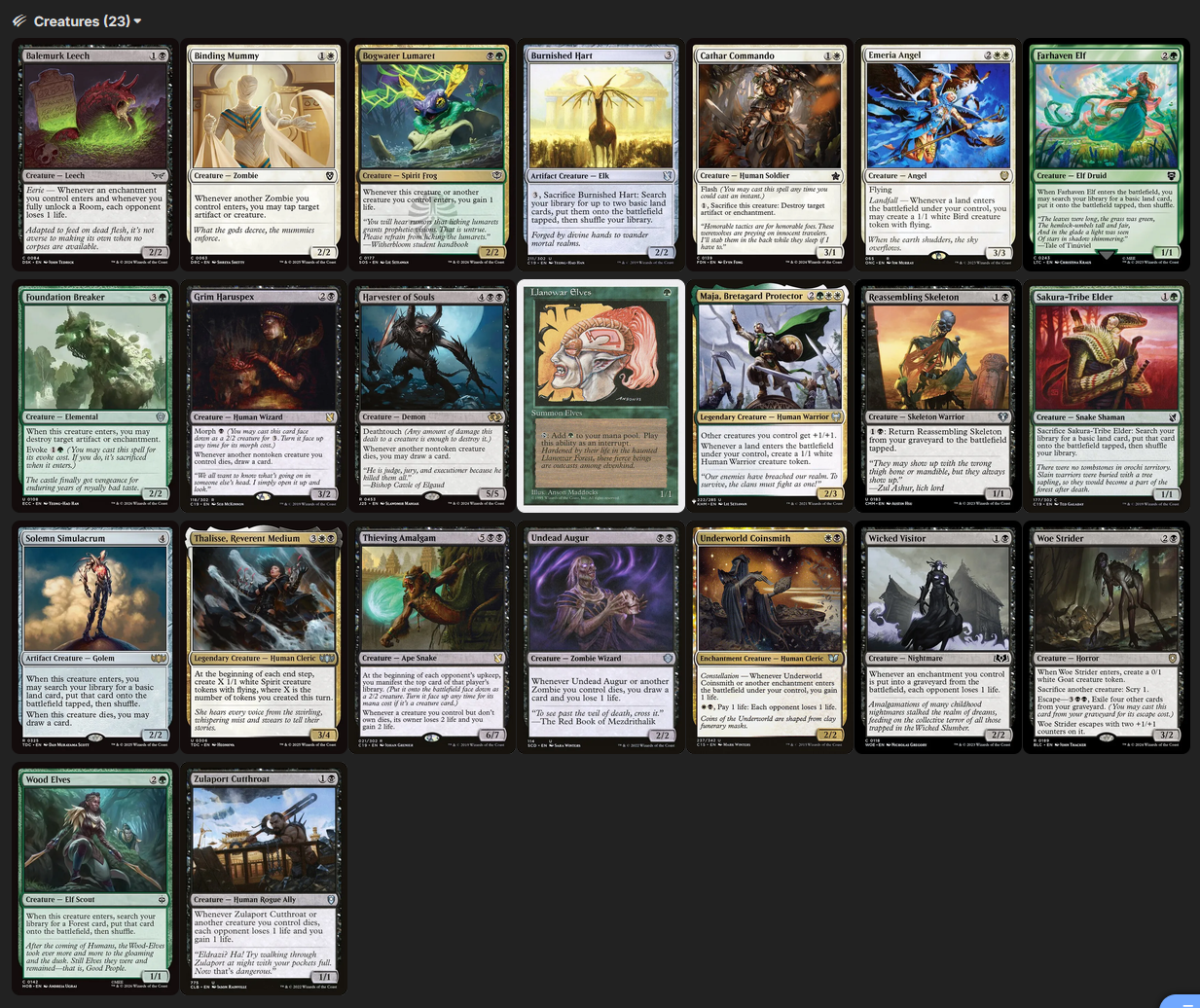
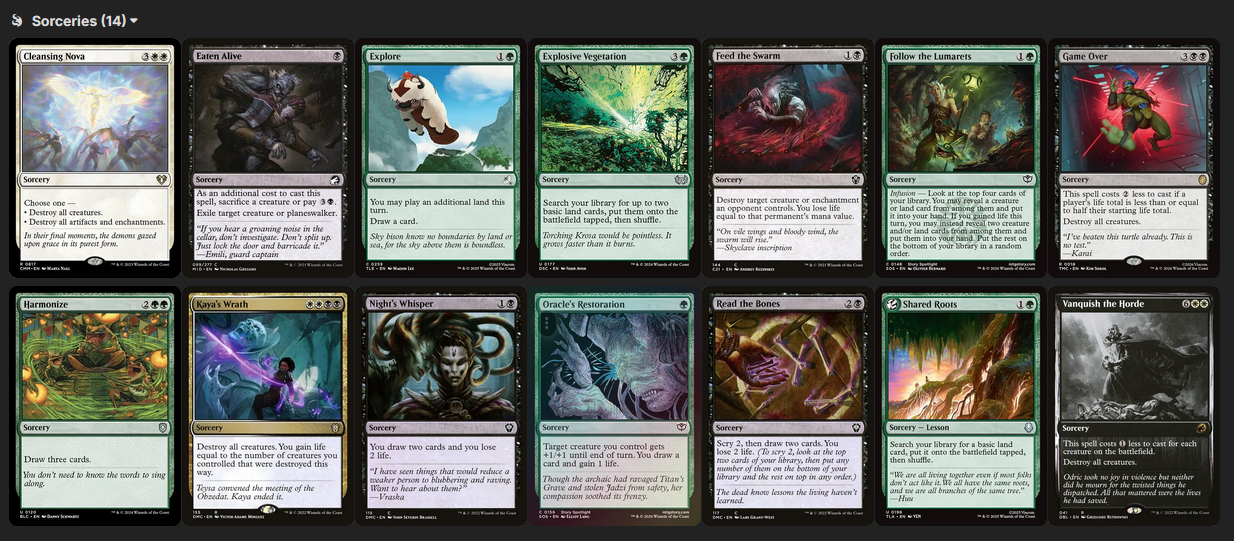
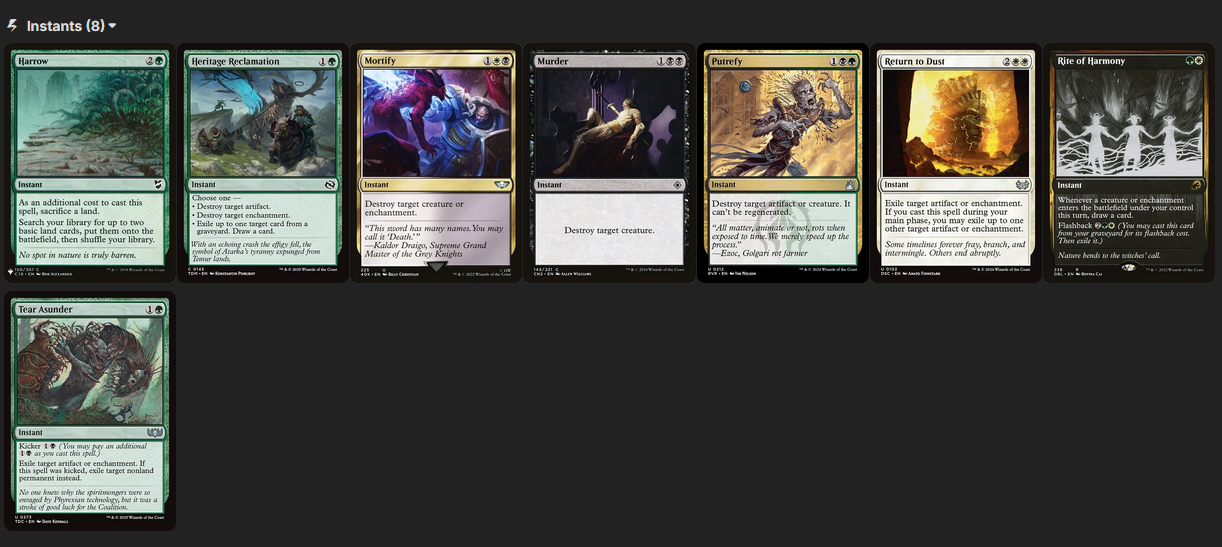
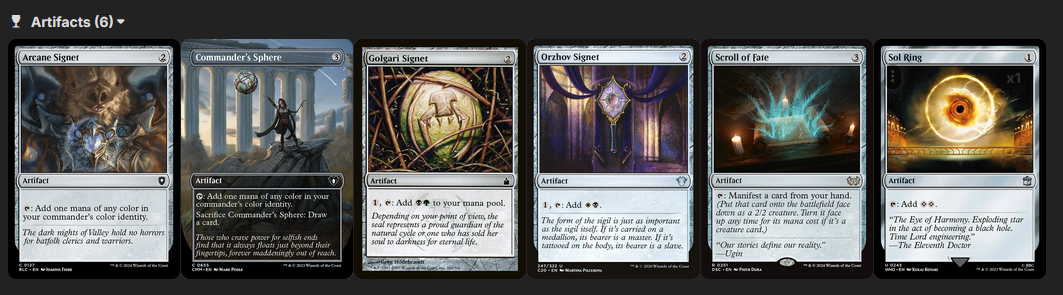
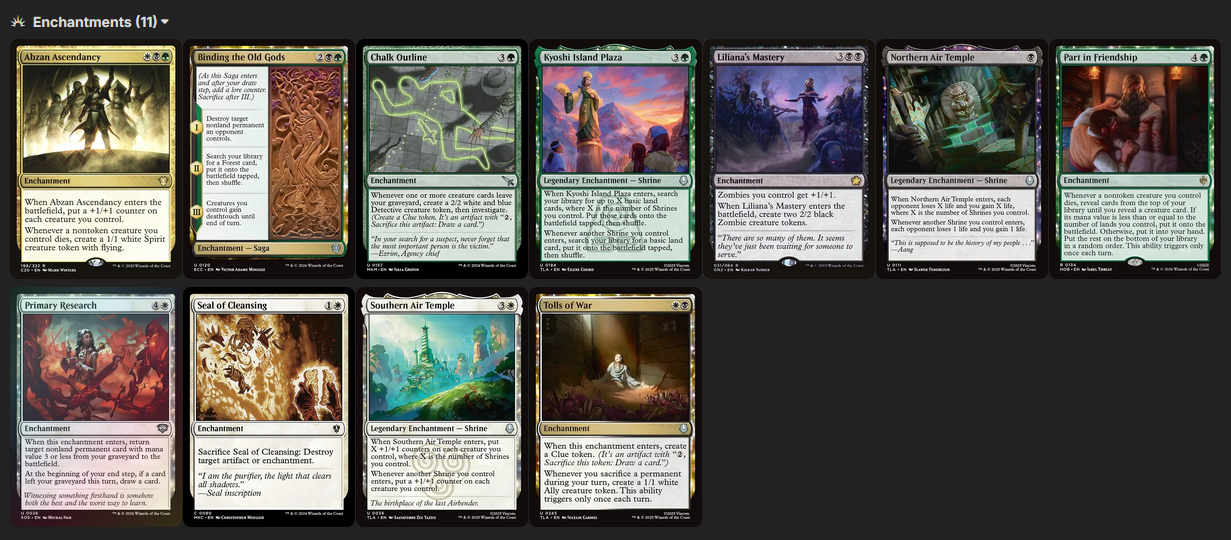
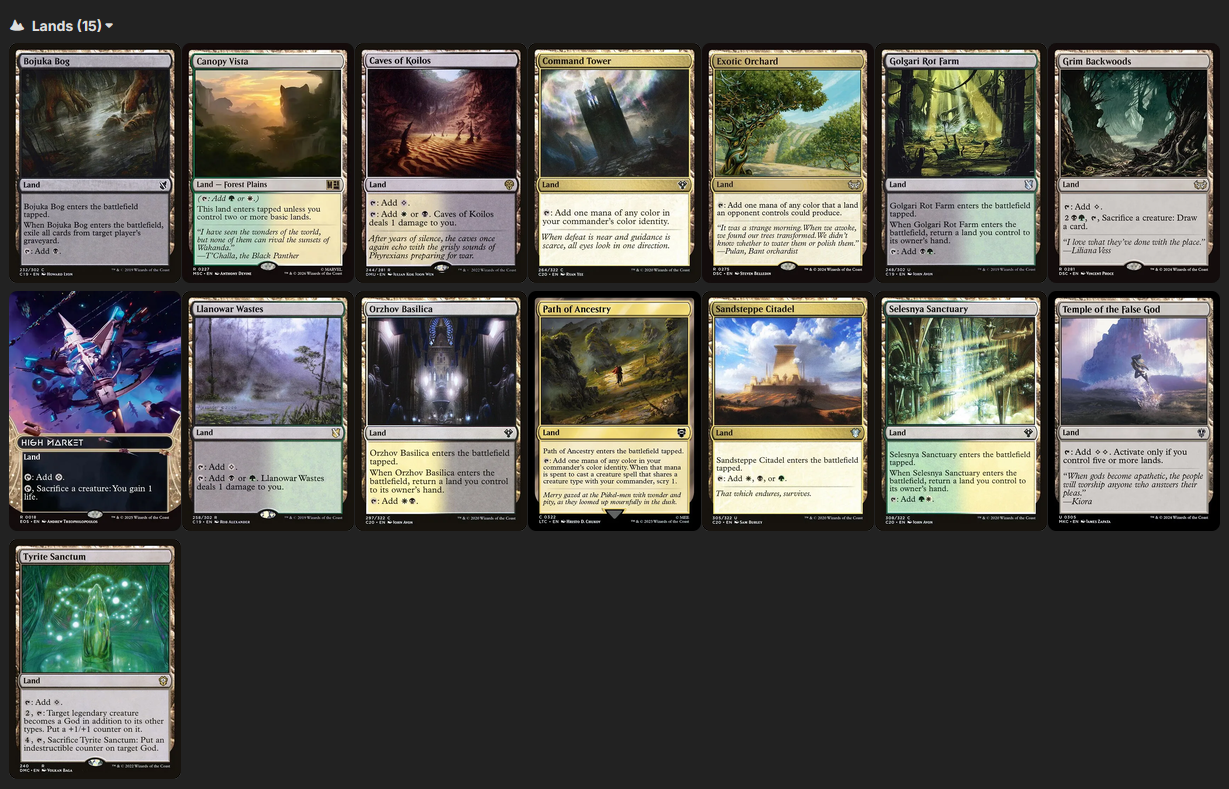
This Myrkul, Lord of Bones deck was designed and assembled as a custom Commander Foundry commission. The build centers on sacrificing utility creatures and preserving their abilities through Myrkul’s enchantment-token effect, creating a resilient Abzan value engine supported by death triggers, token synergies, card advantage, and flexible interaction.
Rather than being developed as a standard inventory deck, this list was constructed specifically for its commissioned build and tailored around Myrkul’s distinctive play pattern.
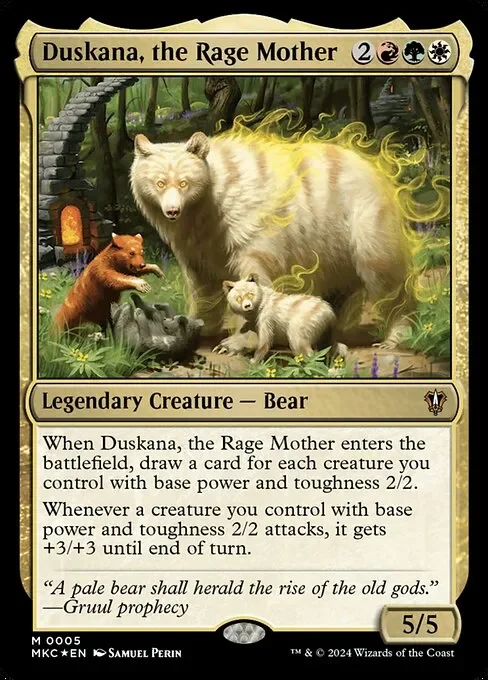
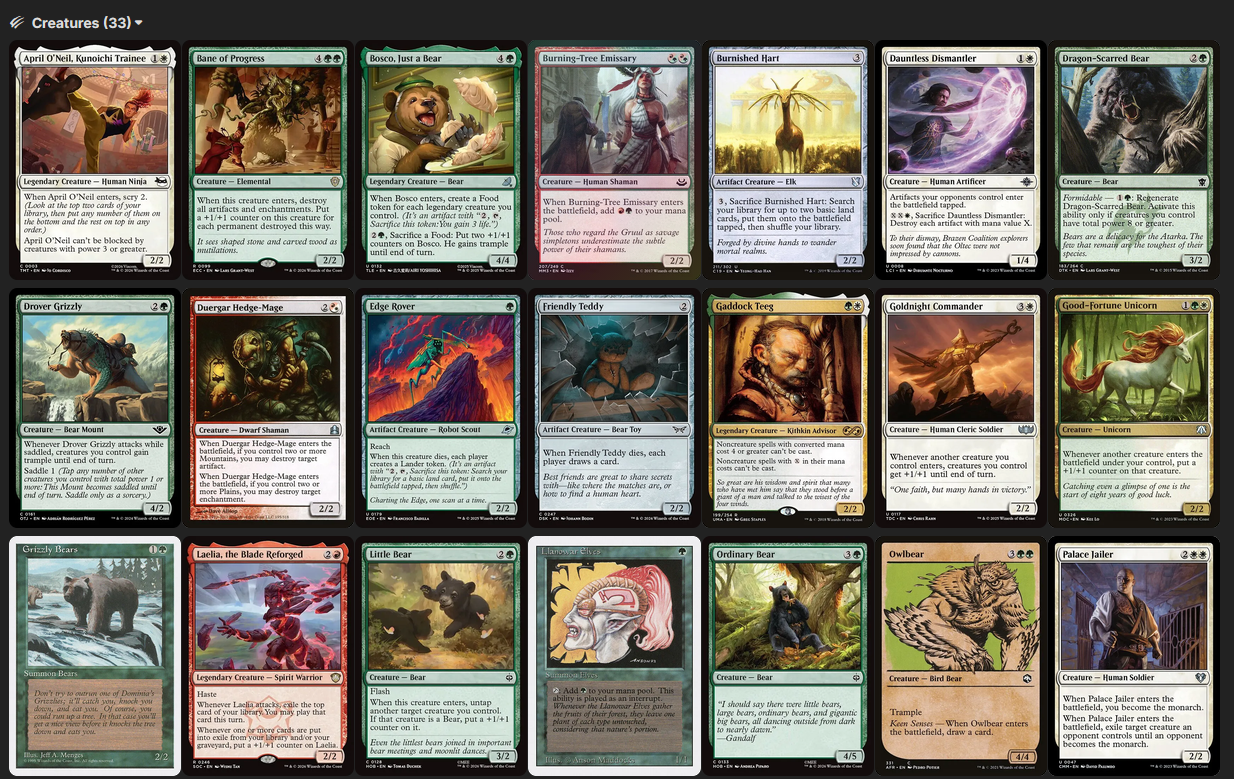
Duskana, the Rage Mother leads a Naya creature deck built around one of Commander’s more unusual mechanical incentives: maintaining a wide battlefield of creatures with base power and toughness 2/2. Duskana converts those bodies into both card advantage and substantial combat pressure, drawing cards when she enters the battlefield and turning every qualifying attacker into a much larger threat.
The deck combines traditional 2/2 creatures, token production, face-down creatures, and carefully selected utility pieces into a cohesive midrange strategy. Because Duskana checks base power and toughness, +1/+1 counters, equipment, temporary pumps, and other modifications can increase a creature’s actual size without removing it from Duskana’s attack trigger.
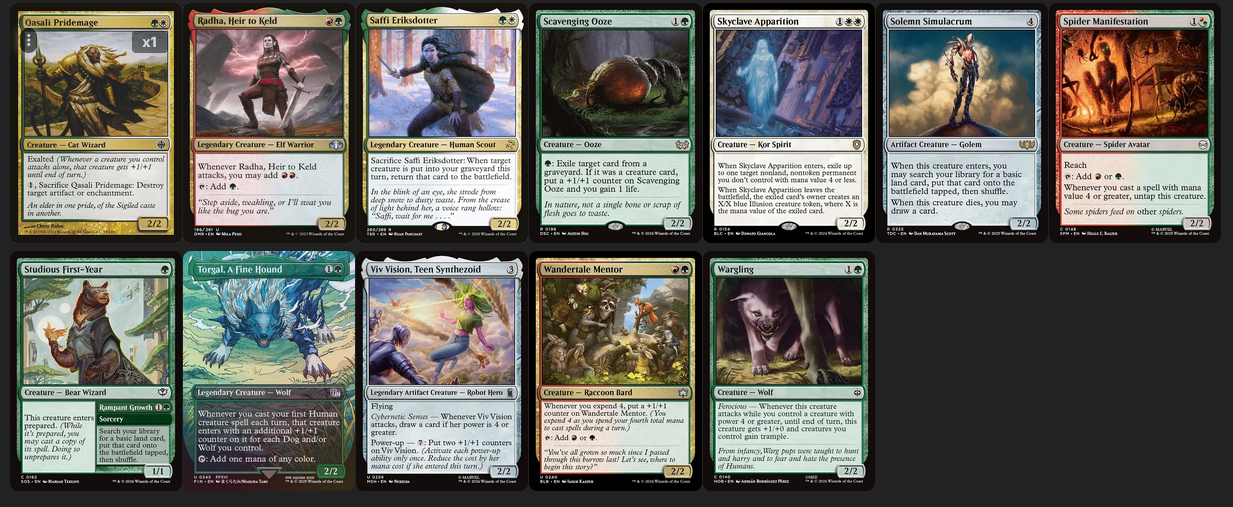
The primary plan is to establish several 2/2 bodies, deploy Duskana for a significant refill, and then leverage her attack trigger to transform an otherwise modest battlefield into immediate pressure. Cards such as Grizzly Bears, Burning-Tree Emissary, Qasali Pridemage, Radha, Heir to Keld, Skyclave Apparition, Scavenging Ooze, Goldnight Commander, Saffi Eriksdotter, and Bane of Progress all contribute useful effects while retaining the exact base statistics Duskana rewards.
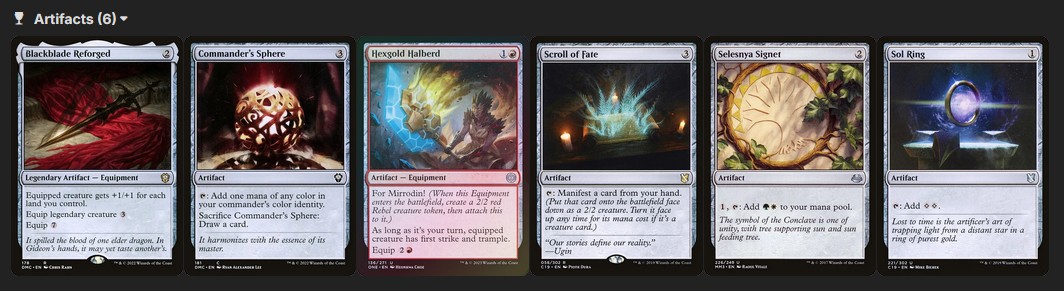
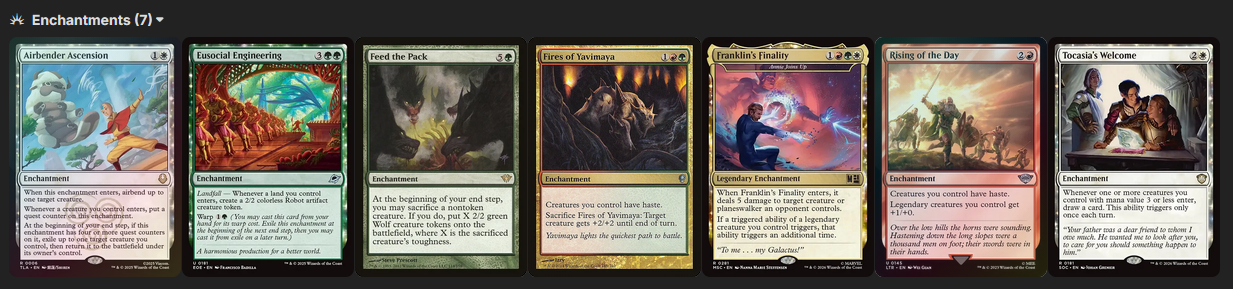
The deck also produces qualifying creatures without relying entirely on naturally printed 2/2s. White Sun's Zenith, Feed the Pack, Eusocial Engineering, and Hexgold Halberd generate 2/2 tokens, while Scroll of Fate can manifest cards as 2/2 creatures. Even Branch of Vitu-Ghazi can function as a face-down 2/2 through disguise before eventually returning to its role as a land.
Duskana rewards quantity without requiring the deck to sacrifice utility. Many of the deck's removal, ramp, recursion, and value creatures naturally have 2/2 base statistics, allowing normal game development to simultaneously build toward the commander's payoff.
Token production expands that density further. White Sun's Zenith creates an instant-speed army of 2/2 Cats, while Feed the Pack converts expendable creatures into multiple 2/2 Wolves. Eusocial Engineering produces 2/2 Robot tokens through landfall, and Hexgold Halberd supplies another qualifying body through its For Mirrodin! ability.
Scroll of Fate provides a particularly flexible version of this plan by turning cards in hand into manifested 2/2 creatures. Those face-down creatures immediately qualify for Duskana's combat trigger while preserving the possibility of turning manifested creature cards face up later.
Duskana serves as the deck's primary draw engine. Her enter-the-battlefield trigger scales directly with the number of qualifying creatures already in play, making a developed board capable of producing a substantial hand refill.
Franklin's Finality, the Marvel alternate treatment of Annie Joins Up, dramatically increases that ceiling. Because Duskana is legendary, Annie Joins Up causes her triggered abilities to trigger an additional time. Duskana can therefore resolve her entire ETB draw effect twice, while her attack trigger can provide each qualifying attacker with two separate +3/+3 boosts.
Additional card flow comes from Tocasia's Welcome, Harmonize, Palace Jailer, and Laelia, the Blade Reforged, giving the deck ways to continue generating resources without depending entirely on its commander.
The interaction package is broad and deliberately attached to several creatures whenever possible. Qasali Pridemage, Duergar Hedge-Mage, Skyclave Apparition, Dauntless Dismantler, and Bane of Progress provide removal while advancing or complementing the creature plan.
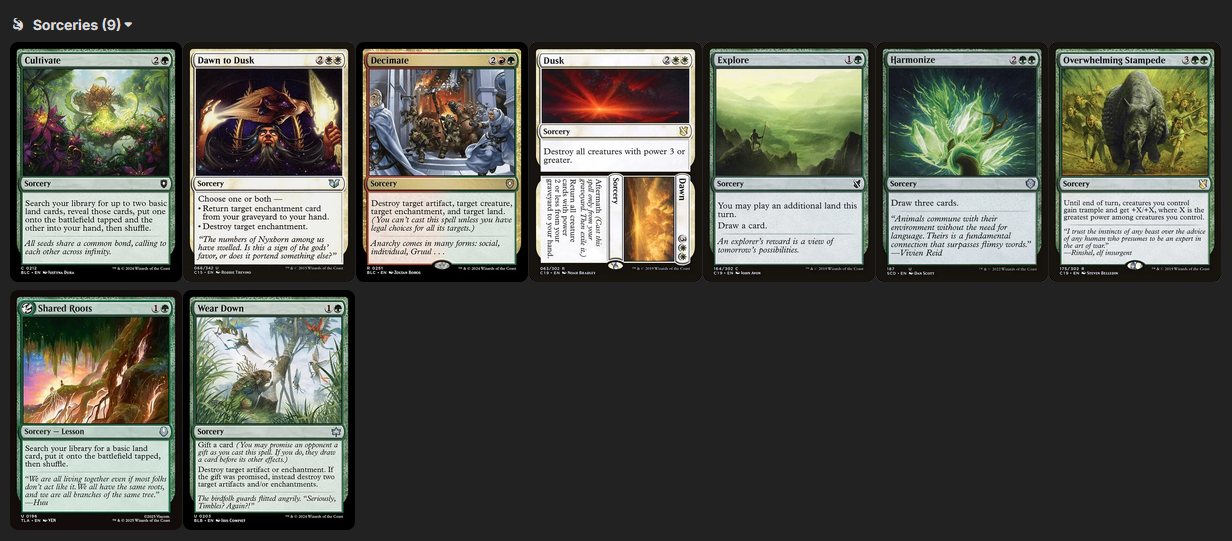
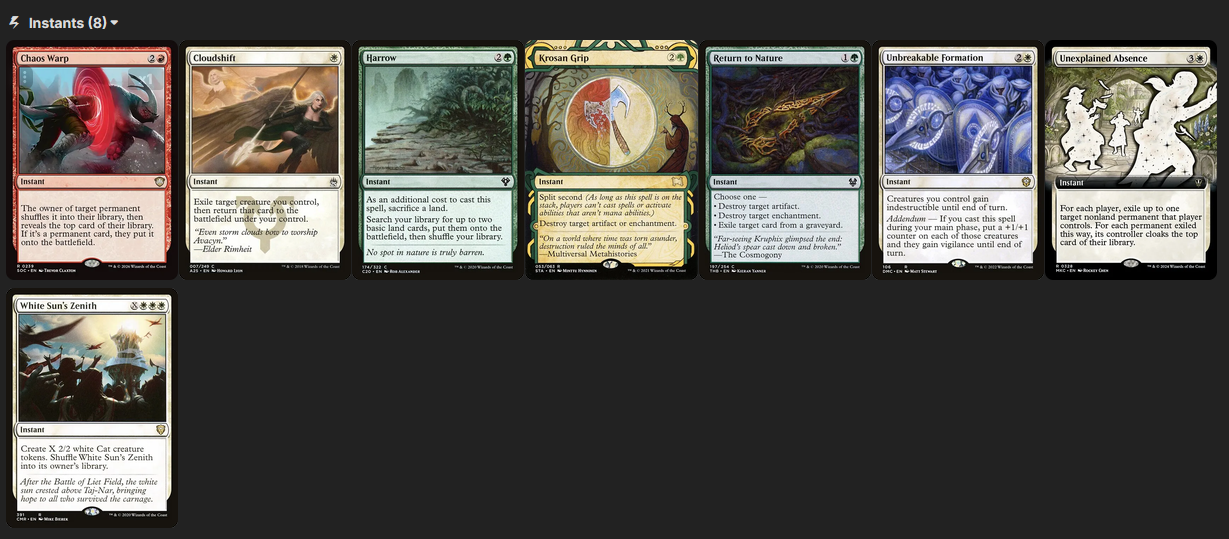
Chaos Warp, Krosan Grip, Return to Nature, Wear Down, Decimate, and Unexplained Absence add flexible answers across multiple permanent types.
Dusk // Dawn is especially well aligned with the deck. Dusk can remove larger creatures while leaving many of Duskana's natural 2-power creatures untouched, and Dawn can later return a large portion of the creature suite from the graveyard to hand. Saffi Eriksdotter and Unbreakable Formation provide additional protection against removal and board wipes.
Cloudshift offers both protection and value, allowing an important creature to dodge interaction while also providing the option to retrigger an enter-the-battlefield effect, including another Duskana draw sequence when the board is properly established.
One of the deck's central structural advantages is that modifying a creature's power and toughness does not normally change its base statistics. Good-Fortune Unicorn, Oran-Rief, the Vastwood, Unbreakable Formation, and other counter effects can therefore grow qualifying 2/2 creatures while leaving Duskana's synergy intact.
Goldnight Commander provides team-wide temporary scaling as additional creatures enter, while Fires of Yavimaya and Rising of the Day give the deck haste access so newly developed threats can contribute to combat more quickly.
Duskana herself turns every natural 2/2 into a 5/5 attacker before any other enhancements are considered. Once counters, anthem effects, or Annie Joins Up are layered onto that foundation, relatively small utility creatures can become substantial combat threats without compromising the underlying engine.
Gaddock Teeg gives the deck a meaningful disruptive angle by restricting expensive and X-cost noncreature spells. Because the deck develops primarily through creatures, Teeg can interfere with opposing sweepers, large sorceries, and other high-impact spells while much of Duskana's own battlefield continues functioning normally.
The deck does contain several spells that are also affected by Teeg, so his inclusion is best treated as a situational tempo piece rather than a permanent lock. This gives the deck access to disruption without forcing the entire list into a dedicated stax structure.
The most direct win condition is simply attacking with a sufficiently developed group of qualifying creatures under Duskana. A battlefield of ordinary 2/2s quickly becomes a collection of 5/5 attackers, and Annie Joins Up can increase that output to +6/+6 per creature from Duskana alone.
Overwhelming Stampede provides an additional route for converting board development into lethal combat by granting trample and scaling the entire team from the deck's largest creature. Goldnight Commander, counters from Good-Fortune Unicorn, and haste from Fires of Yavimaya or Rising of the Day help create turns where a modest board can escalate into decisive pressure with very little warning.
This build approaches Duskana as a true 2/2-matters commander rather than simply a Bear-themed creature deck. Bears such as Grizzly Bears, Dragon-Scarred Bear, Drover Grizzly, Little Bear, Ordinary Bear, and Bosco, Just a Bear reinforce the commander's flavor, but the wider card pool is selected according to mechanical function first.
Removal creatures, mana development, token engines, recursion, protection, and draw effects have been chosen wherever possible to preserve the 2/2 framework. The result is a deck in which individual utility cards continue contributing to the central combat engine instead of occupying isolated support roles.
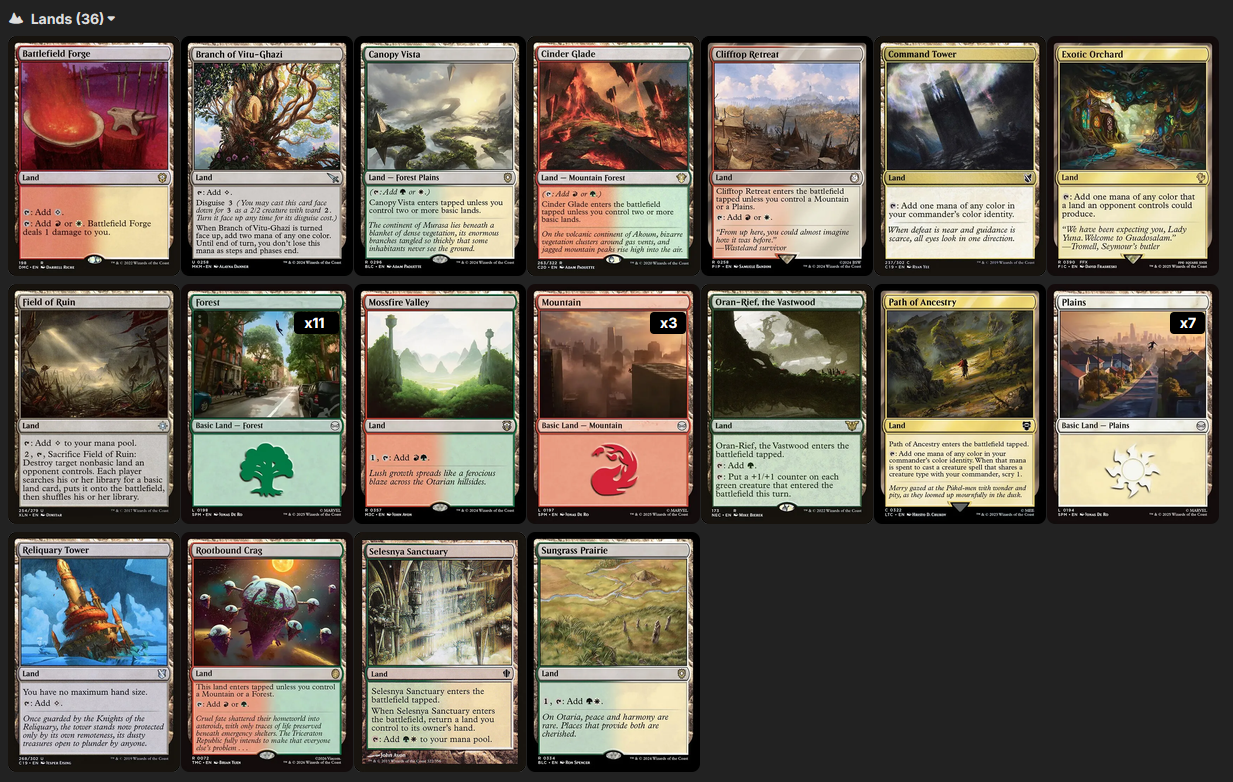
The mana base and ramp package support smooth access to all three Naya colors through Cultivate, Harrow, Explore, Shared Roots, Llanowar Elves, Selesnya Signet, Commander's Sphere, and the deck's multicolor lands. This allows Duskana to enter after a battlefield has already been established, maximizing the value of her first trigger and immediately preparing the deck for its next combat step.
100-card singleton Commander deck, legal for EDH
All cards in Near Mint to Lightly Played condition
Professionally sleeved and ready to play
Built for consistent performance and strategic depth
Enjoy creature decks built around unusual power-and-toughness synergies
Prefer token and midrange strategies with layered combat scaling and utility
Appreciate Commander builds where thematic creature choices also serve deliberate mechanical roles
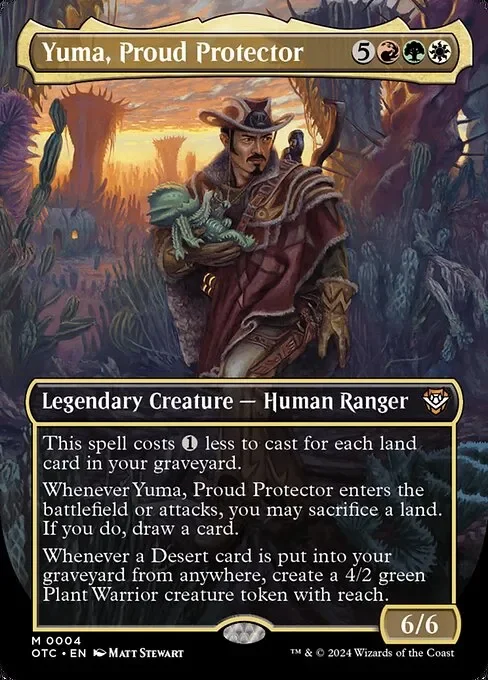
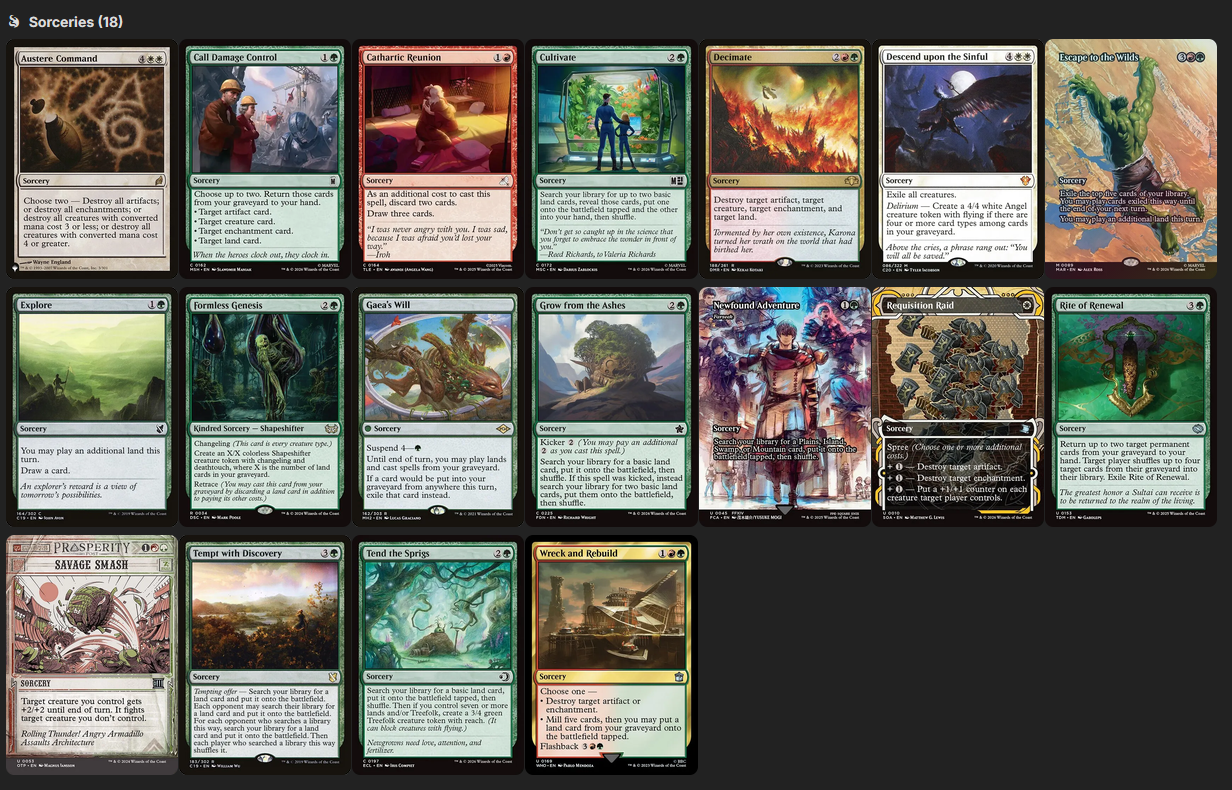
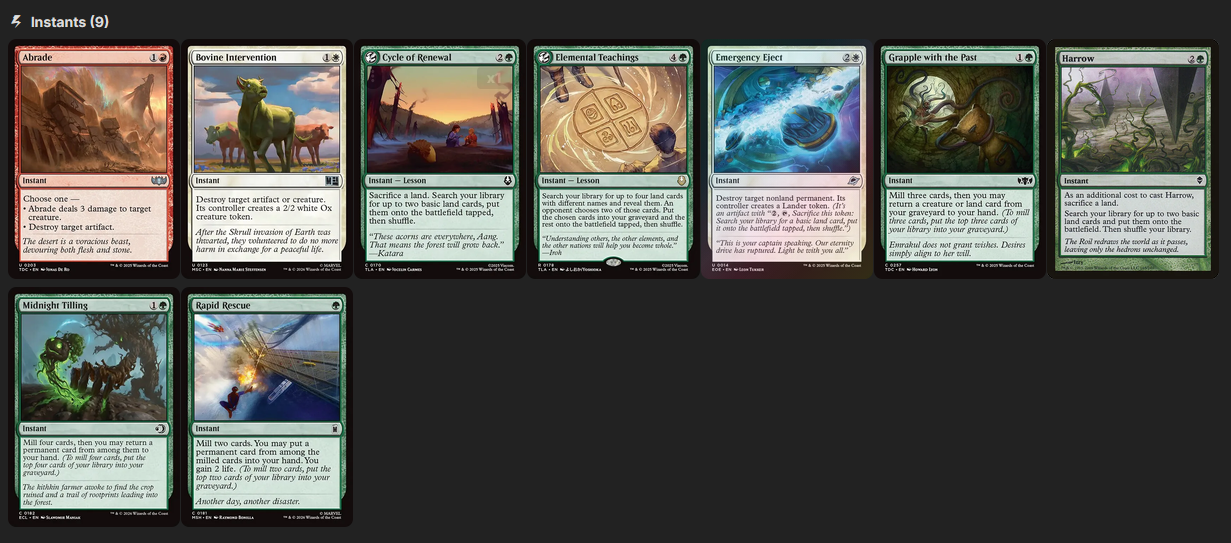
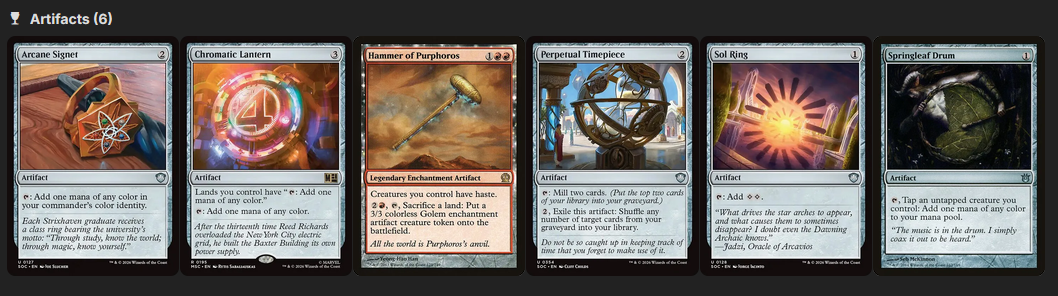
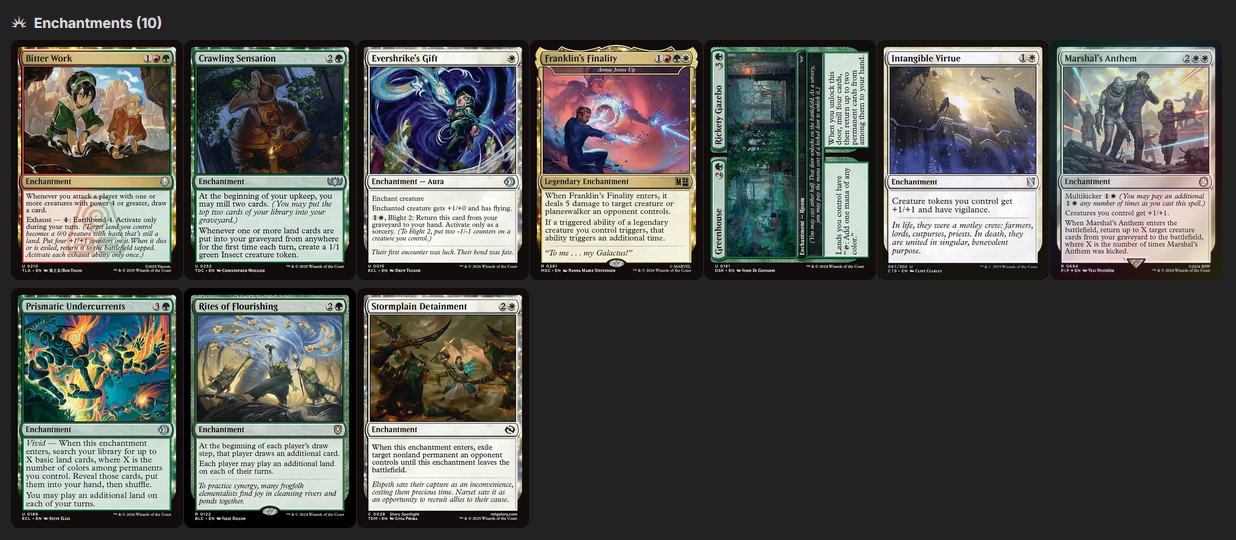
Yuma, Proud Protector leads a Naya land-based strategy built around placing Deserts and other lands into the graveyard, recurring them for value, and converting those exchanges into a steady supply of 4/2 Plant Warrior tokens. Self-mill, land sacrifice, and land recursion operate as interconnected resources, allowing the deck to build pressure while maintaining access to cards from both the library and graveyard.
The deck combines a Desert-focused engine with landfall payoffs, token support, and resilient graveyard play. Rather than relying on a single explosive sequence, it develops through repeatable land interactions that continually advance the board.
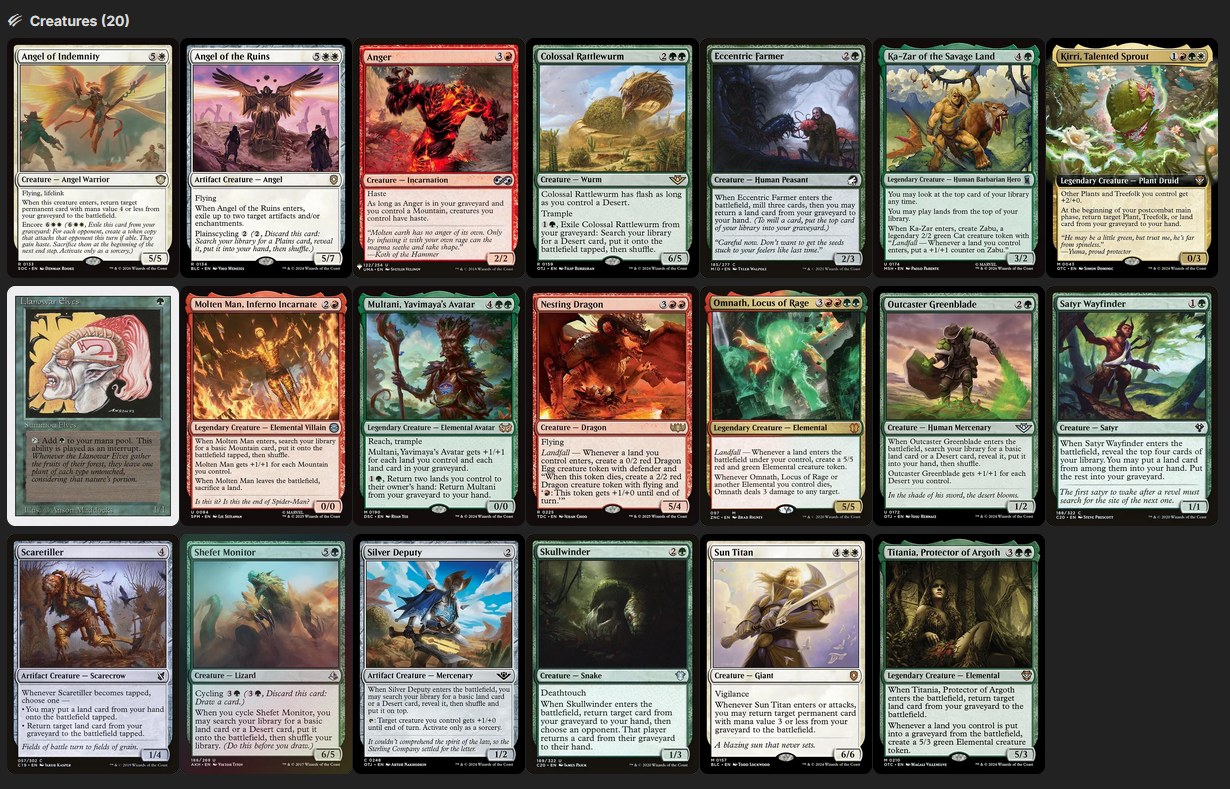
Yuma functions as both the deck’s primary token engine and an efficient late-game threat. Cards such as Eccentric Farmer, Satyr Wayfinder, Perpetual Timepiece, and Crawling Sensation stock the graveyard, helping reduce Yuma’s casting cost while placing lands where they can generate additional value.
The deck’s broader land package supports several complementary threats. Titania, Protector of Argoth rewards land sacrifice with Elemental tokens, Omnath, Locus of Rage converts landfall into additional creatures and removal pressure, and Nesting Dragon creates a growing reserve of Dragon Egg tokens. Multani, Yavimaya’s Avatar provides a scalable recurring threat that benefits from the deck’s high land density.
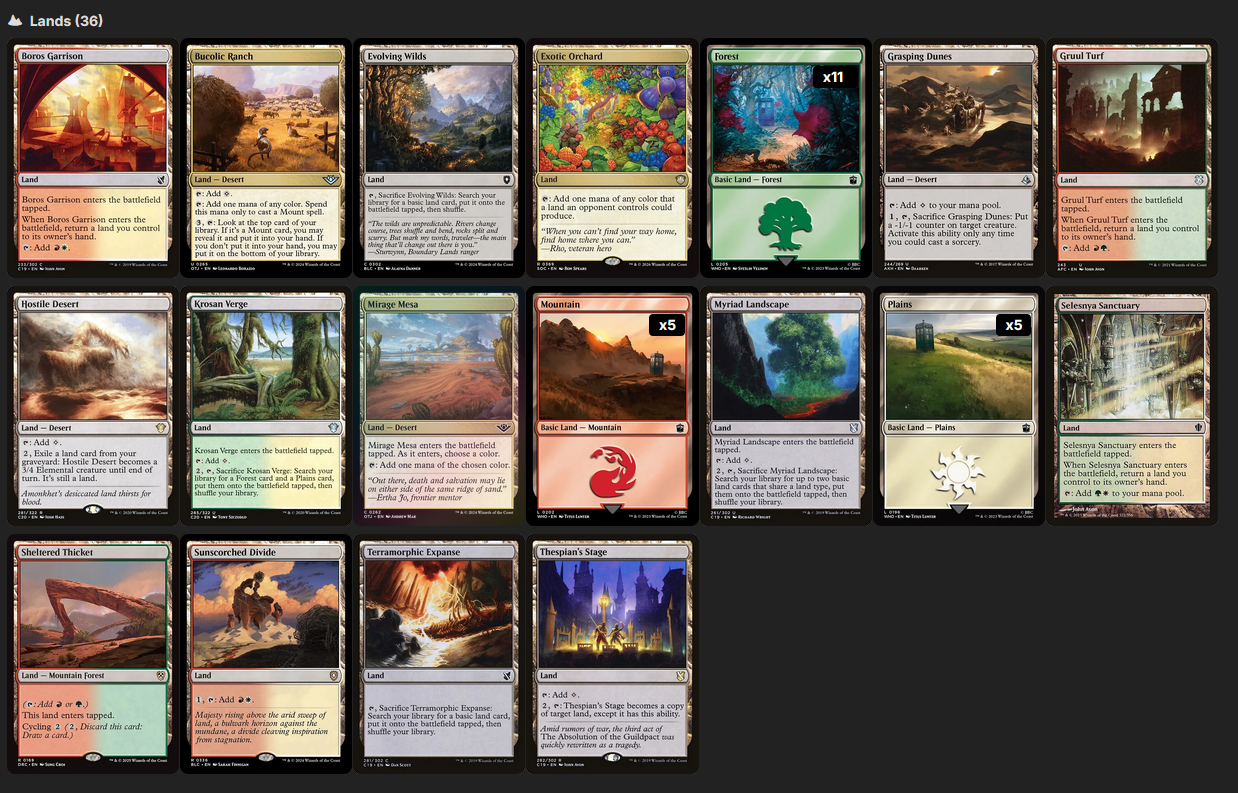
The deck deliberately moves lands into the graveyard through self-mill, cycling, sacrifice effects, and discard. Shefet Monitor, Grasping Dunes, Harrow, Myriad Landscape, and the fetch-land package naturally place lands into the graveyard, while Cathartic Reunion, Grapple with the Past, and Midnight Tilling provide additional selection and setup.
Each Desert entering the graveyard can trigger Yuma’s Plant Warrior production, turning routine resource exchanges into meaningful board development.
A substantial recursion package allows sacrificed or milled lands to remain active resources. Scaretiller returns lands whenever it becomes tapped, while Rite of Renewal, Rapid Rescue, and Sun Titan recover important permanents. Gaea’s Will offers a broader recovery turn, enabling the deck to replay lands and spells from the graveyard.
Kirri, Talented Sprout supports both the Plant token plan and the graveyard engine by strengthening Plant creatures and returning lands or Plants during combat.
The deck produces threats through several overlapping engines. Yuma creates 4/2 Plant Warriors, Titania creates 5/3 Elementals, Omnath produces 5/5 Elementals, and Nesting Dragon turns landfall triggers into delayed flying threats.
Crawling Sensation adds Insect production when lands enter the graveyard, while Formless Genesis can create a creature whose size reflects the deck’s developed graveyard. This variety makes the board difficult to contain with single-target interaction.
Intangible Virtue grants the deck’s creature tokens additional power and vigilance, allowing them to attack without fully surrendering defensive positioning. Hammer of Purphoros gives creatures haste and can convert excess lands into additional threats, while Marshal’s Anthem strengthens the board and returns creatures from the graveyard.
Annie Joins Up enhances the deck’s legendary permanent triggers, increasing the value generated by Yuma, Titania, Omnath, and other central pieces.
The interaction suite covers creatures, artifacts, enchantments, and wide boards. Abrade, Bovine Intervention, Requisition Raid, and Wreck and Rebuild provide efficient targeted answers, while Decimate can remove several permanent types at once.
Austere Command offers flexible battlefield management, and Descend upon the Sinful provides a full creature reset when opposing boards become unmanageable. Because much of the deck’s value is stored in lands, graveyard resources, and repeatable token engines, it can rebuild effectively after removal.
The deck closes games by accumulating multiple large tokens and scalable land-based threats. Haste from Hammer of Purphoros or Anger reduces the time opponents have to respond, while Intangible Virtue and Marshal’s Anthem increase the combat efficiency of a developed token board.
Yuma’s Plant Warriors provide consistent pressure, and the secondary engines ensure that the deck can continue producing threats even when the commander is removed.
This build is structured around the principle that lands remain useful at every stage of the game. They provide early mana development, become graveyard resources through sacrifice and self-mill, and later return through recursion effects to trigger landfall or support another round of value generation.
Ramp, self-mill, recursion, token production, and interaction are distributed throughout the list to create consistent sequencing. The Naya mana base includes fixing, fetch lands, cycling lands, bounce lands, and utility Deserts, ensuring that its lands contribute directly to the deck’s central strategy rather than functioning solely as mana sources.
100-card singleton Commander deck, legal for EDH
All cards in Near Mint to Lightly Played condition
Professionally sleeved and ready to play
Built for consistent performance and strategic depth
Enjoy land-focused decks built around graveyard value and resource recursion
Prefer token strategies with multiple overlapping production engines
Appreciate Commander builds that turn land sacrifice and self-mill into sustained board advantage
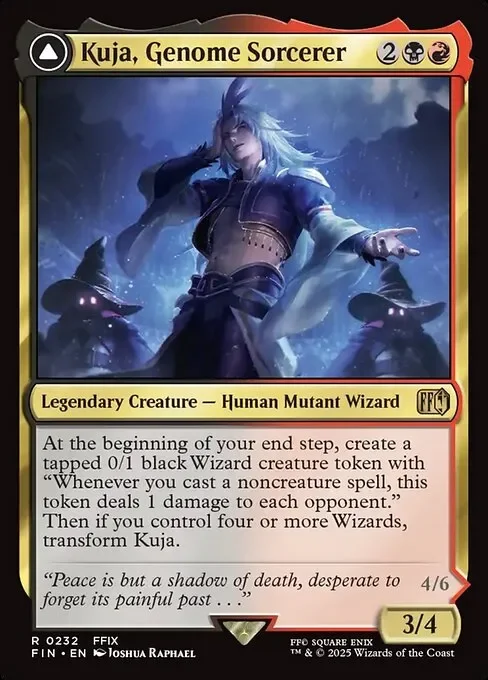
Kuja, Genome Sorcerer leads a Rakdos spellslinger deck built around repeated noncreature casting, Wizard token production, and incremental damage. Each spell advances multiple parts of the game plan, allowing Kuja to develop a board while direct-damage creatures steadily reduce opposing life totals.
The deck combines efficient interaction, discard-based card selection, ritual mana, and spell-copying effects into a cohesive engine. Once four Wizards are assembled, Kuja transforms and converts the deck’s steady spell velocity into a more aggressive closing sequence.
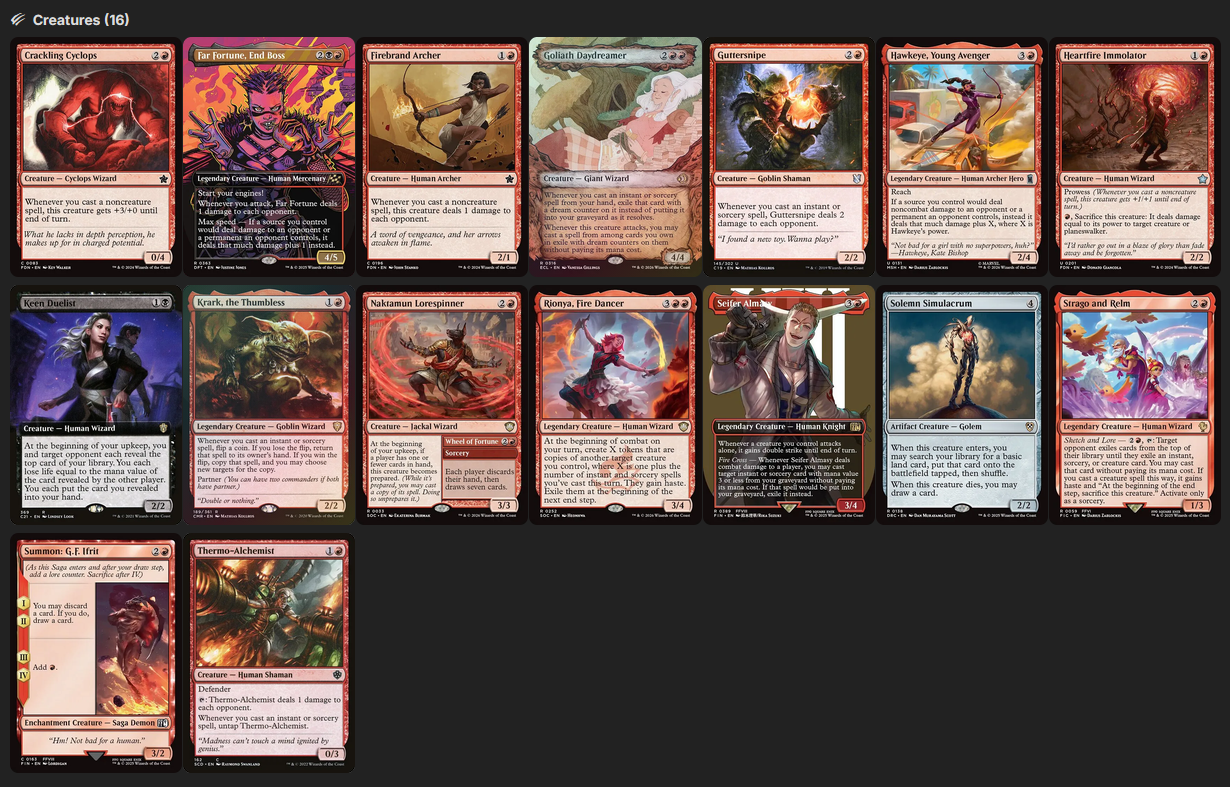
This build operates as a Rakdos spellslinger and Wizard-token hybrid. Kuja supplies tapped Wizard tokens at each end step, while Firebrand Archer, Guttersnipe, Thermo-Alchemist, and Heartfire Immolator turn ordinary instants and sorceries into repeated damage across the table.
The supporting creature package reinforces this structure. Krark, the Thumbless introduces spell-copying potential, Rionya, Fire Dancer converts spell-heavy turns into temporary creature copies, and Strago and Relm reward repeated casting while contributing directly to Kuja’s transformation requirement. Final Fantasy cards such as Seifer Almasy, Summon: G.F. Ifrit, Vincent’s Limit Break, and Sephiroth’s Intervention strengthen the deck’s theme without sacrificing functional utility.
The primary engine is built around casting multiple noncreature spells while Kuja and the deck’s damage creatures remain in play. Firebrand Archer, Guttersnipe, and Thermo-Alchemist apply pressure without requiring combat, while Crackling Cyclops becomes a substantial attacker during spell-heavy turns.
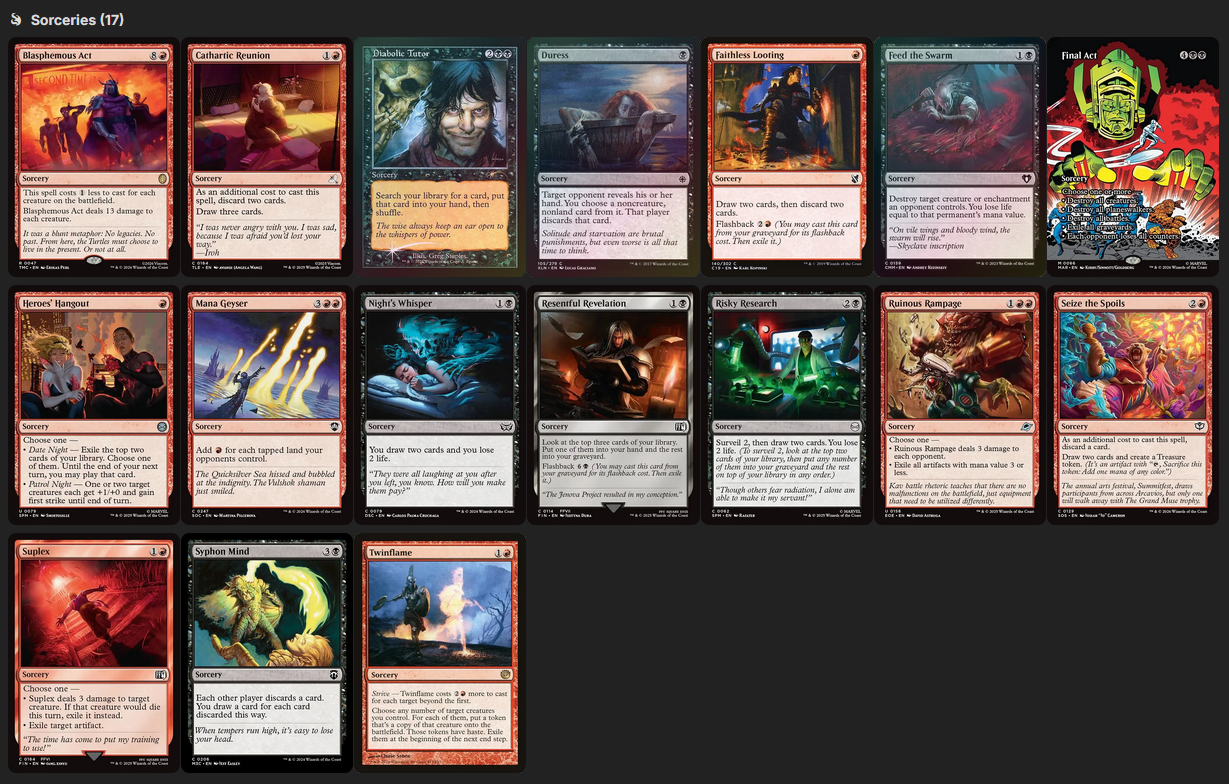
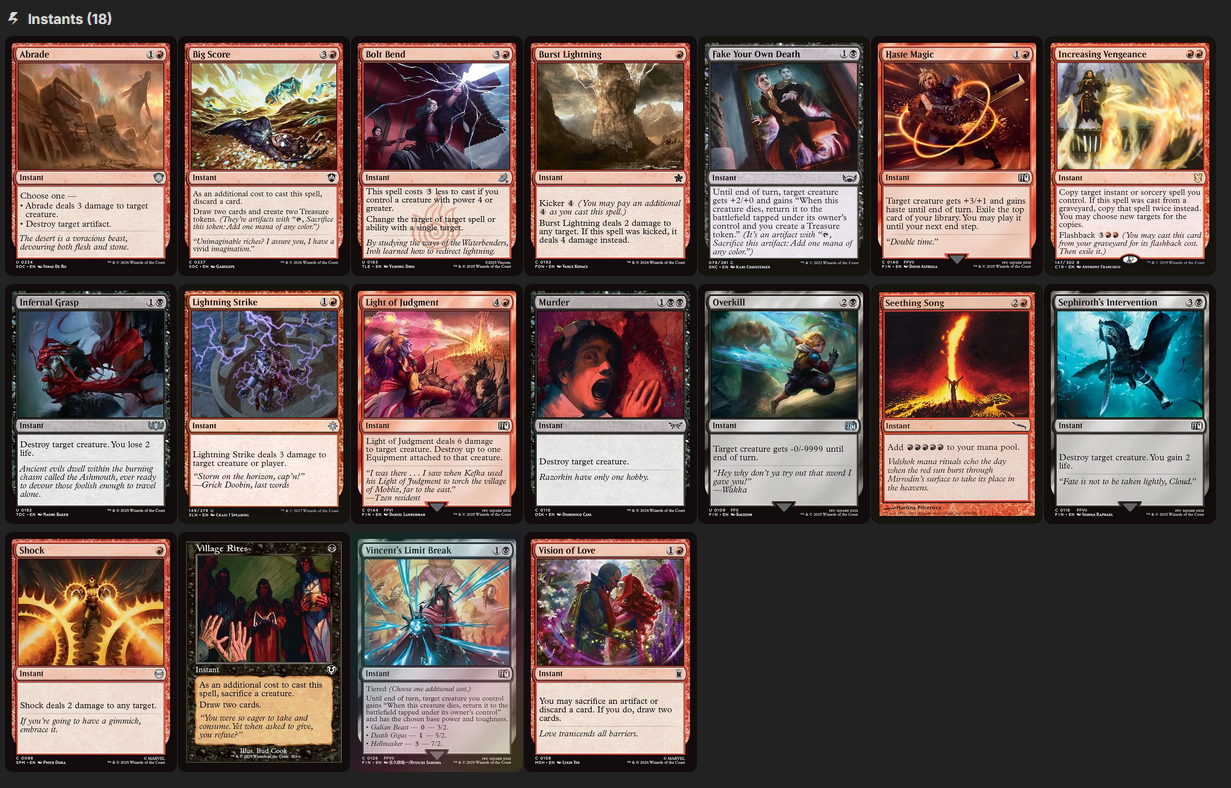
Low-cost interaction such as Shock, Burst Lightning, Lightning Strike, Abrade, and Suplex removes opposing pieces while simultaneously triggering the deck’s damage engines.
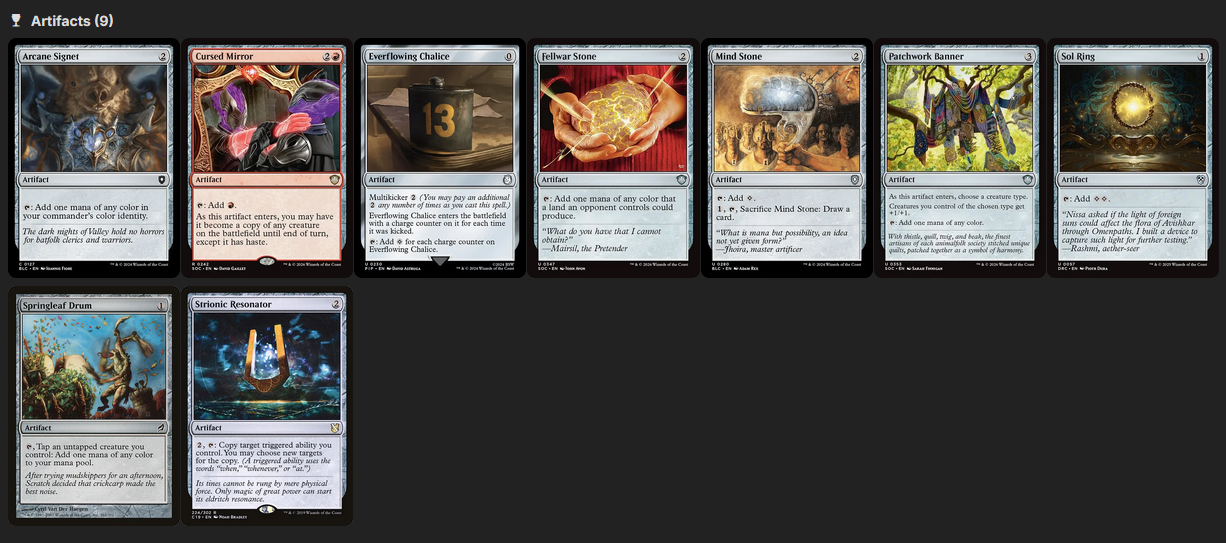
Kuja creates a Wizard token during each end step in which he remains on the battlefield, giving the deck a reliable way to establish the four Wizards needed for transformation. Patchwork Banner supports the Wizard package with additional mana and a tribal stat increase, while creatures such as Naktamun Lorespinner, Goliath Daydreamer, Strago and Relm, and Krark, the Thumbless accelerate the transformation threshold.
Because the deck can build its Wizard count without committing its entire hand to the battlefield, it retains resources for interaction and recovery.
Faithless Looting, Cathartic Reunion, Big Score, Seize the Spoils, and Risky Research keep spells moving through the hand while filtering away excess lands or situational cards. Night’s Whisper, Syphon Mind, Keen Duelist, and Resentful Revelation provide additional card advantage across different stages of the game.
Sacrifice-based draw effects such as Village Rites and Vision of Love allow temporary tokens or threatened creatures to be converted into fresh resources.
The artifact package includes Sol Ring, Arcane Signet, Fellwar Stone, Mind Stone, Everflowing Chalice, and Springleaf Drum for consistent early development. Mana Geyser and Seething Song create larger bursts of mana, enabling sequences in which several spells are cast during a single turn.
These concentrated casting windows are especially effective with Kuja, Guttersnipe-style damage effects, or spell-copying support already established.
Increasing Vengeance, Krark, the Thumbless, and Strionic Resonator increase the value of key spells and triggered abilities. Rionya, Fire Dancer can reproduce utility creatures or damage engines after a productive main phase, while Twinflame provides another method of creating temporary copies.
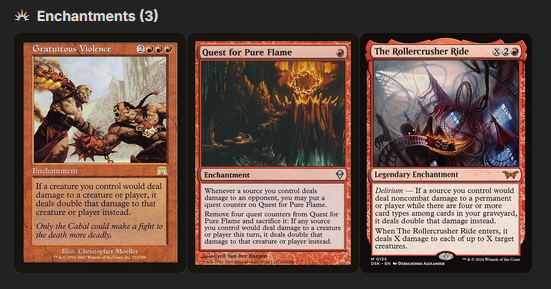
Quest for Pure Flame and Gratuitous Violence amplify damage once the deck has established momentum. These effects allow modest sources of damage to become decisive, particularly when several triggered abilities resolve during the same turn.
The removal suite covers creatures, artifacts, enchantments, and larger board states. Infernal Grasp, Murder, Overkill, Feed the Swarm, and Sephiroth’s Intervention answer individual threats, while Blasphemous Act, Final Act, and Light of Judgment provide broader control.
Bolt Bend protects important permanents or redirects targeted interaction. Fake Your Own Death preserves a key creature through removal while returning it with additional value, and Cursed Mirror functions as both acceleration and a temporary copy of the strongest available creature.
The deck generally wins by accumulating damage through repeated spellcasting rather than relying exclusively on combat. Kuja’s transformation, multiple Guttersnipe-style triggers, and copied burn spells can rapidly reduce life totals after several turns of measured development.
The Rollercrusher Ride, Quest for Pure Flame, and Gratuitous Violence provide additional damage scaling. When combat is required, a spell-enhanced Crackling Cyclops, copied creatures from Rionya, or hasty threats created through Twinflame can convert the deck’s established advantage into a final attack.
This deck is constructed so that its interaction, card selection, and mana development all contribute to Kuja’s central strategy. Low-cost spells maintain tempo, Wizard creatures support transformation, and damage engines ensure that routine game actions steadily advance the win condition.
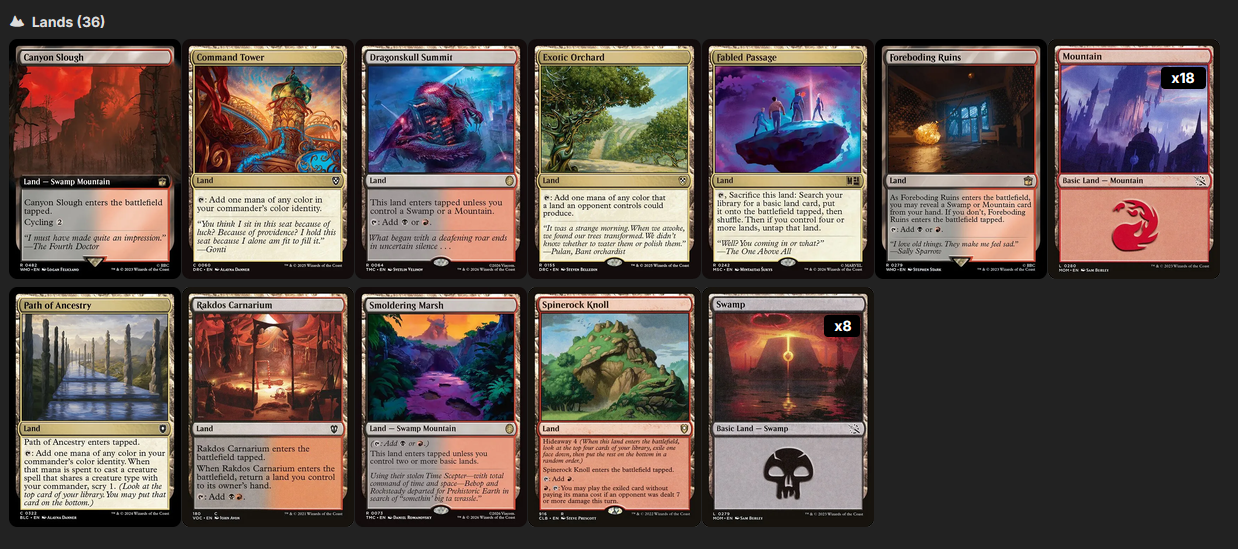
The mana base balances reliable access to both colors with utility from Spinerock Knoll, Path of Ancestry, Canyon Slough, and Fabled Passage. Thirty-six lands and a structured acceleration package support consistent sequencing, while the mixture of targeted removal, sweepers, draw spells, and finishers gives the deck flexibility across varied Commander tables.
100-card singleton Commander deck, legal for EDH
All cards in Near Mint to Lightly Played condition
Professionally sleeved and ready to play
Built for consistent performance and strategic depth
Enjoy Rakdos spellslinger decks with incremental damage and token development
Prefer Commander builds that reward sequencing, resource management, and explosive casting turns
Appreciate Final Fantasy themes supported by cohesive mechanical construction
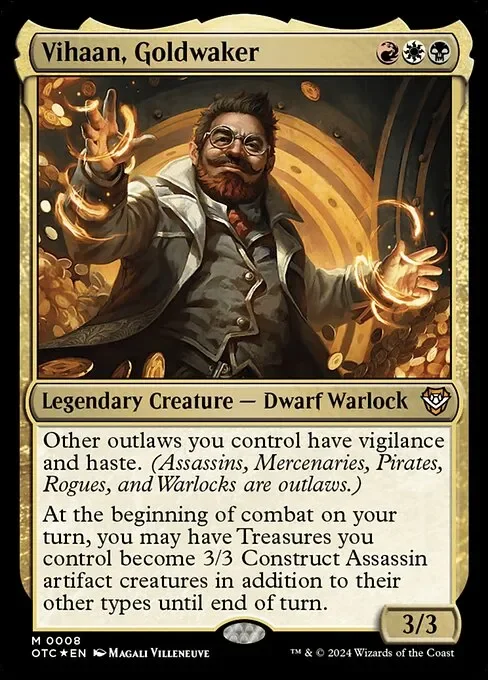
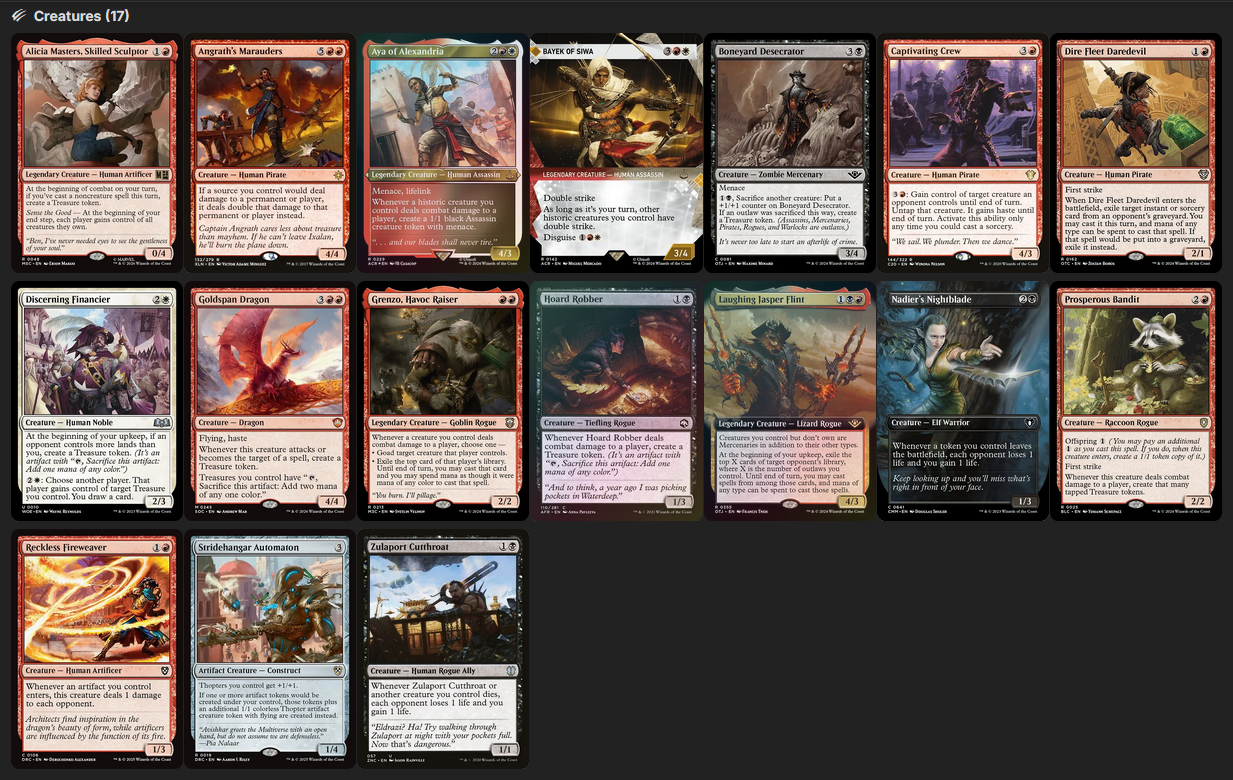
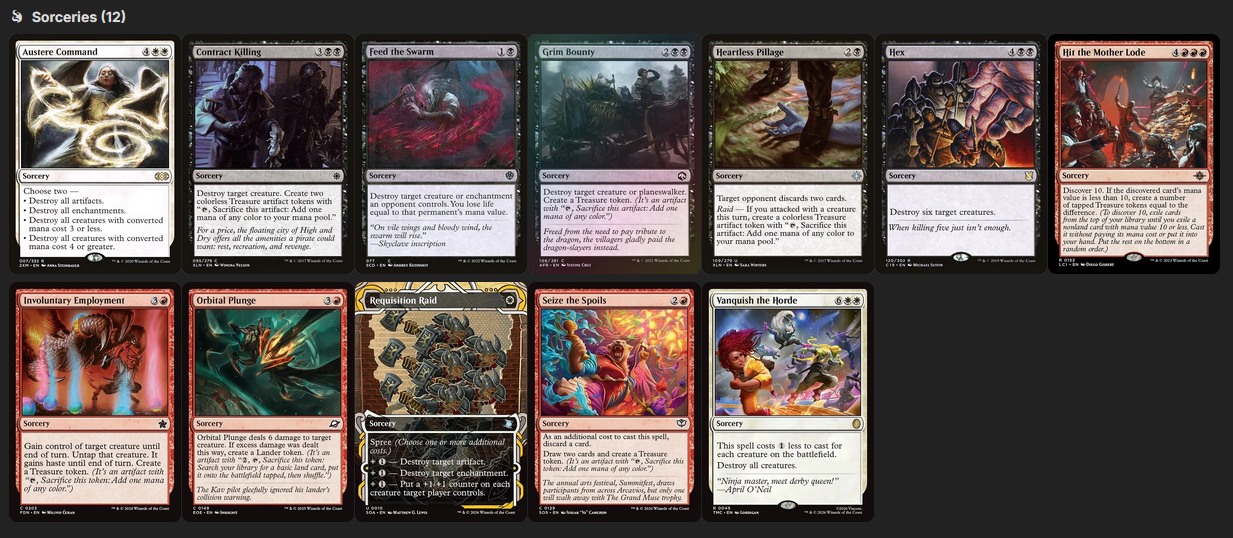
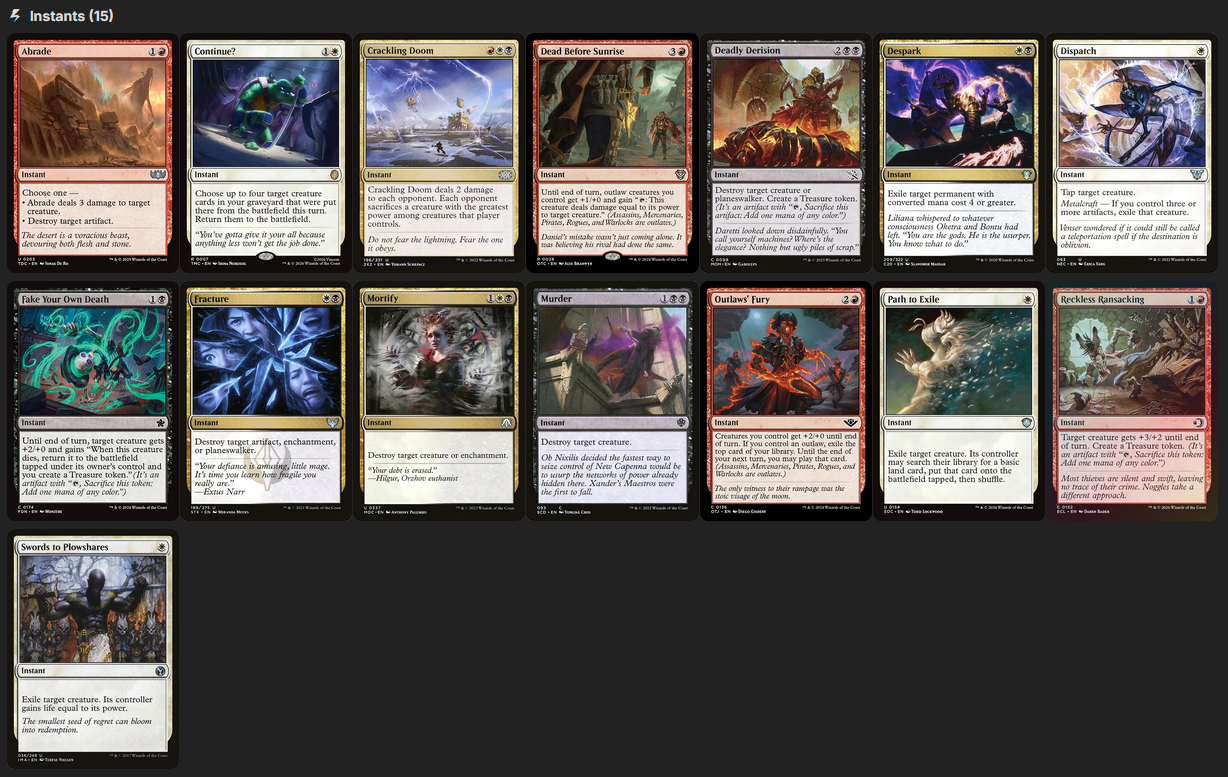
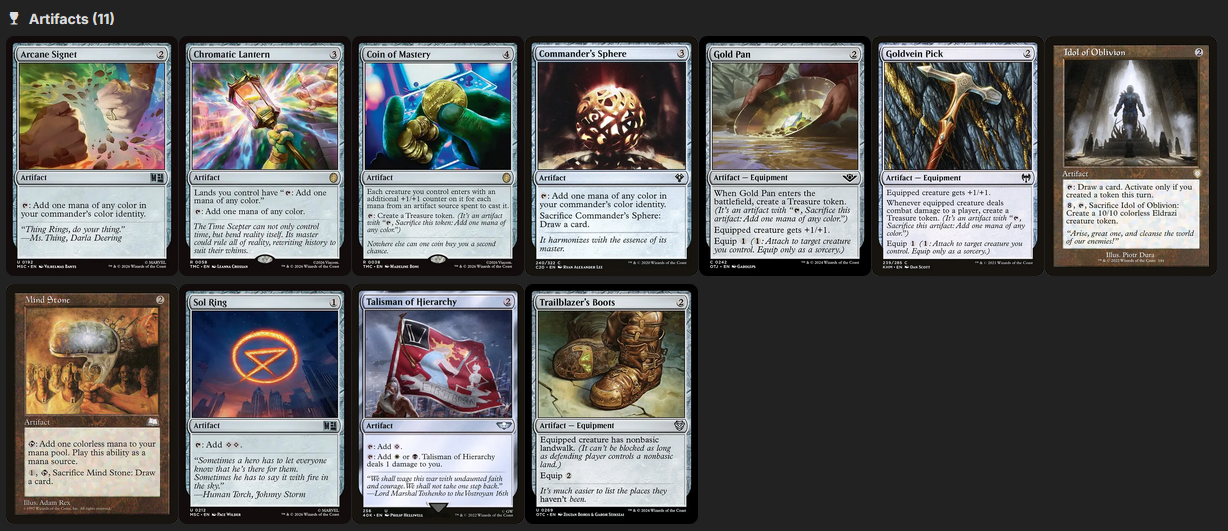
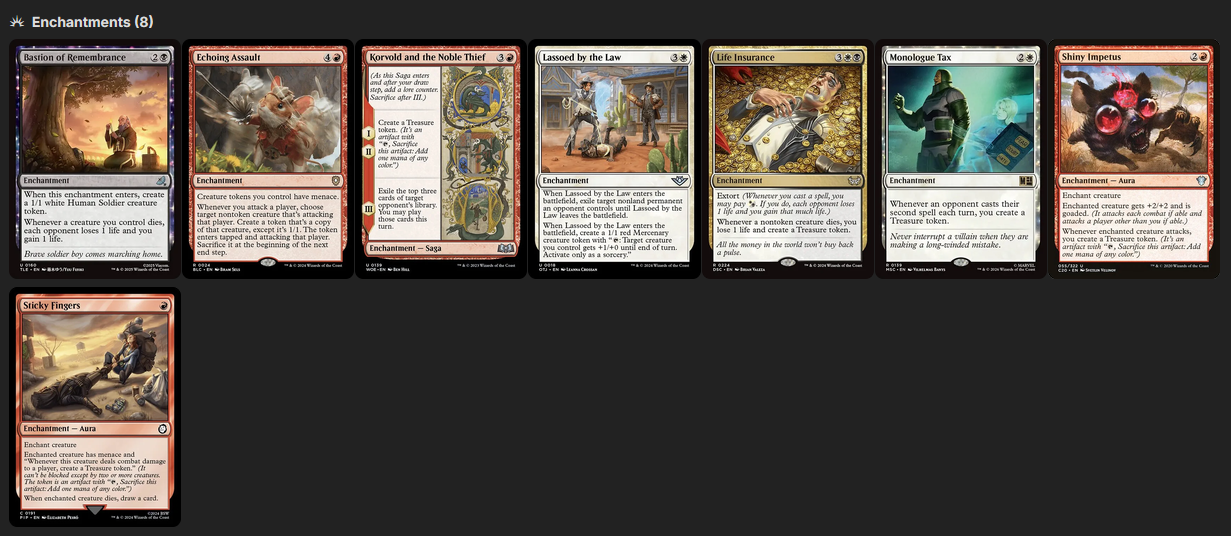
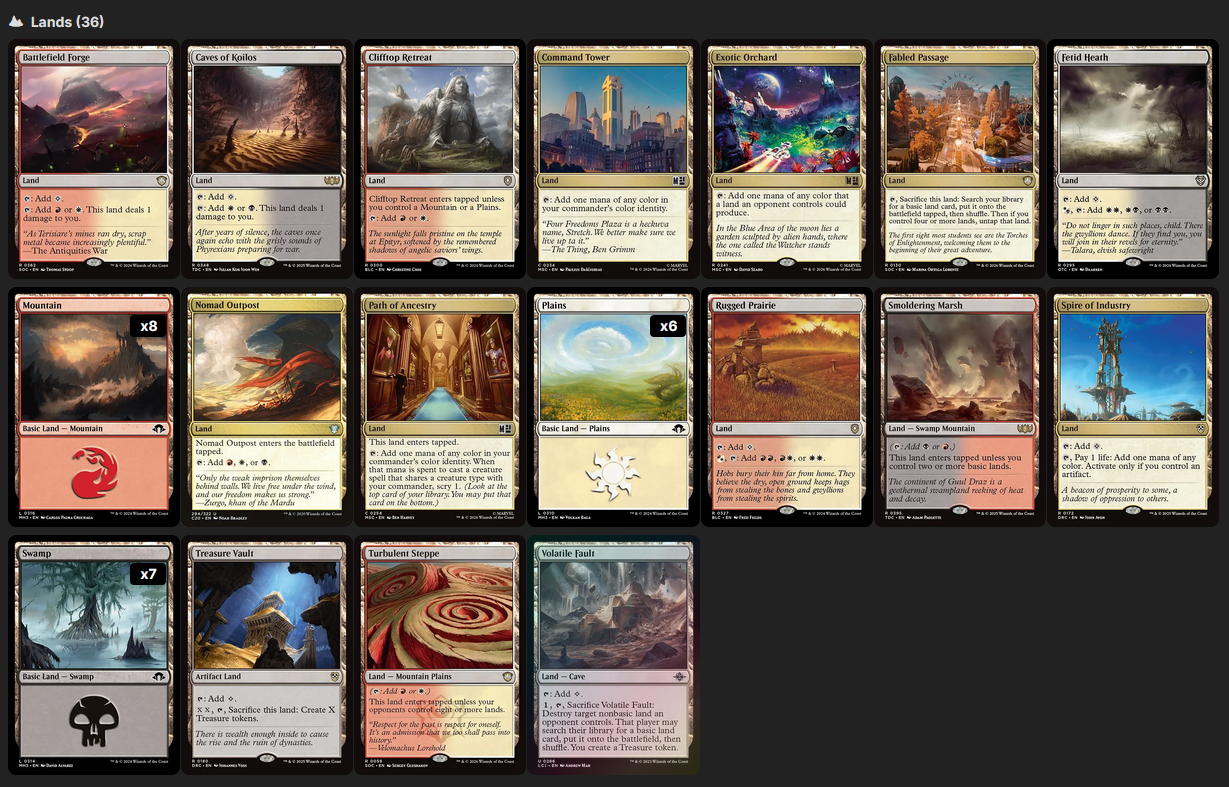
Vihaan, Goldwaker leads a Mardu Treasure strategy that converts accumulated resources into an aggressive combat force. At the beginning of combat, Vihaan transforms Treasures into 3/3 Construct Assassin creatures while granting the deck’s Outlaws vigilance and haste, allowing the deck to develop mana, apply pressure, and preserve key creatures for defense.
The build combines Treasure generation, artifact synergies, Outlaw tribal support, sacrifice effects, and targeted interaction. Its play patterns are flexible and deliberate, shifting between resource development, opportunistic theft, wide combat turns, and incremental life-loss triggers.
This deck operates as a Treasure and Outlaws midrange shell with aristocrats and artifact-combat elements. Cards such as Prosperous Bandit, Goldspan Dragon, Grim Bounty, Seize the Spoils, and Reckless Ransacking steadily increase the Treasure count, giving Vihaan a larger temporary army each combat.
The Outlaw package includes Assassins, Mercenaries, Pirates, Rogues, and Warlocks that benefit directly from Vihaan’s vigilance and haste. Aya of Alexandria, Bayek of Siwa, Dire Fleet Daredevil, Grenzo, Havoc Raiser, and Laughing Jasper Flint provide additional combat pressure, card access, and disruptive value while remaining aligned with the deck’s central creature type.
Treasure production serves as both mana acceleration and board development. Hoard Robber, Goldvein Pick, Sticky Fingers, Contract Killing, and Life Insurance create Treasures through combat, removal, and creature deaths. These resources can be retained for future turns or transformed by Vihaan into attacking 3/3 creatures without permanently sacrificing their mana utility.
Monologue Tax, Discerning Financier, and Goldspan Dragon further improve the deck’s ability to generate or exploit additional resources over the course of a multiplayer game.
Vihaan grants vigilance and haste to the deck’s Outlaws, allowing newly deployed threats to influence combat immediately. Bayek of Siwa can provide double strike during an Assassin-heavy attack, while Outlaws’ Fury offers a direct scaling payoff for a developed tribal board.
Echoing Assault produces temporary Treasure copies of attacking creatures, supporting both aggressive combat and artifact-based triggers. Trailblazer’s Boots helps important attackers bypass crowded battlefields and maintain reliable combat pressure.
Animating Treasures creates repeated opportunities to trigger artifact and creature-based effects. Reckless Fireweaver damages opponents as artifacts enter, while Alicia Masters, Skilled Sculptor converts noncreature spells into additional artifact creatures.
Bastion of Remembrance, Nadier’s Nightblade, and Zulaport Cutthroat punish opponents when animated Treasures or other creatures leave the battlefield. Boneyard Desecrator and Deadly Derision provide additional sacrifice outlets that convert expendable permanents into counters, removal, and further Treasure production.
The deck uses several forms of temporary control and stolen-card value. Captivating Crew and Involuntary Employment take opposing creatures, while Grenzo, Havoc Raiser, Dire Fleet Daredevil, and Laughing Jasper Flint create access to opponents’ cards.
A broad interaction package includes Swords to Plowshares, Path to Exile, Dispatch, Despark, Mortify, Fracture, and Crackling Doom. Feed the Swarm answers problematic enchantments, while Austere Command and Vanquish the Horde provide flexible battlefield resets.
Vihaan converts stored Treasures into a wide attacking force without requiring the deck to commit every resource as a conventional creature. Bayek of Siwa can substantially increase combat damage, while Angrath’s Marauders doubles damage from attacking creatures and artifact-based triggers.
Reckless Fireweaver, Bastion of Remembrance, Nadier’s Nightblade, and Zulaport Cutthroat provide an alternate route to victory when direct combat becomes difficult. This layered finish allows the deck to pressure life totals through attacks, artifact entry triggers, and sacrifice-based damage.
The deck’s removal suite covers creatures, artifacts, enchantments, planeswalkers, and larger permanents across a range of mana values. Austere Command is particularly effective because it can be configured to preserve Treasures or selected creatures while removing the most threatening opposing board elements.
Fake Your Own Death, Continue?, and Dead Before Sunrise provide protection or recovery for important creatures. Because much of the deck’s combat presence can be generated from Treasures at the beginning of combat, it can rebuild pressure without relying entirely on a large permanent creature board.
This deck is constructed around Vihaan’s ability to give Treasures a second strategic purpose. Treasure production is distributed across creatures, removal spells, combat equipment, and enchantments, ensuring that the commander’s animation effect remains integrated throughout the deck rather than functioning as an isolated payoff.
The mana base supports consistent access to all three colors through established dual lands, fixing artifacts, and utility lands. Each inclusion contributes to resource generation, Outlaw synergy, artifact interaction, removal coverage, or a defined finishing line, creating a cohesive Mardu deck with multiple paths through a multiplayer game.
100-card singleton Commander deck, legal for EDH
All cards in Near Mint to Lightly Played condition
Professionally sleeved and ready to play
Built for consistent performance and strategic depth
Enjoy Treasure strategies that convert mana resources into combat pressure
Prefer Mardu decks combining Outlaw tribal synergy, sacrifice effects, and interaction
Appreciate Commander builds with both combat and aristocrats-style win conditions
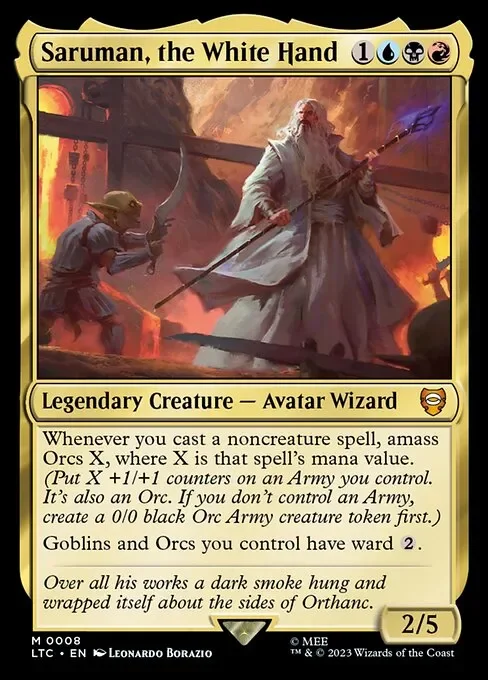
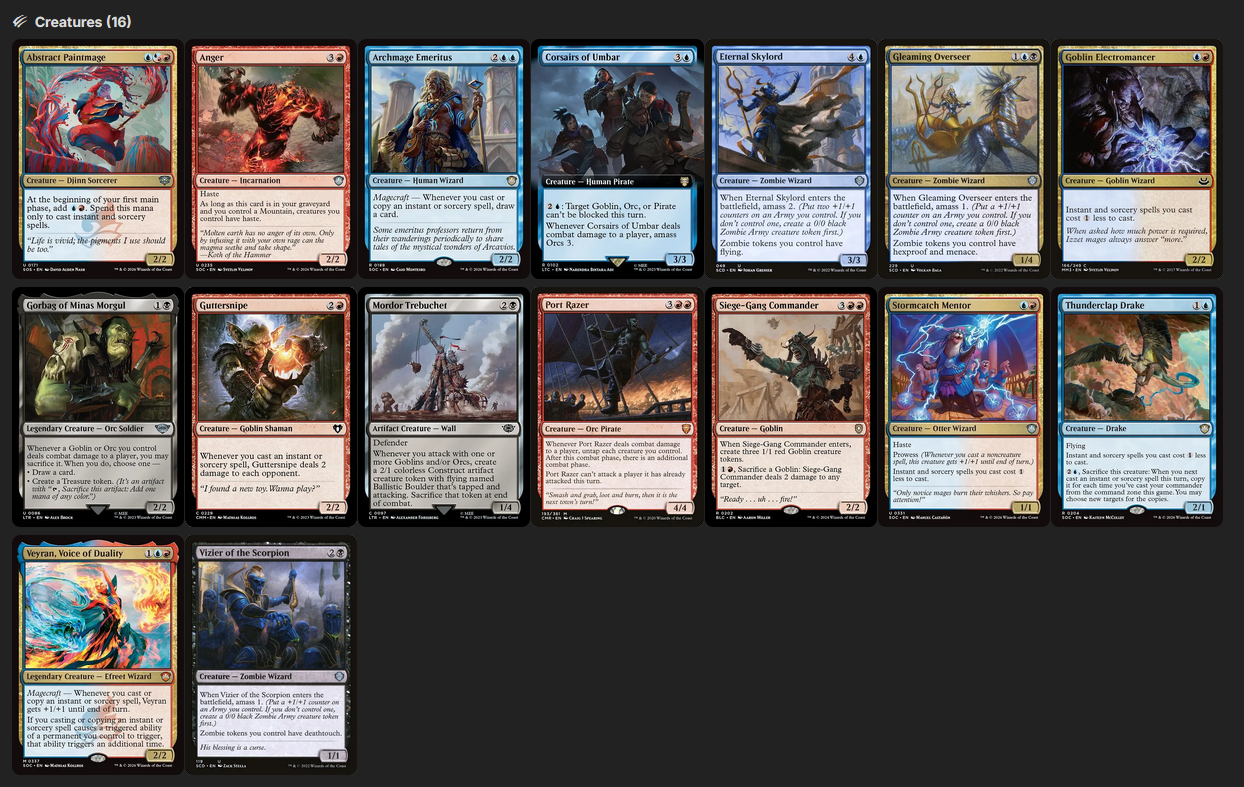
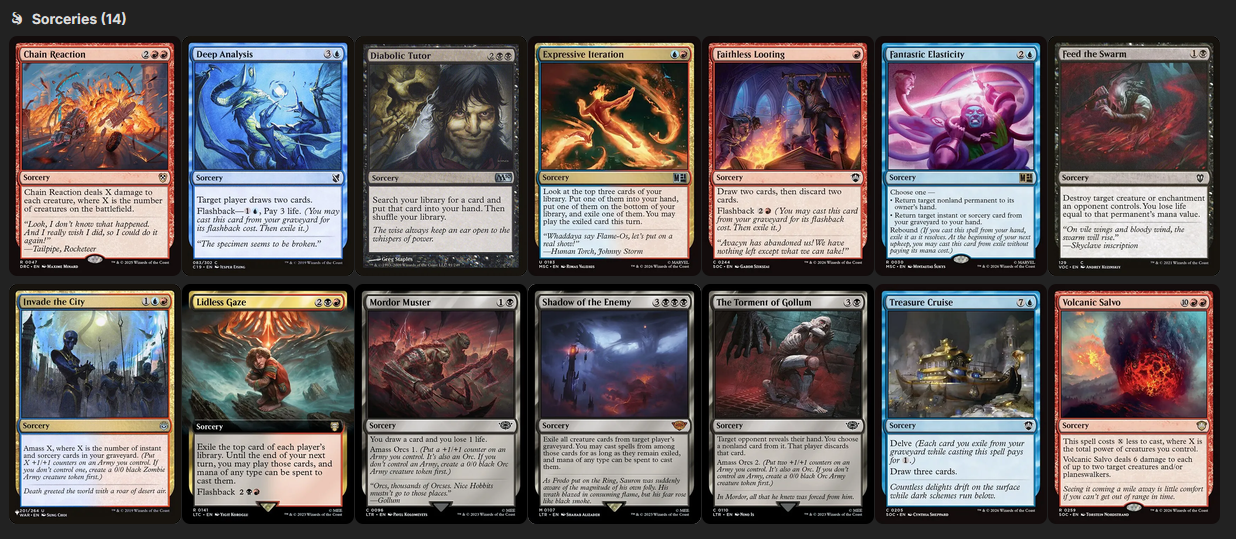
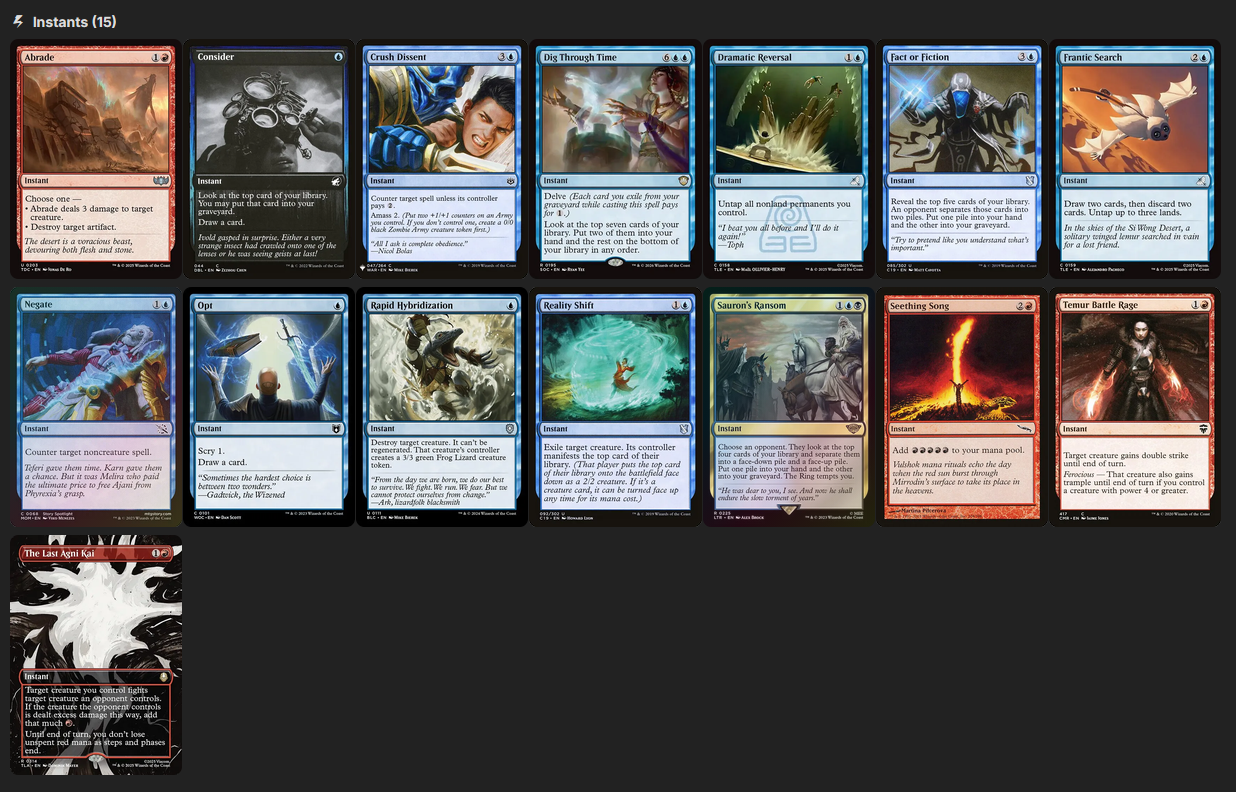
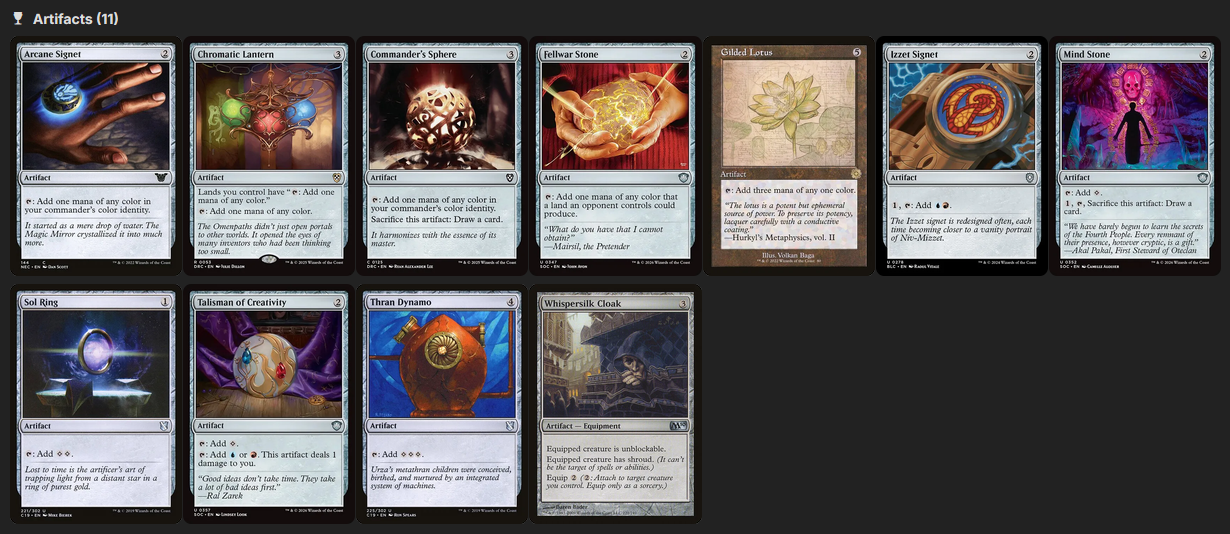
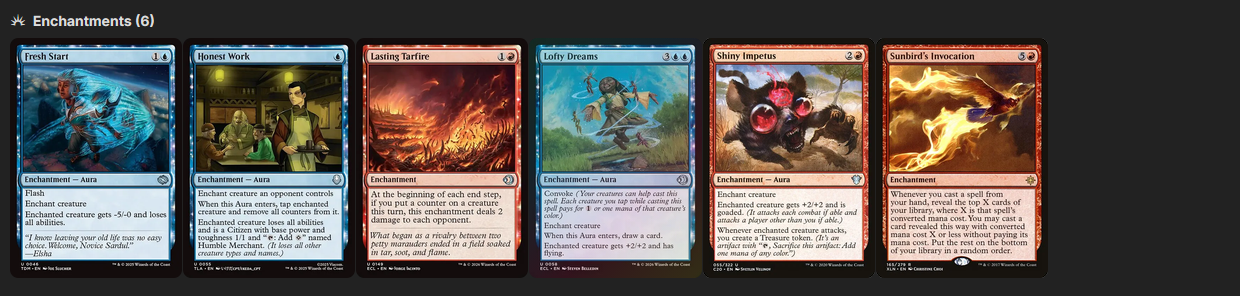
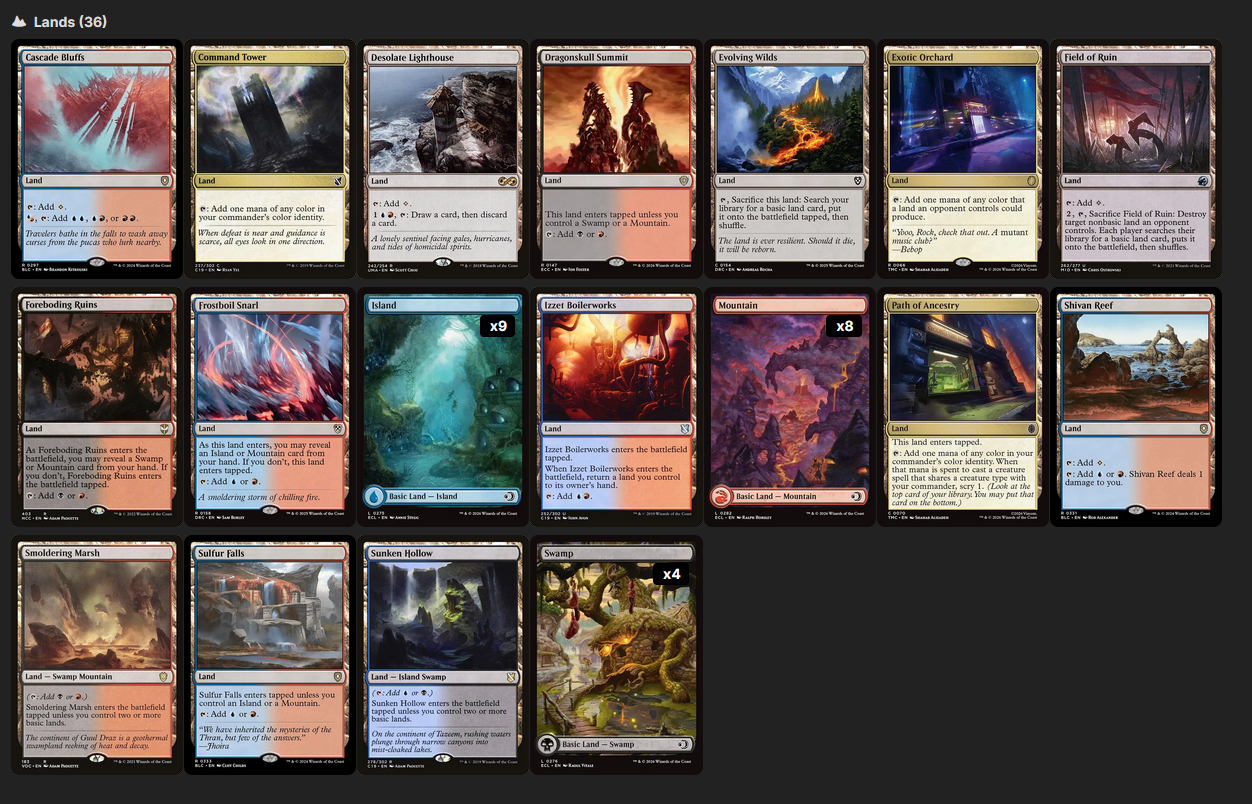
Saruman, the White Hand leads a Grixis spellslinger deck built to convert every noncreature spell into an expanding Orc Army. The deck combines efficient card selection, reactive interaction, and high-mana-value spells to steadily develop a protected threat while controlling the pace of the table.
Saruman’s ward ability gives the deck’s Goblins and Orcs additional protection, making the accumulated Army difficult to remove through conventional interaction. The result is a purposeful midrange-control strategy that rewards careful sequencing before converting spell-based value into decisive combat pressure.
This build operates as a spellslinger and Army-token hybrid. Low-cost spells such as Consider, Opt, Faithless Looting, and Expressive Iteration provide early velocity, while larger effects such as Dig Through Time, Treasure Cruise, and Volcanic Salvo create substantial Army growth without sacrificing card efficiency.
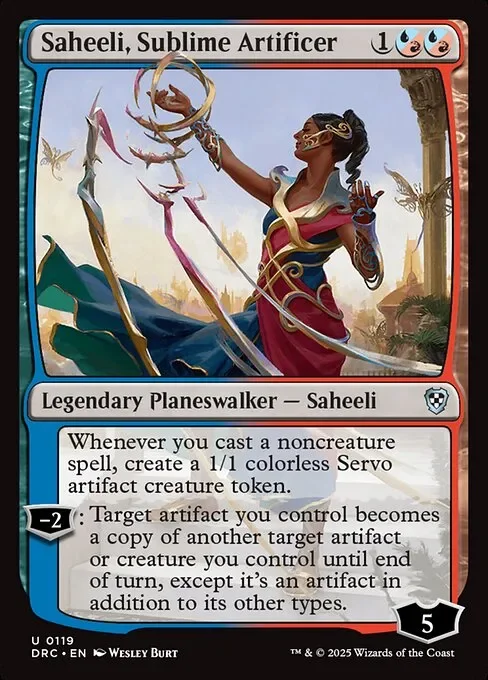
The deck also includes several independent token engines. Saheeli, Sublime Artificer produces Servo tokens alongside Saruman’s Army, while Invade the City, Mordor Muster, Eternal Skylord, and Vizier of the Scorpion reinforce the amass plan. Cards such as Gleaming Overseer and Mordor Trebuchet then improve the utility and combat relevance of the resulting board.
Saruman rewards the deck for casting spells across a broad range of mana values. Goblin Electromancer, Stormcatch Mentor, Thunderclap Drake, and Talisman of Creativity help establish efficient turns, while Seething Song, Thran Dynamo, and Gilded Lotus support the deck’s more expensive plays.
Sunbird’s Invocation provides an additional payoff for the deck’s larger spells, turning each substantial cast into another opportunity to generate value and trigger Saruman.
The deck uses a deep collection of filtering and draw effects to maintain consistent access to interaction and threats. Fact or Fiction, Sauron’s Ransom, Deep Analysis, and Frantic Search replenish resources, while Archmage Emeritus and Lofty Dreams reward the deck for continuing to cast spells.
Graveyard-based costs on Dig Through Time and Treasure Cruise allow the deck to transform previously used resources into efficient card advantage later in the game.
Saruman’s amass trigger creates a single Army that grows according to the mana value of each noncreature spell. Invade the City and Mordor Muster add further counters or establish an Army when the commander is unavailable.
Gleaming Overseer grants Army tokens menace and hexproof, while Vizier of the Scorpion adds deathtouch. Eternal Skylord provides evasion, giving the deck several ways to make its primary token increasingly difficult to block or remove.
The deck includes flexible answers across multiple permanent types. Abrade, Feed the Swarm, Rapid Hybridization, and Reality Shift provide targeted removal, while Negate and Crush Dissent protect key developments or interrupt opposing win conditions.
Chain Reaction and Volcanic Salvo provide broader battlefield control. Fresh Start, Fantastic Elasticity, and The Last Agni Kai supply additional tactical interaction without reducing the deck’s noncreature-spell density.
A sufficiently developed Army can end games through direct combat, particularly when supported by Whispersilk Cloak, Temur Battle Rage, or the evasion granted by Eternal Skylord. Port Razer creates additional combat opportunities, allowing an established battlefield to generate multiple attack steps.
The deck can also apply pressure through repeated spell damage from Guttersnipe, token production from Saheeli, Sublime Artificer, and board-wide value from Sunbird’s Invocation. These secondary engines prevent the deck from relying entirely on a single creature token.
The deck is constructed around a high concentration of noncreature spells so that nearly every draw can contribute to Saruman’s central engine. Card draw, removal, countermagic, acceleration, and token production all reinforce the same underlying plan rather than competing for deck space.
The mana base supports smooth Grixis sequencing through a balanced mixture of multicolor lands, basic lands, mana rocks, and color-fixing effects. Every inclusion serves a defined role in establishing the commander, sustaining spell volume, protecting the battlefield, or converting accumulated value into a controlled finish.
100-card singleton Commander deck, legal for EDH
All cards in Near Mint to Lightly Played condition
Professionally sleeved and ready to play
Built for consistent performance and strategic depth
Enjoy Grixis spellslinger decks with token-based battlefield development
Prefer interactive Commander strategies that balance control and combat
Appreciate cohesive builds with multiple overlapping value engines
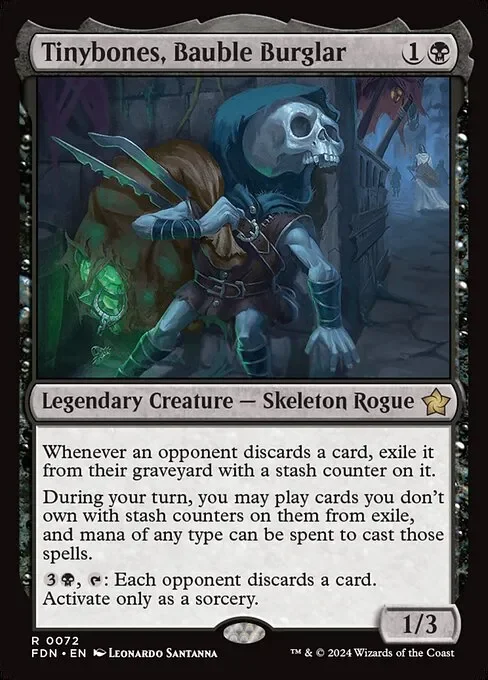
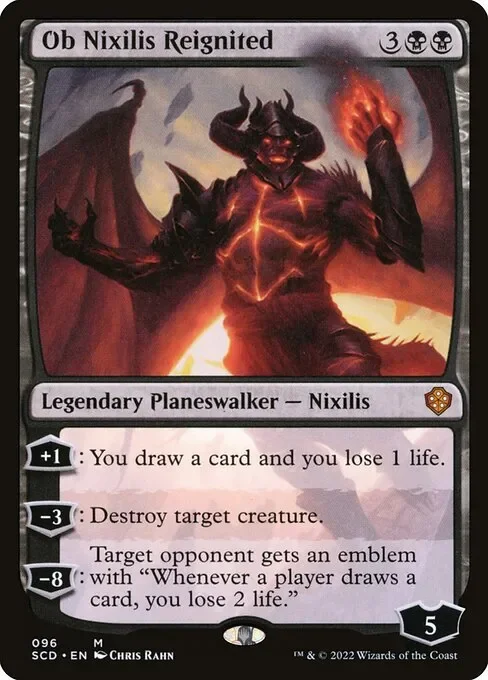
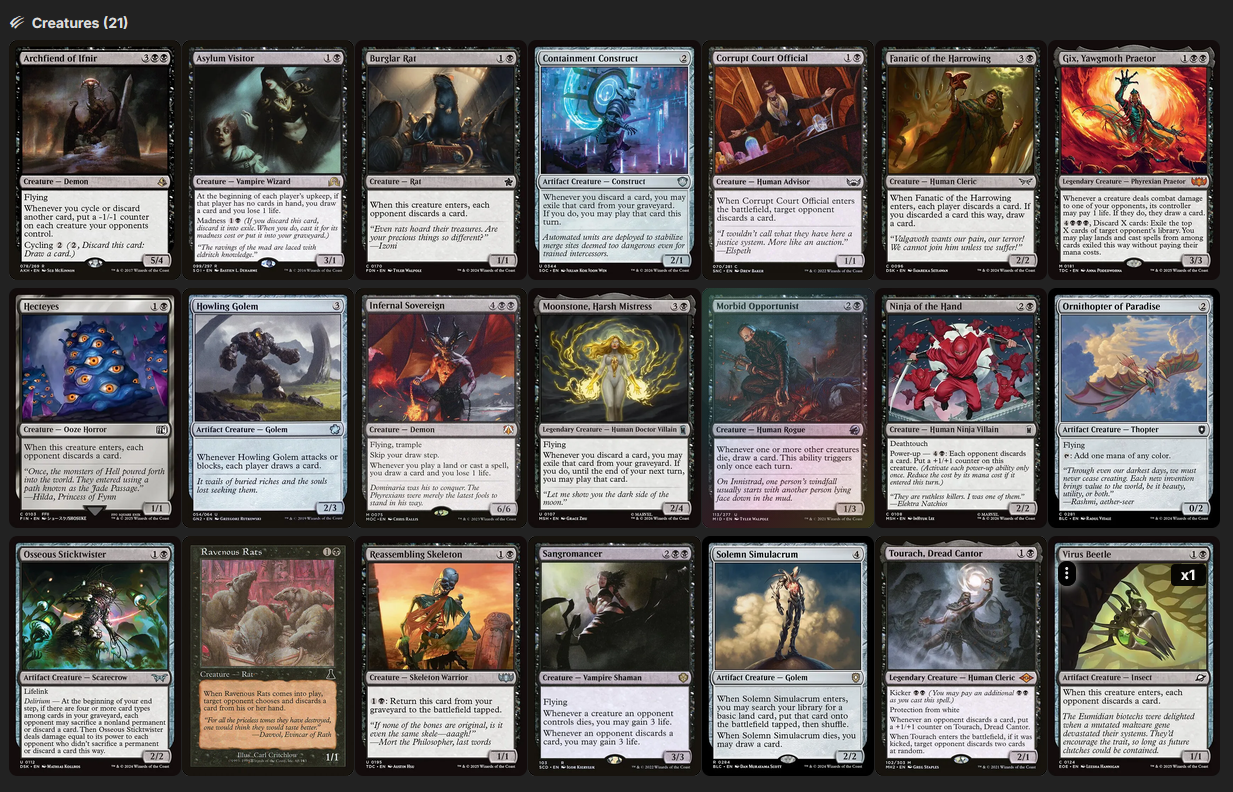
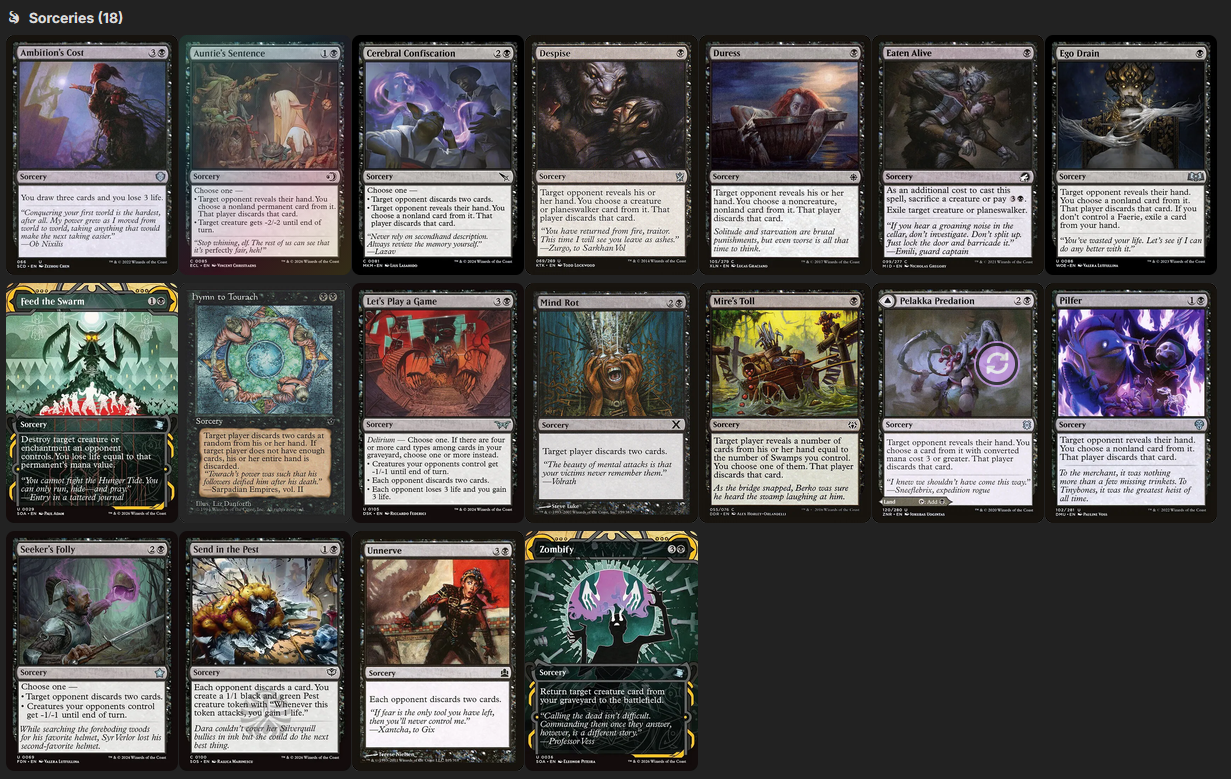
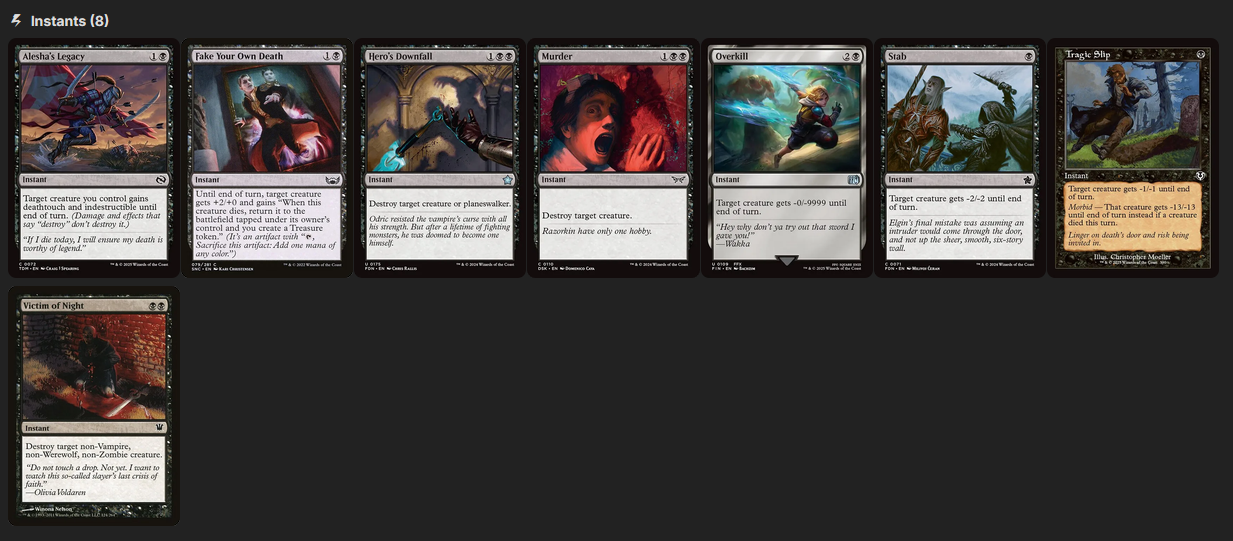
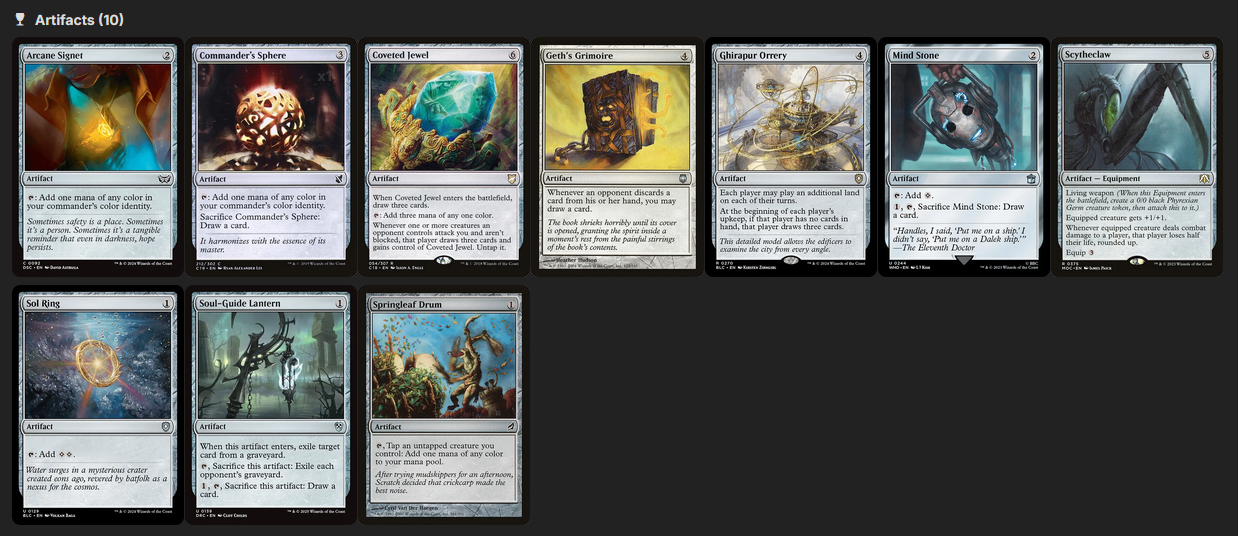
Tinybones, Bauble Burglar leads a mono-black discard strategy that converts opposing resources into an expanding pool of castable cards. The deck applies steady hand pressure through targeted disruption, repeatable discard creatures, and symmetrical resource effects, then uses Tinybones to appropriate the strongest cards opponents are forced to lose.
Rather than relying exclusively on emptying hands, the build combines discard with creature control, card advantage, graveyard interaction, and resilient value engines. This creates a measured control deck capable of limiting opposing options while continuing to develop its own board.
The deck operates as a discard-control and resource-theft hybrid. Burglar Rat, Virus Beetle, Corrupt Court Official, Fanatic of the Harrowing, and Ravenous Rats establish early pressure while adding bodies that can later support sacrifice effects, Springleaf Drum, or defensive play.
Larger discard spells such as Hymn to Tourach, Cerebral Confiscation, Mind Rot, Unnerve, and Let’s Play a Game create multiple Tinybones triggers while reducing opponents’ ability to recover. Geth’s Grimoire turns these effects into direct card advantage, while Asylum Visitor, Gix, Yawgmoth Praetor, Greed, and Morbid Opportunist provide additional draw engines.
Duress, Despise, Pilfer, Mire’s Toll, and Ego Drain provide focused hand disruption, allowing the deck to remove relevant interaction before committing its more important permanents. Multi-card discard effects then pressure the entire table and stock Tinybones with opposing spells.
Hecteyes and Howling Golem introduce repeatable discard sources, while Tourach, Dread Cantor develops into a meaningful threat as opponents lose cards.
Tinybones exiles cards discarded from opposing graveyards with stash counters, preserving them as resources for later turns. Because mana of any type may be spent to cast these cards, the deck can repurpose removal, ramp, creatures, or finishers from across the table without altering its mono-black mana base.
Moonstone, Harsh Mistress provides a complementary theft effect, allowing discarded nonland cards to be played while also granting an additional card draw when opponents lose cards from hand.
Geth’s Grimoire is one of the deck’s central payoff pieces, drawing cards whenever opponents discard. Sangromancer converts the same discard plan into life gain, helping offset Greed, Ambition’s Cost, Gix, and Infernal Sovereign.
Ghirapur Orrery supports additional land development and can refill empty hands, creating a controlled tension between resource recovery and the deck’s ability to strip those new cards away again. Coveted Jewel provides a substantial mana and card advantage burst while introducing an interactive combat objective.
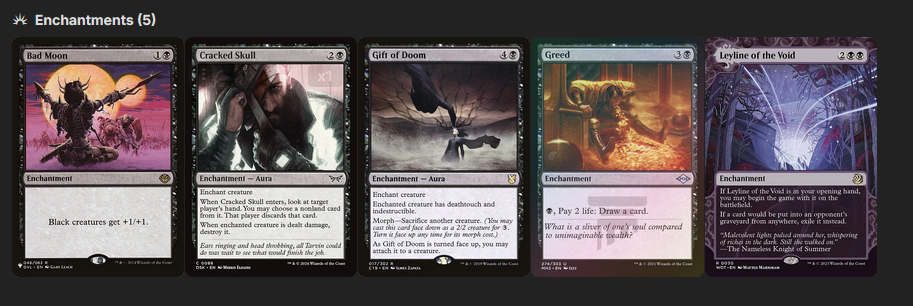
Hero’s Downfall, Murder, Victim of Night, Overkill, Tragic Slip, Stab, and Feed the Swarm provide a broad removal suite. Eaten Alive and Gift of Doom convert disposable creatures into efficient answers, while Cracked Skull offers repeatable hand information and a delayed removal option.
Reassembling Skeleton supplies a renewable sacrifice body, and Fake Your Own Death protects key creatures while generating additional mana value. Zombify restores an important threat or engine after removal.
Leyline of the Void and Soul-Guide Lantern provide graveyard suppression when opposing recursion presents a greater threat than the immediate value of Tinybones’ stash ability.
The deck wins by converting prolonged resource denial into an overwhelming difference in available cards. Tinybones and Moonstone allow opposing threats to be used against their original owners, while Archfiend of Ifnir can steadily reduce opposing creature boards through the deck’s own discard effects.
Scytheclaw pressures life totals through combat, Tourach develops into a scalable attacker, and Infernal Sovereign provides a substantial evasive threat with additional card access. Ob Nixilis Reignited reinforces the control plan through removal and card draw, with its emblem presenting a durable late-game win condition.
This deck is constructed around maintaining a consistent relationship between discard effects and tangible strategic rewards. Early hand disruption protects the deck’s development, creature-based discard establishes board presence, and repeatable draw engines ensure the strategy does not exhaust its own resources.
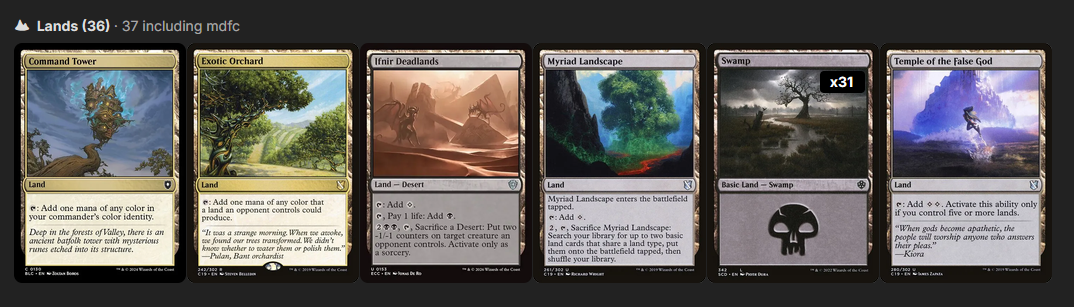
The mana base prioritizes reliable mono-black sequencing, supported by Sol Ring, Arcane Signet, Mind Stone, Ornithopter of Paradise, Springleaf Drum, Commander's Sphere, and Solemn Simulacrum. Each inclusion contributes to disruption, resource conversion, board control, recovery, or closing pressure, producing a cohesive Commander deck with multiple overlapping lines of play.
100-card singleton Commander deck, legal for EDH
All cards in Near Mint to Lightly Played condition
Professionally sleeved and ready to play
Built for consistent performance and strategic depth
Enjoy mono-black discard strategies with resource theft and incremental control
Prefer interactive Commander decks that restrict opposing options without relying on a single win condition
Appreciate builds that combine graveyard management, card advantage, and deliberate hand disruption
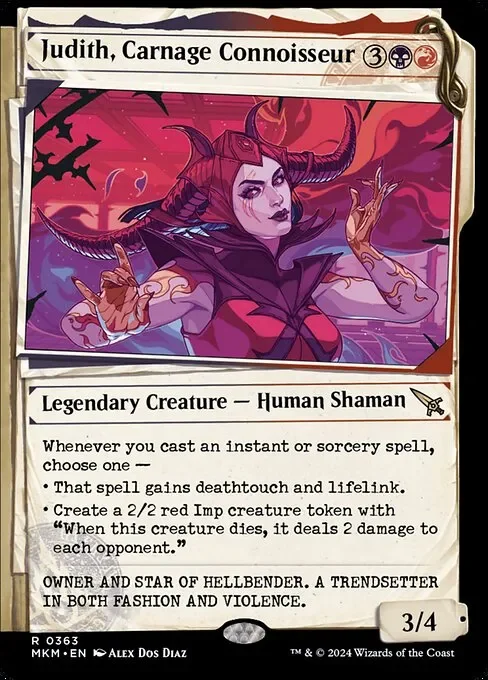
Judith, Carnage Connoisseur leads a Rakdos Commander deck built around the interaction between instant and sorcery spells, lifelink, deathtouch, sacrifice value, and incremental damage. Judith turns damage-based spells into highly efficient removal and life-gain engines, allowing cards like Fiery Confluence, Chain Reaction, Anger of the Gods, Fire Covenant, and Dual Shot to control the battlefield while generating substantial life swings. The deck blends spellslinger pressure with aristocrats-style sacrifice lines, using token production, death triggers, and recursive value to maintain a layered board presence.
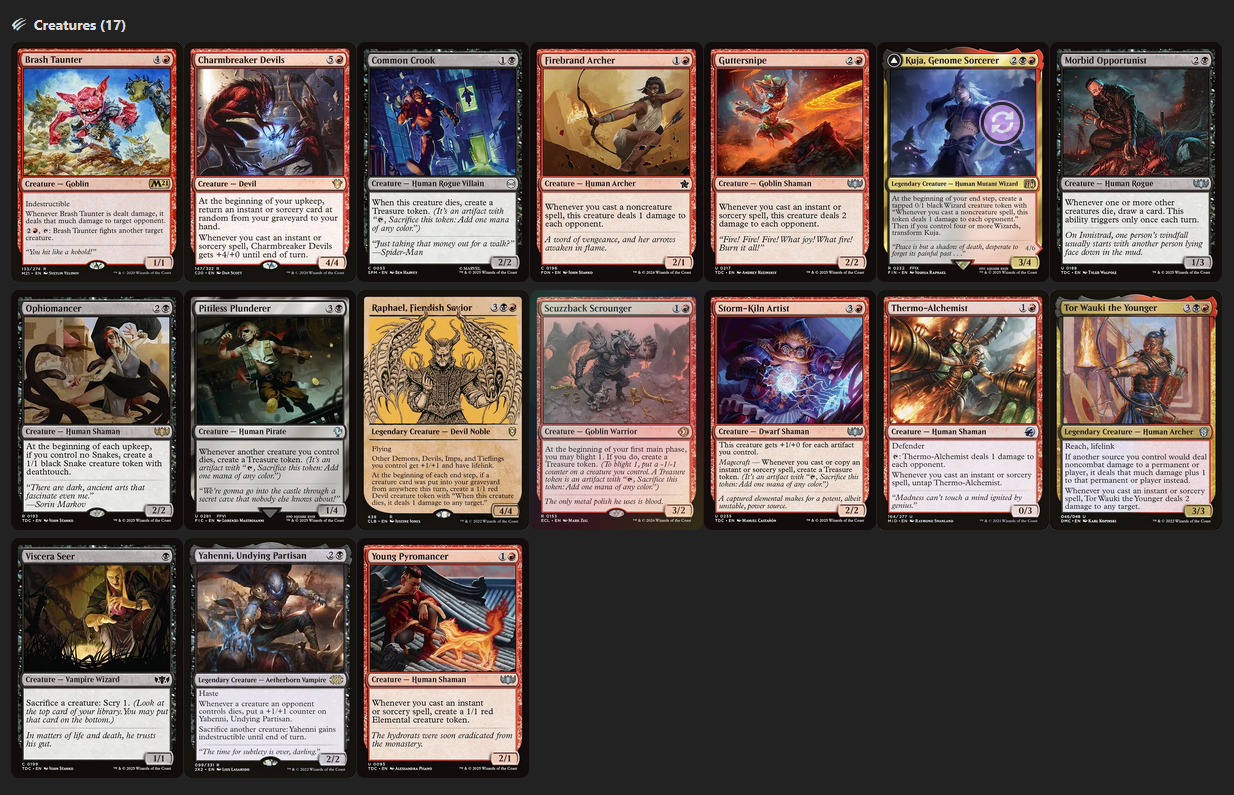
This Flagship build is designed as a Rakdos Spellslinger Aristocrats shell, combining efficient removal, sacrifice outlets, token engines, and damage amplifiers. Guttersnipe, Firebrand Archer, Thermo-Alchemist, Tor Wauki the Younger, and Raphael, Fiendish Savior reward repeated spellcasting, while Young Pyromancer, Ophiomancer, and Judith herself provide expendable bodies that support draw, ramp, sacrifice, and pressure. The result is a cohesive midrange deck that can play defensively through lifelinking removal, then transition into a decisive damage-based finish.
Judith’s first mode gives instant and sorcery spells deathtouch and lifelink, dramatically improving the efficiency of low-damage sweepers and pingers. Effects such as Boiling Earth, Barrage of Boulders, Dual Shot, and Fiery Confluence become precision removal tools when Judith is in play, while larger damage spells like Chain Reaction and Fire Covenant can create major life-gain swings.
The second mode creates 2/2 Imp tokens with death triggers, giving the deck a steady supply of sacrifice fodder and chip damage. These tokens work naturally with Viscera Seer, Yahenni, Undying Partisan, Skullclamp, Village Rites, Deadly Dispute, Costly Plunder, Corrupted Conviction, Final Vengeance, and Worthy Cost, turning creatures into cards, mana, removal, and opponent-facing damage.
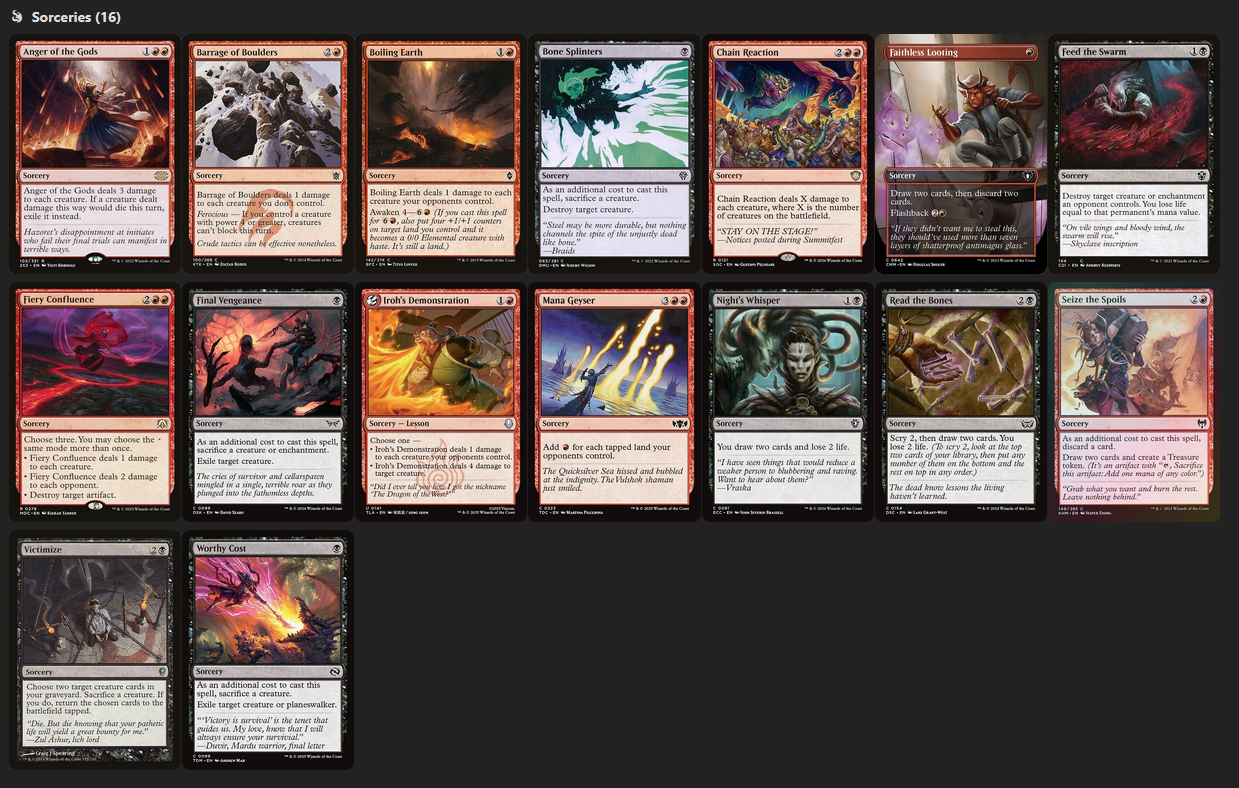
The deck’s primary control package is built around damage-based interaction that becomes far more efficient with Judith on the battlefield. Anger of the Gods, Chain Reaction, Fiery Confluence, Boiling Earth, Barrage of Boulders, and Dual Shot can clear creatures while gaining life through Judith’s lifelink-granting ability. Fire Covenant is especially effective in this structure, allowing targeted damage distribution that becomes both removal and a major life-buffer when Judith is active.
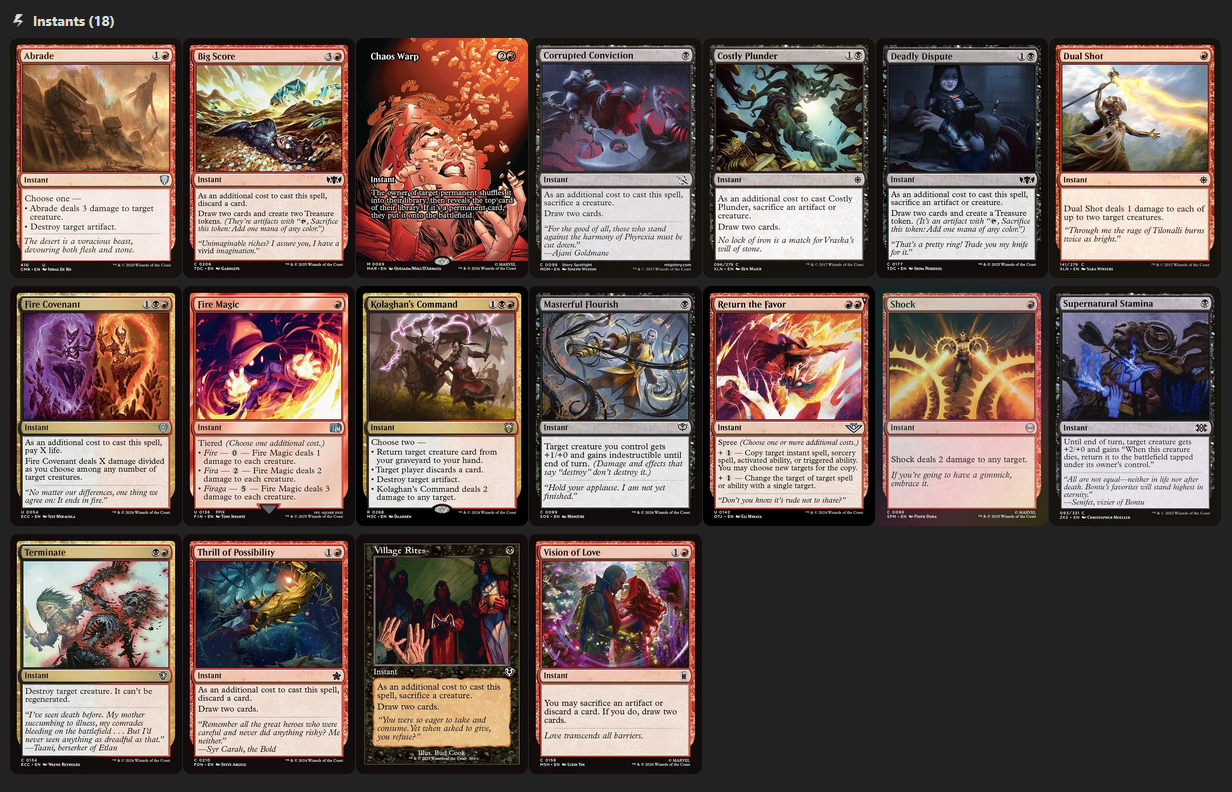
Spot interaction is also carefully supported through Abrade, Terminate, Chaos Warp, Feed the Swarm, Kolaghan’s Command, Shock, and Bone Splinters. These cards give the deck flexible answers across creatures, artifacts, enchantments, and problematic permanents.
Judith’s Imp tokens provide recurring material for the deck’s sacrifice package. Viscera Seer offers free sacrifice utility and card selection, while Yahenni, Undying Partisan gives the deck a resilient threat that can protect itself through sacrifice. Skullclamp converts small creatures into repeatable card advantage, and Morbid Opportunist rewards the steady flow of creatures dying throughout the game.
The draw-and-sacrifice suite is deliberately dense. Village Rites, Deadly Dispute, Costly Plunder, Corrupted Conviction, Final Vengeance, and Worthy Cost ensure that expendable tokens and utility creatures remain useful at every stage of the game. Pitiless Plunderer turns those deaths into Treasure, helping the deck chain spells and recover quickly after removal-heavy turns.
The deck applies consistent pressure through noncombat damage engines. Guttersnipe, Firebrand Archer, Thermo-Alchemist, and Tor Wauki the Younger punish opponents for each instant and sorcery cast, allowing the deck to advance its game plan even while drawing cards, removing creatures, or setting up sacrifice lines.
Raphael, Fiendish Savior gives Demons, Devils, Imps, and Tieflings lifelink, improving Judith’s Imp tokens and supporting the deck’s broader life-swing structure. Kuja, Genome Sorcerer adds another layer of pressure by creating a board-wide damage event when set up properly, while Brash Taunter provides a durable damage-reflection threat that pairs well with the deck’s sweepers and damage spells.
The deck is built to keep cards and mana moving. Faithless Looting, Night’s Whisper, Read the Bones, Thrill of Possibility, Seize the Spoils, Big Score, and Theater of Horrors provide steady card access and filtering. These pieces help keep the deck from stalling after early interaction and ensure that spell density remains high throughout the game.
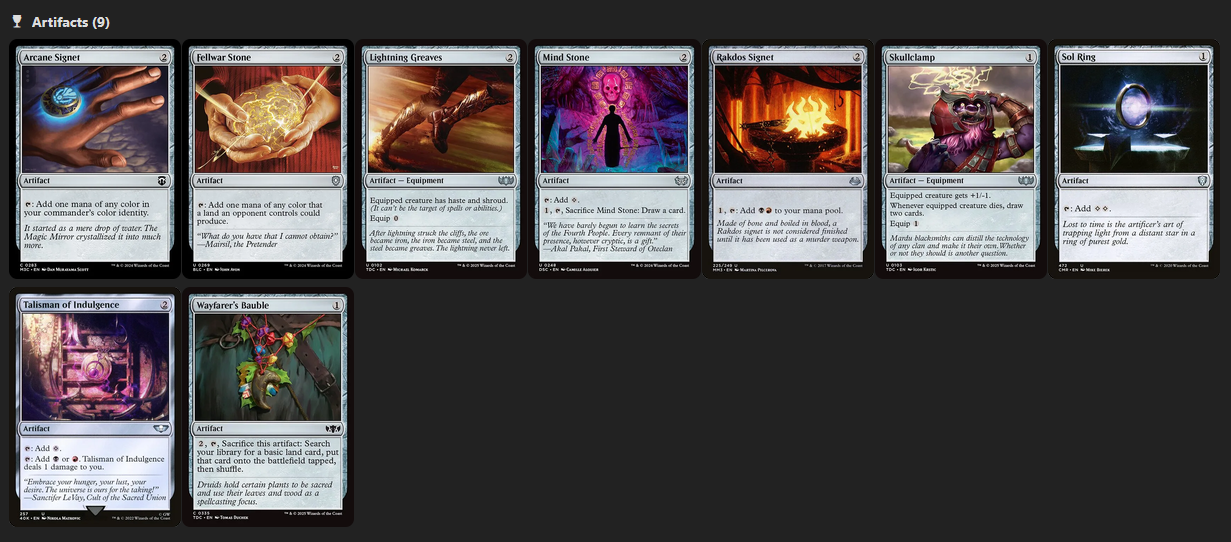
Mana production is supported by Sol Ring, Arcane Signet, Rakdos Signet, Talisman of Indulgence, Fellwar Stone, Mind Stone, and Wayfarer’s Bauble. Mana Geyser and Storm-Kiln Artist give the deck explosive turns, especially when paired with multiple cheap spells, sacrifice draw effects, or damage payoffs.
The deck includes several tools to rebuild after removal or regain key value pieces. Victimize can return two important creatures at once, often restoring a sacrifice engine, damage payoff, or token generator. Supernatural Stamina protects a key creature while also creating a death-and-return sequence, and Kolaghan’s Command provides flexible recursion alongside removal and artifact interaction.
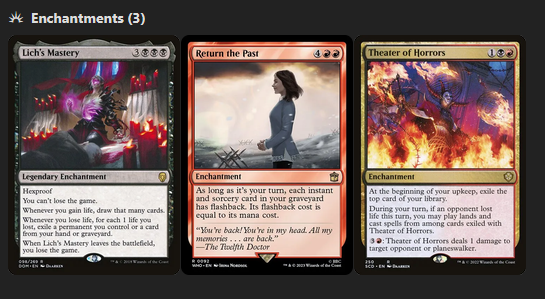
Charmbreaker Devils and Return the Past support the deck’s instant-and-sorcery plan by allowing key spells to be reused. Lich’s Mastery adds a high-risk, high-reward late-game engine that can convert Judith-enhanced lifegain into substantial card advantage when carefully protected.
This deck closes games through layered damage rather than relying on a single finish. Repeated spellcasting with Guttersnipe, Firebrand Archer, Thermo-Alchemist, and Tor Wauki the Younger steadily reduces opposing life totals. Judith’s Imp tokens add death-trigger damage, while Raphael, Fiendish Savior and lifelink-enhanced spells keep the deck stabilized during longer exchanges.
Large damage turns can come from Fiery Confluence, Chain Reaction, Fire Covenant, Mana Geyser, Iroh’s Demonstration, and Return the Favor. With enough mana and the right board state, the deck can shift from controlling the table to ending the game through repeated spell triggers, sacrifice damage, and amplified noncombat pressure.
This Judith build is constructed to maximize the commander’s unusual ability to turn modest damage spells into efficient removal and meaningful lifegain. Every card supports one or more core functions: casting impactful instants and sorceries, generating sacrifice material, converting creatures into cards or mana, or applying pressure through noncombat damage.
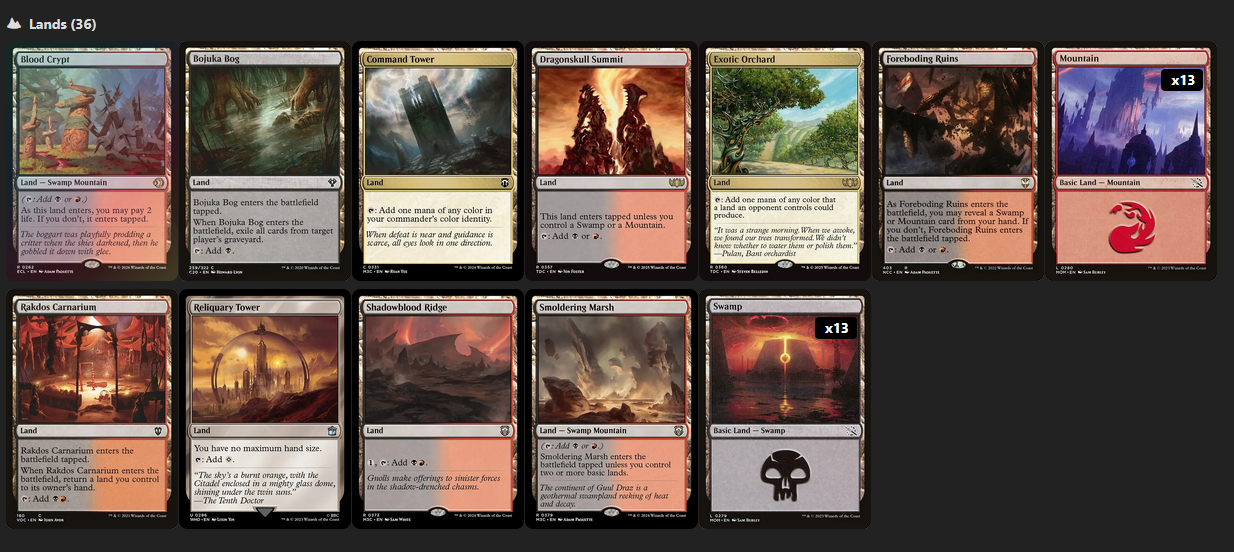
The mana base is balanced for consistent Rakdos sequencing, with dual lands, artifact ramp, Treasure generation, and utility lands supporting both early development and larger late-game turns. The deck is tuned to operate as a cohesive midrange engine, capable of controlling creature-heavy boards, grinding through removal, and converting small advantages into decisive damage.
100-card singleton Commander deck, legal for EDH
All cards in Near Mint to Lightly Played condition
Professionally sleeved and ready to play
Built for consistent performance and strategic depth
Enjoy Rakdos Commander decks with spellslinger pressure and aristocrats-style sacrifice engines
Prefer damage-based control decks that convert removal into life gain and board advantage
Appreciate cohesive, professionally constructed decks with layered synergy and tactical flexibility
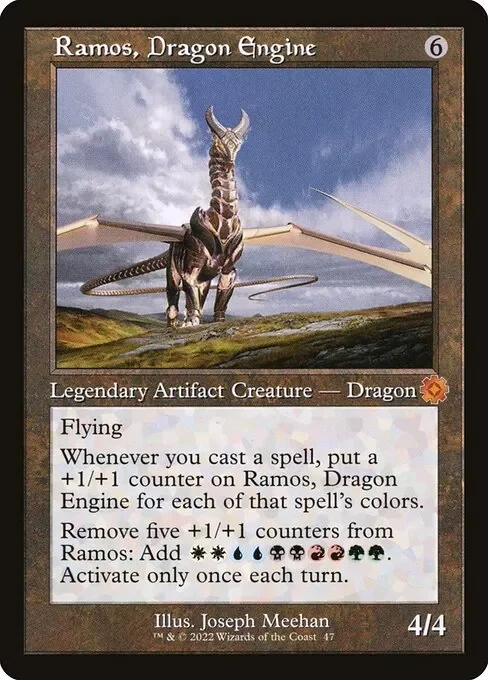
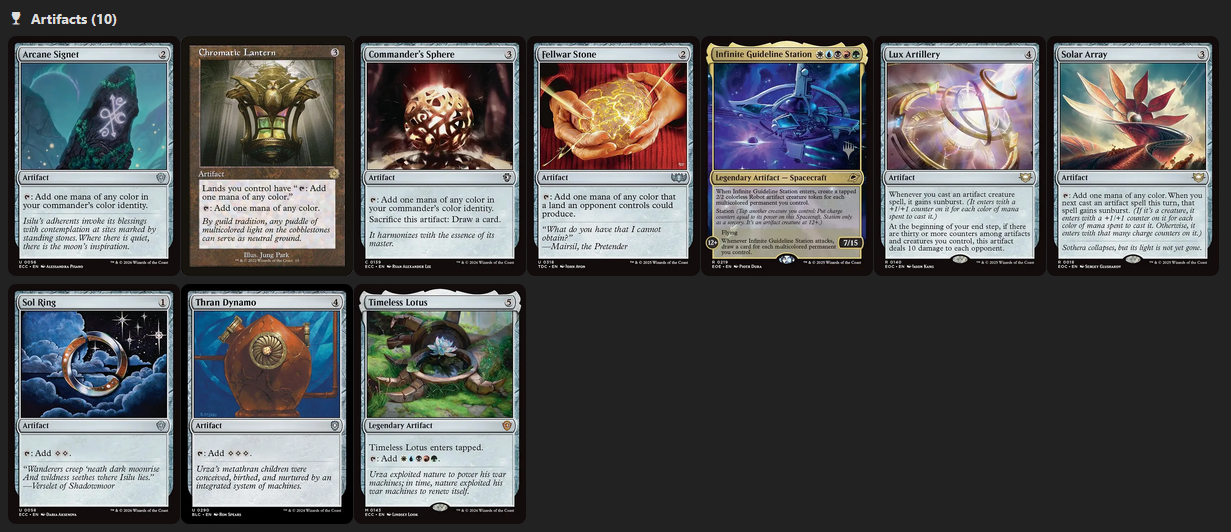
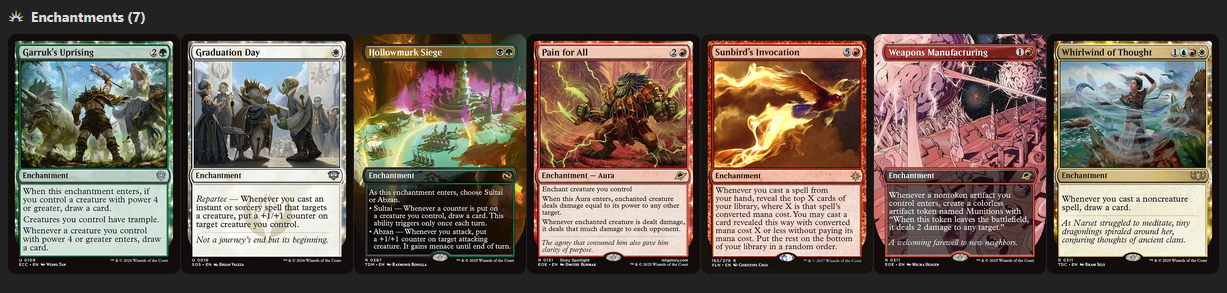
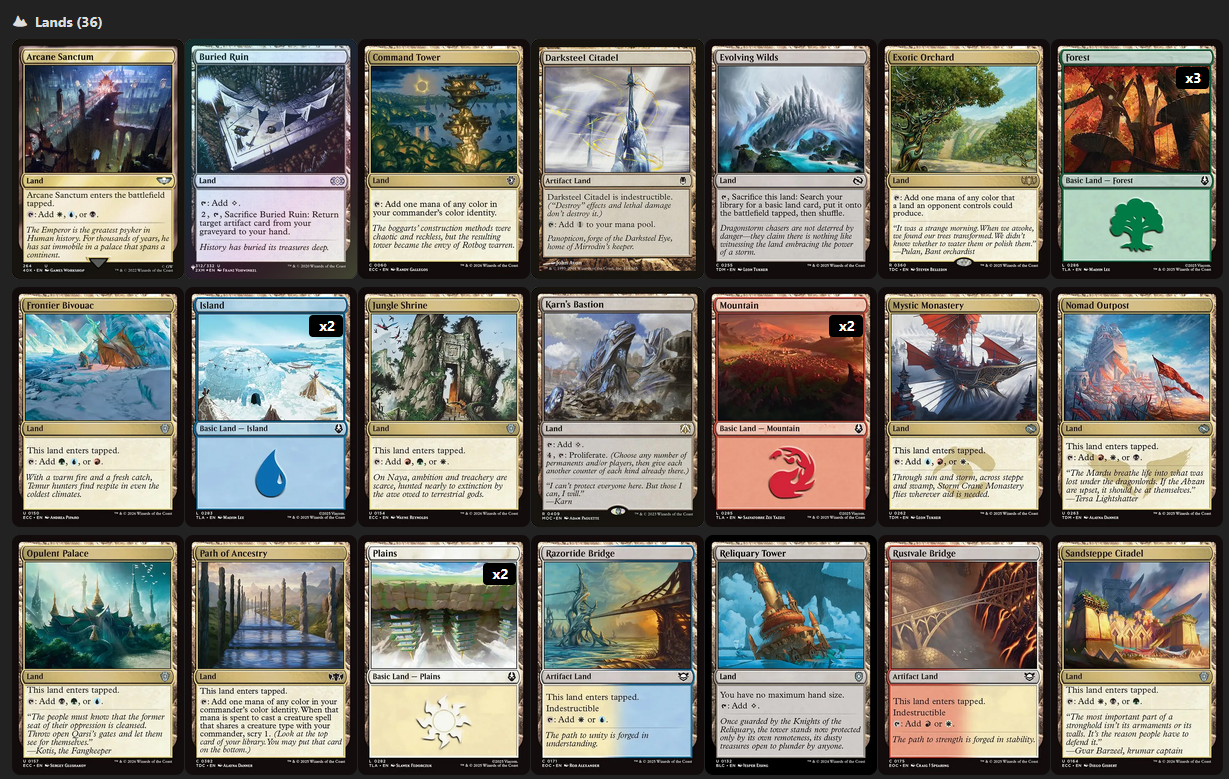
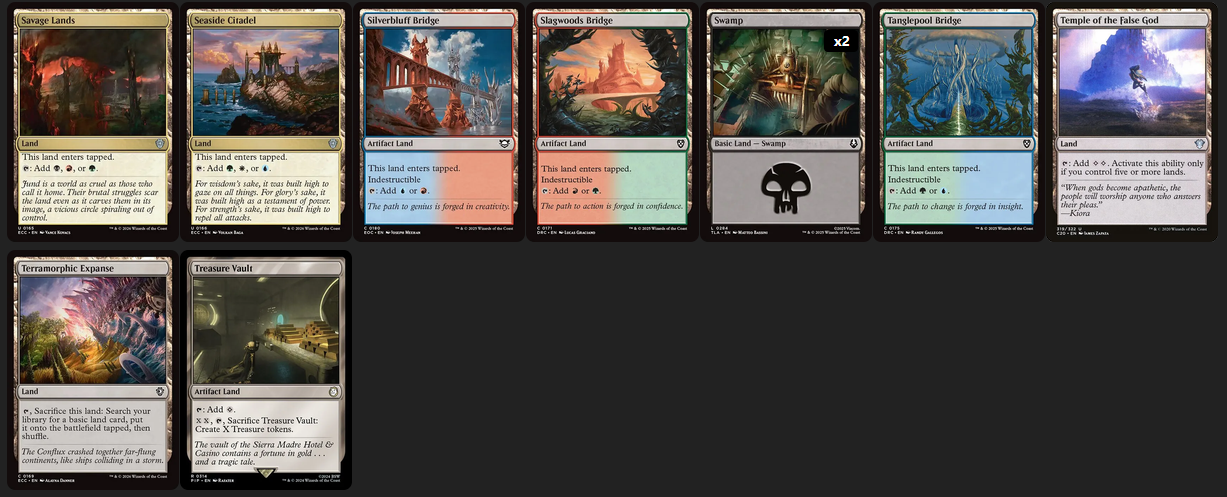
This Flagship Commander deck is built around Ramos, Dragon Engine as a five-color mana engine that rewards multicolored sequencing, counter accumulation, and explosive midgame turns. The list blends +1/+1 counter scaling, mutate value, proliferate effects, and high-impact multicolor payoffs into a cohesive shell that turns incremental development into decisive board presence. Ramos functions as both the central accelerator and a credible combat threat, allowing the deck to pivot between value generation, large spell deployment, and commander-focused pressure.
Deck Overview
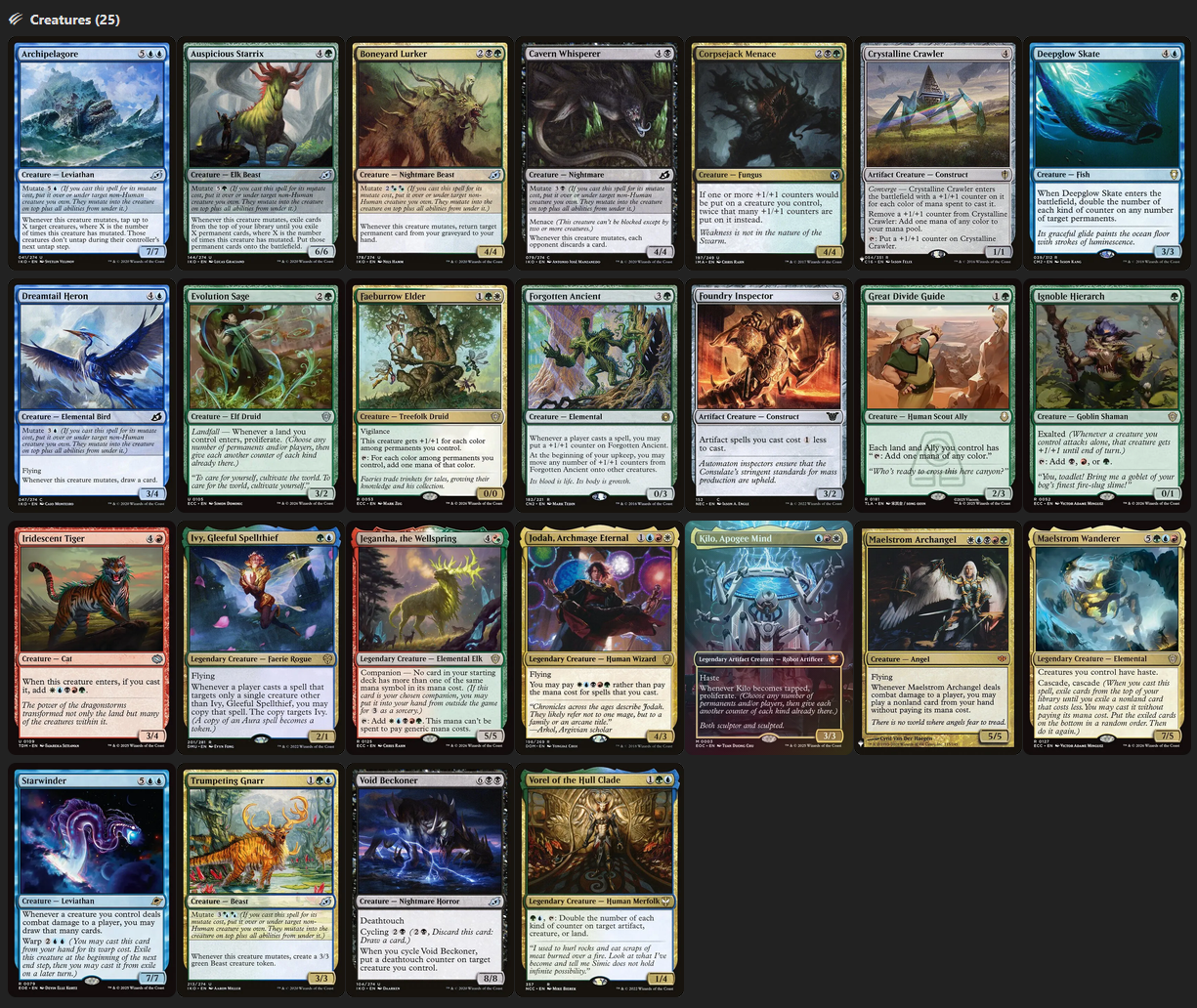
This build operates as a Five-Color Counters and Cascade Value Engine with a strong artifact and mutate subtheme. Cards like Corpsejack Menace, Forgotten Ancient, Evolution Sage, Deepglow Skate, and Vorel of the Hull Clade amplify the counter strategy, while Maelstrom Wanderer, Sunbird’s Invocation, and Ruinous Ultimatum give the deck substantial top-end impact. The mutate package, including Auspicious Starrix, Archipelagore, Boneyard Lurker, Cavern Whisperer, Dreamtail Heron, and Trumpeting Gnarr, provides layered value while also contributing multicolored spell casts that naturally fuel Ramos.
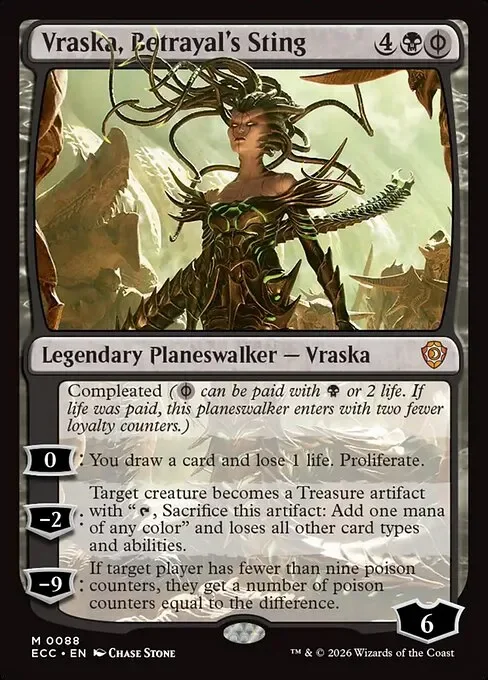
Ramos rewards every multicolored spell with +1/+1 counters, and this deck is designed to compound that advantage quickly. Corpsejack Menace increases the rate at which counters accumulate, while Deepglow Skate and Vorel of the Hull Clade can rapidly convert Ramos or other key permanents into major threats. Evolution Sage, Karn’s Bastion, and Vraska, Betrayal’s Sting add repeatable proliferate lines that support Ramos, Crystalline Crawler, Lux Artillery, and other counter-based permanents throughout the game.
The mana base is built to support smooth five-color sequencing through tri-lands, artifact fixing, and versatile ramp. Chromatic Lantern, Arcane Signet, Fellwar Stone, Commander’s Sphere, Sol Ring, Thran Dynamo, Timeless Lotus, and Solar Array help stabilize development while enabling large multicolor turns. Faeburrow Elder, Ignoble Hierarch, Cultivate, Rampant Growth, and Growth Spiral further support the deck’s ability to cast multicolored spells consistently and activate Ramos at meaningful points in the game.
The mutate package gives the deck a flexible value engine that ties directly into the commander’s color-reward structure. Auspicious Starrix can generate major battlefield advantage, Boneyard Lurker provides recursion, Cavern Whisperer pressures opposing hands, and Dreamtail Heron adds card flow. Trumpeting Gnarr and Archipelagore extend the board while keeping the deck’s creature plan relevant, allowing the list to apply pressure without relying solely on Ramos.
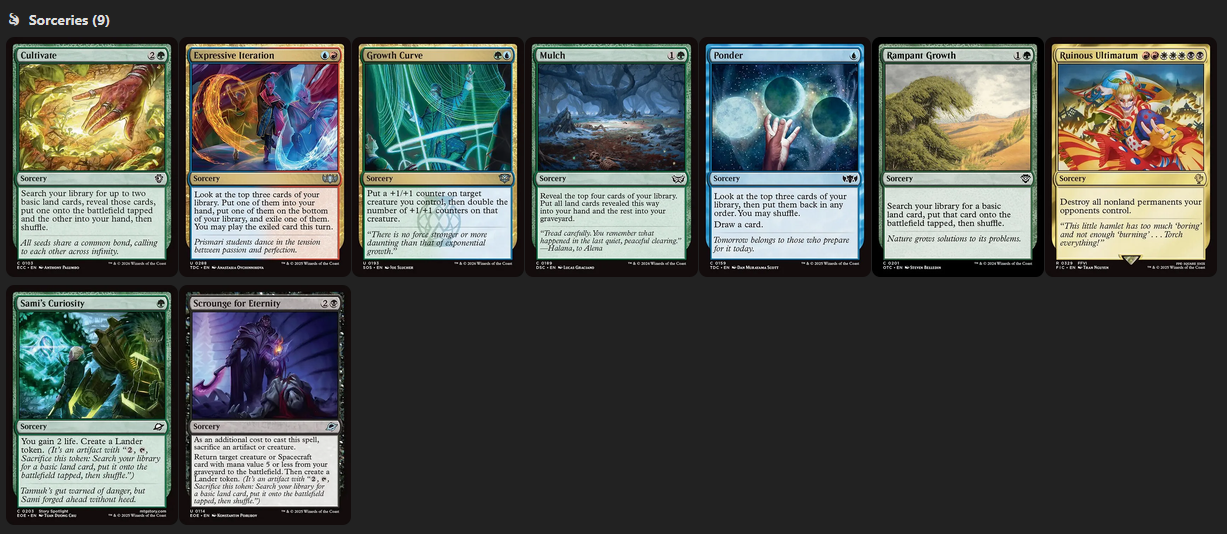
The deck includes several ways to keep cards moving while rewarding noncreature and multicolored spell sequencing. Whirlwind of Thought, Sphinx’s Revelation, Ponder, Expressive Iteration, Mulch, and Sami’s Curiosity provide selection, draw, or resource conversion at different stages of the game. Sunbird’s Invocation and Maelstrom Wanderer give the deck powerful cascade-style momentum, turning expensive spells into layered advantage and helping the deck rebuild or press ahead after interaction.
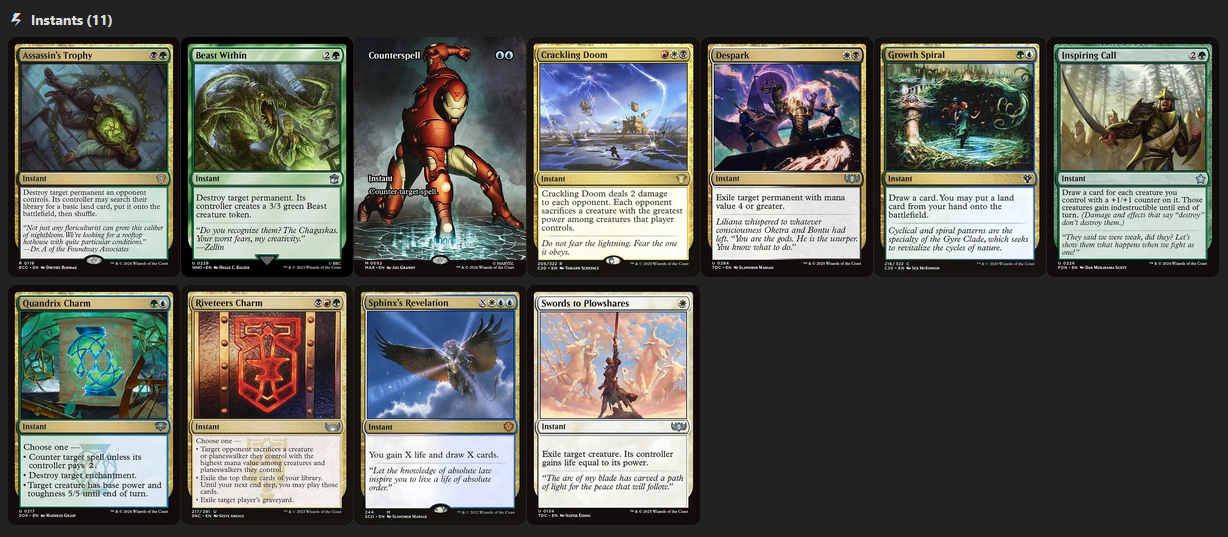
This build includes a broad interaction suite suited to a five-color Commander shell. Assassin’s Trophy, Beast Within, Despark, Swords to Plowshares, Counterspell, Quandrix Charm, Riveteers Charm, and Crackling Doom allow the deck to answer a wide range of threats. Ruinous Ultimatum serves as a major reset that preserves the deck’s own board while clearing opposing permanents, and Inspiring Call protects developed creatures while converting counters into card advantage.
The deck closes by converting accumulated counters, mana, and spell advantage into overwhelming board states. Ramos, Dragon Engine can generate ten mana in a single activation, enabling high-impact turns with Ruinous Ultimatum, Maelstrom Wanderer, Sunbird’s Invocation, Sphinx’s Revelation, or multiple spells chained together. Lux Artillery, Infinite Guideline Station, Maelstrom Archangel, Starwinder, and large mutate creatures add additional pressure points, giving the deck several ways to transform resource advantage into a finished game.
Build Philosophy
This Flagship build is designed around synergy density, flexible sequencing, and five-color cohesion. Every inclusion supports the deck’s core structure: casting multicolored spells, growing Ramos, multiplying counters, and leveraging those resources into high-impact turns. The mana base is constructed to support broad color access, while the ramp package, proliferate effects, and interaction suite allow the deck to operate with consistency across varied Commander tables.
Technical Details
100-card singleton Commander deck, legal for EDH
All cards in Near Mint to Lightly Played condition
Professionally sleeved and ready to play
Built for consistent performance and strategic depth
Ideal For Players Who:
Enjoy five-color Commander decks with layered counter synergy and explosive mana development
Prefer multicolor value engines that combine mutate, proliferate, cascade, and artifact support
Appreciate cohesive, professionally constructed decks with flexible paths to victory
Ramos, Dragon Engine Five-Color Counters Commander Deck
Five-color Commander deck built around Ramos, Dragon Engine, focusing on +1/+1 counters, proliferate, mutate value, and multicolor spell sequencing for EDH pods.
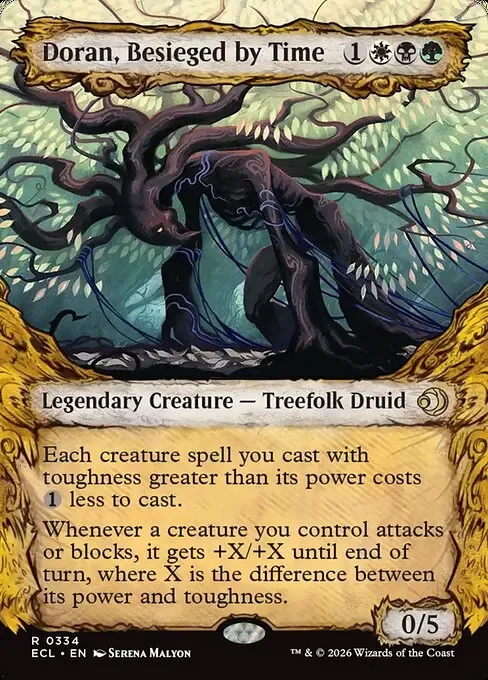
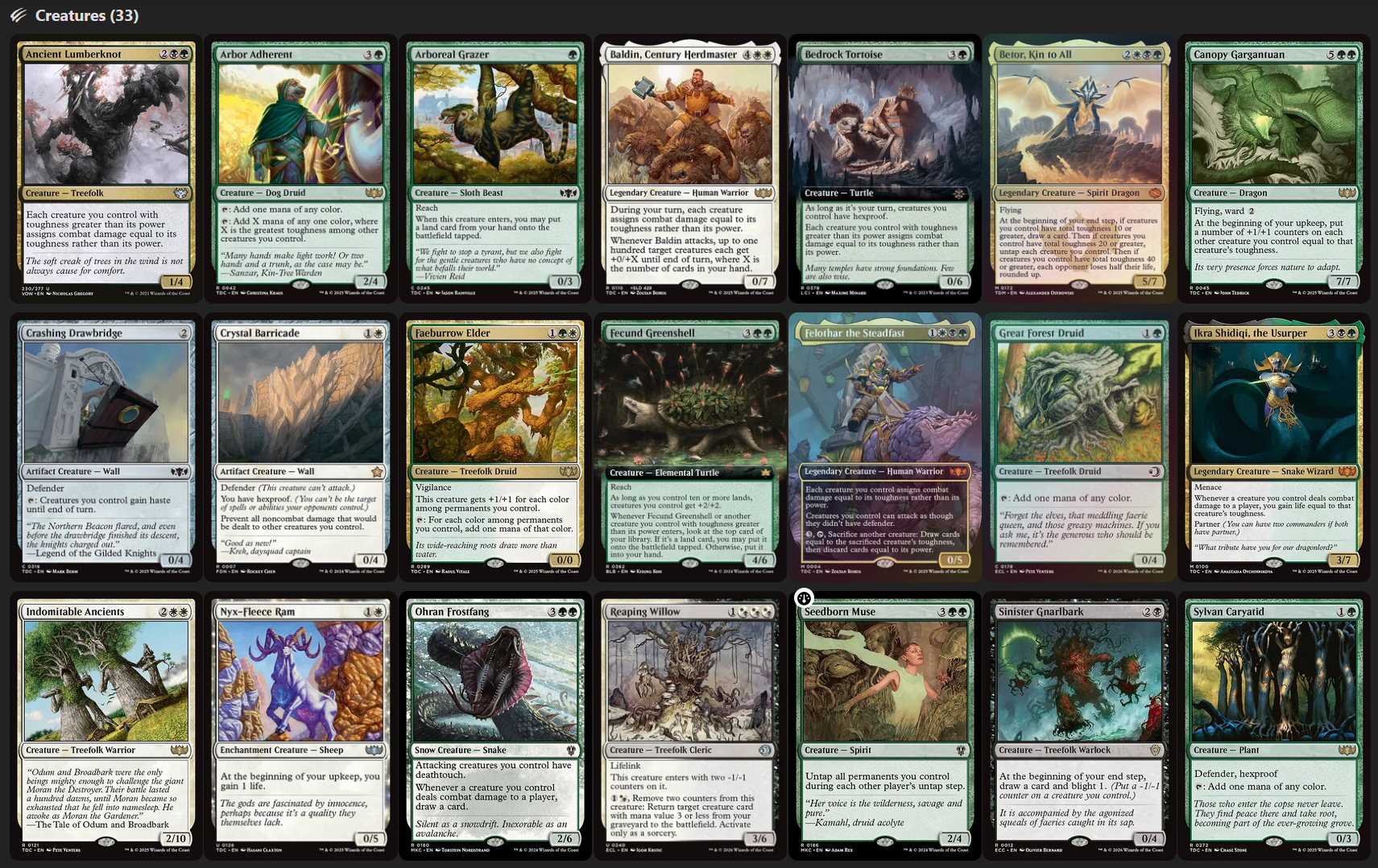
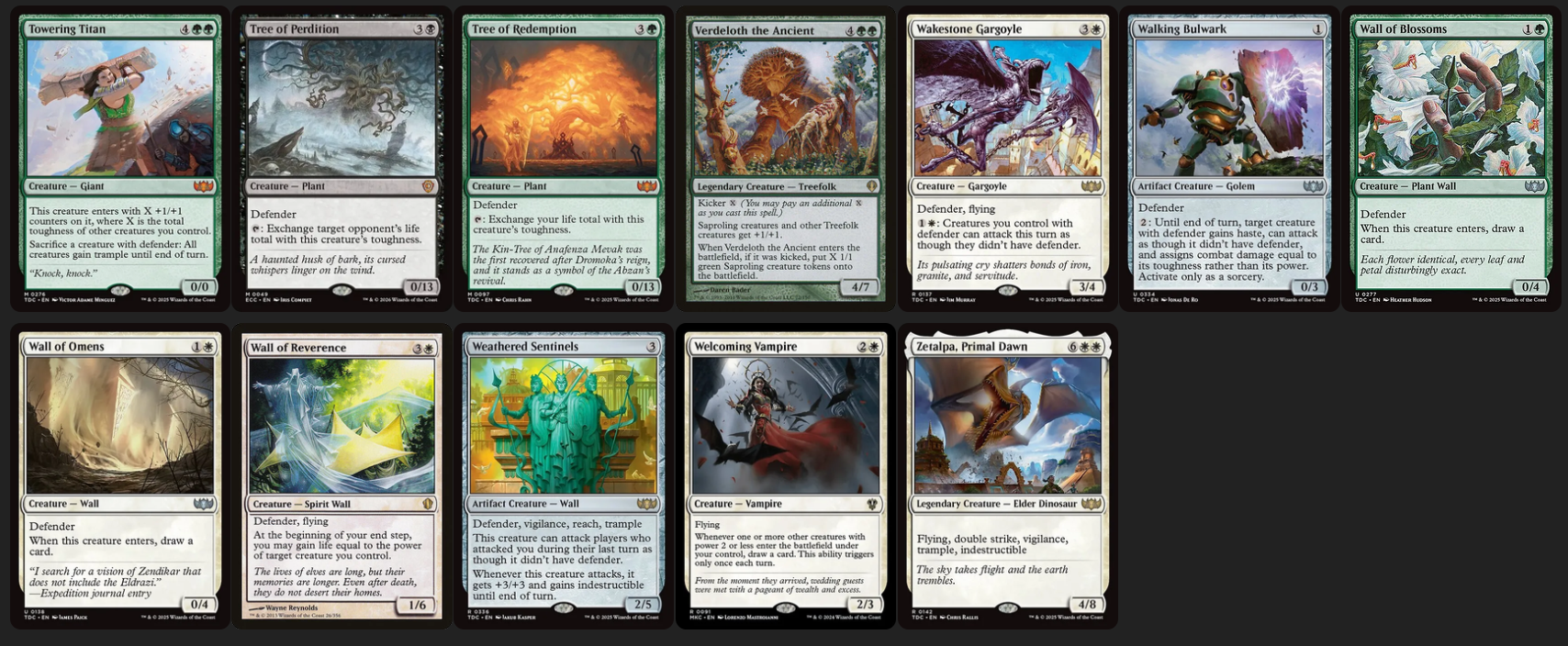
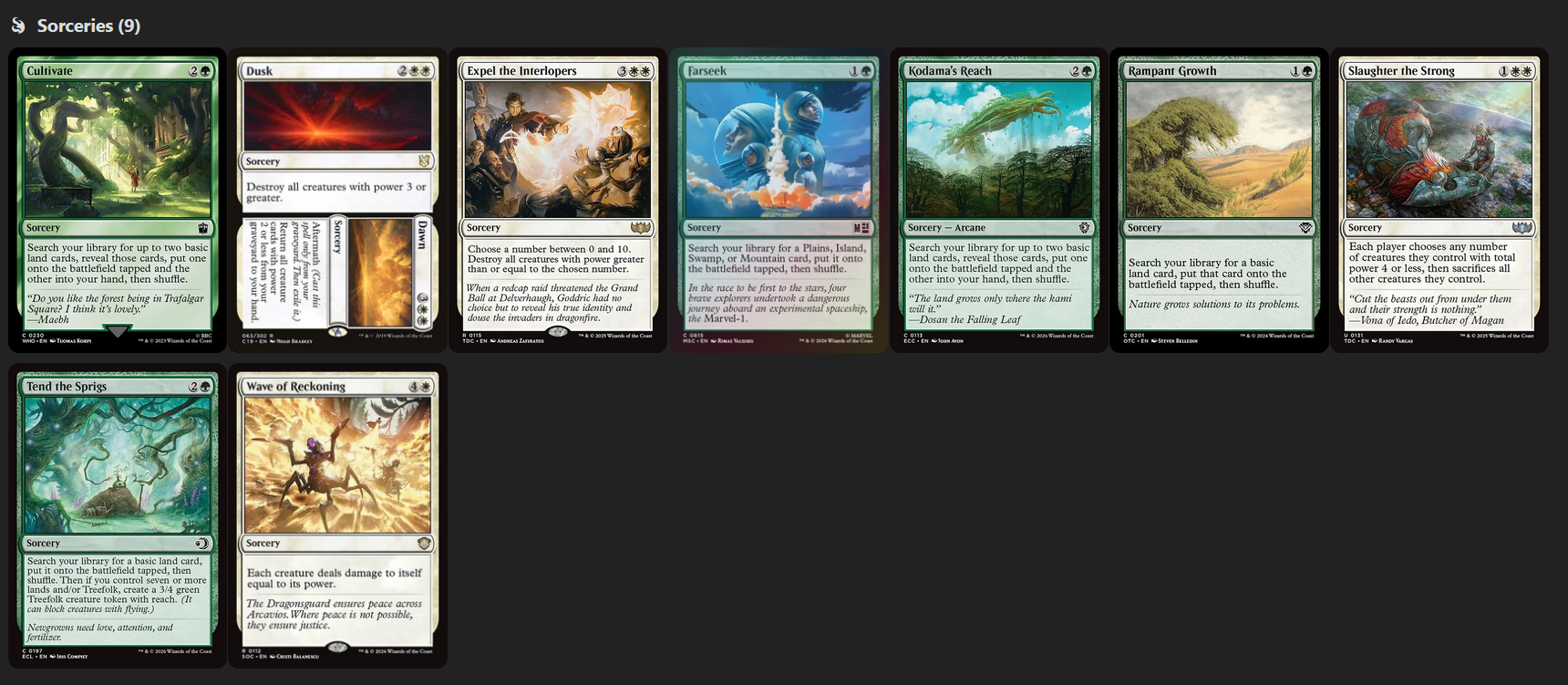
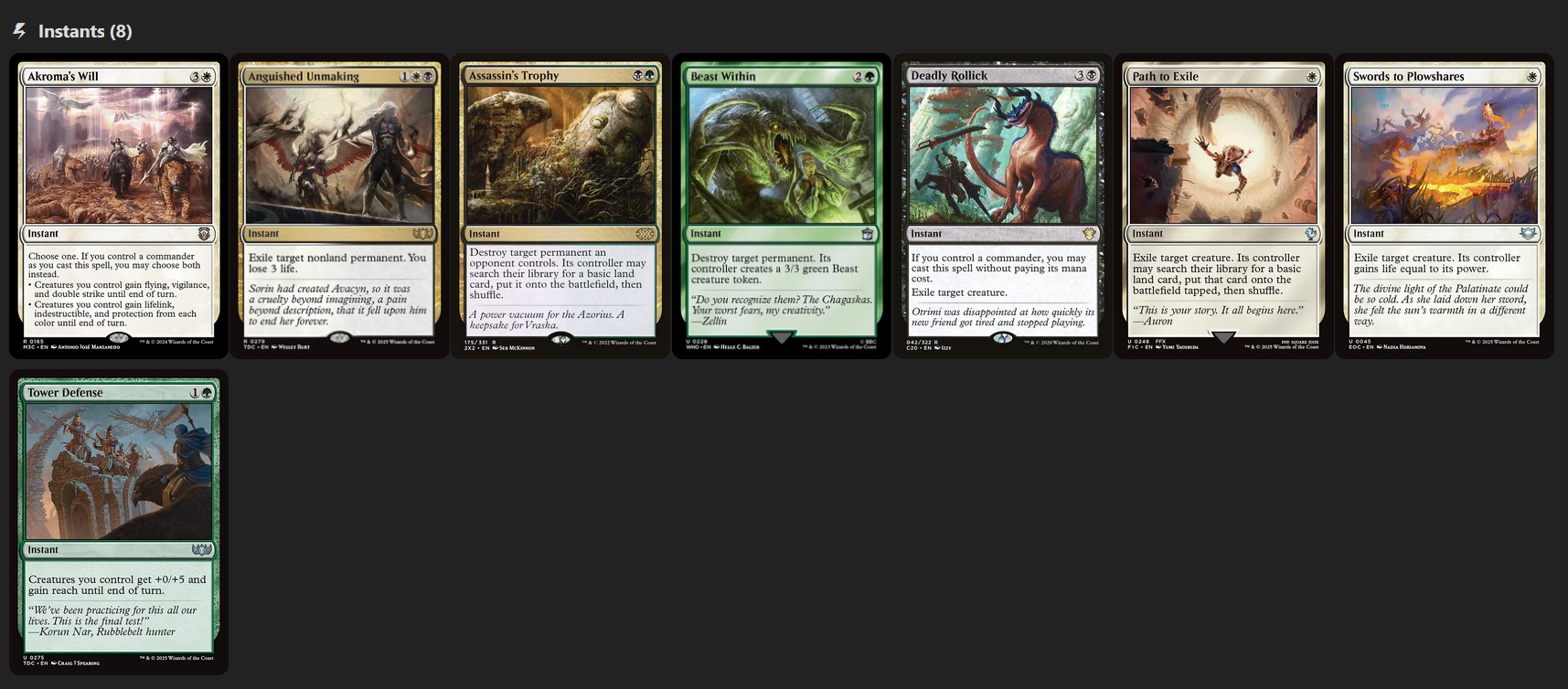
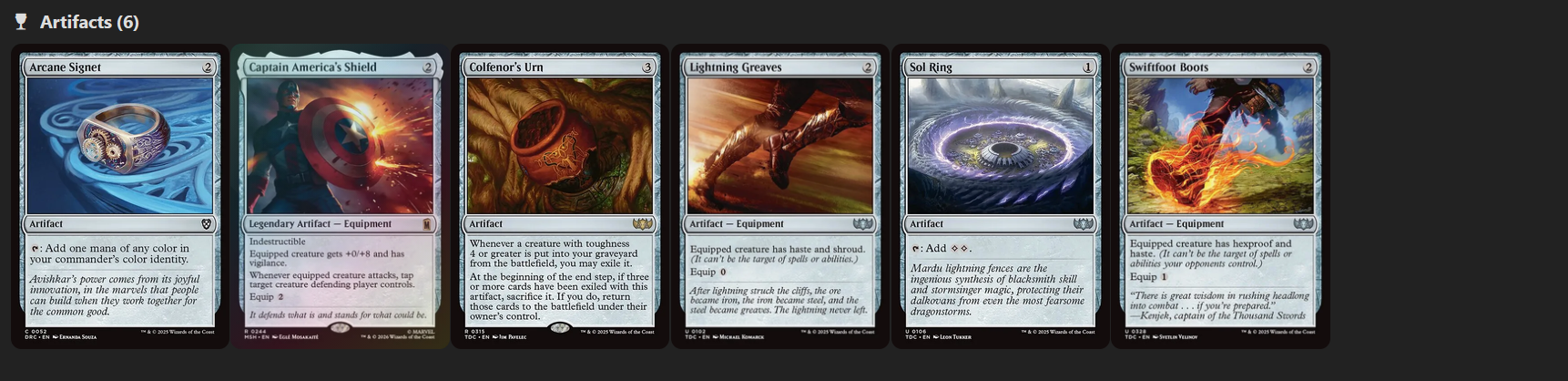
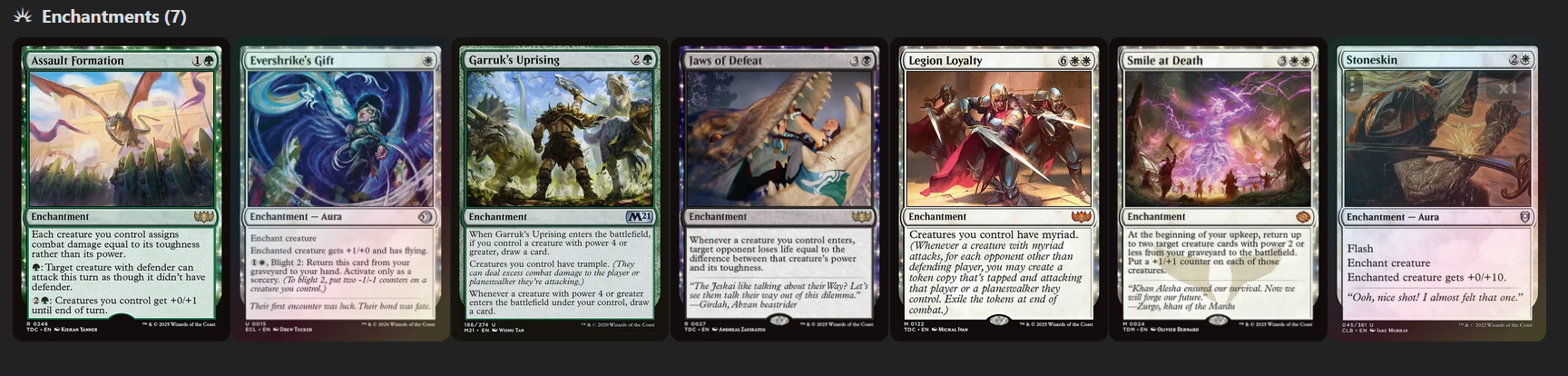
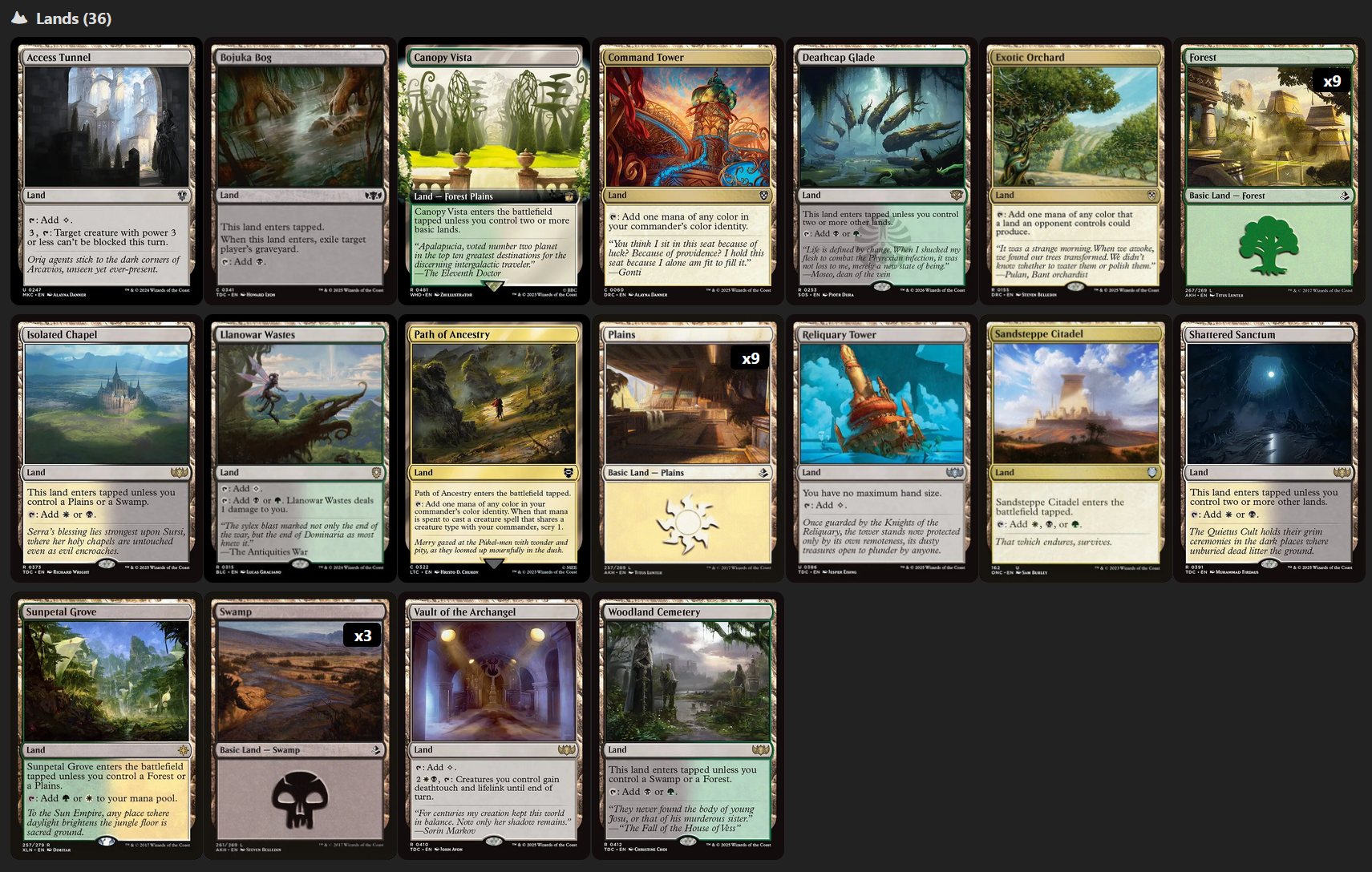
This Flagship Commander deck is built around Doran, Besieged by Time, using high-toughness creatures, defenders, Treefolk, and combat-reassignment effects to create a board state that is far more threatening than it first appears. Doran reduces the cost of many key creature spells and turns every attack or block into a meaningful stat conversion, allowing the deck to pressure opponents through resilient bodies rather than conventional power. The result is an Abzan strategy that plays defensively in the early turns, then converts its durable board presence into decisive combat advantage.
Deck Overview
This deck operates as a Toughness-Matters Defender Midrange build with Treefolk synergy, selective board control, and combat-based finishing tools. Cards such as Assault Formation, Bedrock Tortoise, Ancient Lumberknot, Baldin, Century Herdmaster, and Walking Bulwark reinforce the central theme by allowing creatures to assign combat damage using toughness or attack despite defender restrictions. The deck also includes multiple high-impact toughness creatures such as Tree of Perdition, Tree of Redemption, Indomitable Ancients, Canopy Gargantuan, and Towering Titan, giving the list a distinct mechanical identity while supporting real strategic pressure.
The core of the deck is built around converting defensive stats into offensive output. Doran, Besieged by Time rewards creatures with toughness greater than power by reducing their casting cost, then amplifies combat by granting a temporary boost equal to the difference between their power and toughness whenever they attack or block.
This allows cards like Indomitable Ancients, Nyx-Fleece Ram, Wall of Omens, Wall of Blossoms, Tree of Perdition, and Tree of Redemption to function as efficient defensive pieces early while becoming substantial combat threats once the deck’s enablers are established.
Because many of the deck’s most efficient bodies have defender, the list includes several ways to turn them into active attackers. Assault Formation, Wakestone Gargoyle, Walking Bulwark, Bedrock Tortoise, and Baldin, Century Herdmaster all help convert the deck’s walls and high-toughness creatures into a legitimate offensive board.
Crashing Drawbridge also gives the team haste, allowing newly deployed threats or post-wipe rebuilds to immediately participate in combat. This gives the deck a strong tempo pivot once its board is developed.
The mana base is supported by a consistent Abzan ramp package, including Sol Ring, Arcane Signet, Farseek, Rampant Growth, Cultivate, Kodama’s Reach, Sylvan Caryatid, Arboreal Grazer, Faeburrow Elder, Great Forest Druid, and Arbor Adherent.
Doran’s own cost reduction further strengthens the deck’s sequencing, especially when casting high-toughness creatures that naturally fit the strategy. Lands such as Command Tower, Sandsteppe Citadel, Canopy Vista, Deathcap Glade, Shattered Sanctum, Sunpetal Grove, Woodland Cemetery, and Exotic Orchard provide a balanced color base for reliable access to all three colors.
This deck includes removal suited to both precision interaction and asymmetrical board control. Swords to Plowshares, Path to Exile, Assassin’s Trophy, Anguished Unmaking, Beast Within, and Deadly Rollick handle individual threats efficiently, while Dusk // Dawn, Slaughter the Strong, Wave of Reckoning, and Expel the Interlopers are especially effective in a deck built around low-power, high-toughness creatures.
The board wipes are deliberately selected to favor the deck’s construction, often leaving its key creatures intact while reducing opposing boards. Colfenor’s Urn and Smile at Death add additional resilience by preserving or returning high-toughness creatures after removal.
The deck uses several utility creatures and enchantments to maintain momentum while developing its board. Wall of Blossoms, Wall of Omens, Welcoming Vampire, Ohran Frostfang, Fecund Greenshell, and Garruk’s Uprising provide card flow through creature deployment, combat, or large-board development.
Additional utility comes from Jaws of Defeat, Ikra Shidiqi, the Usurper, Vault of the Archangel, and Wall of Reverence, which turn the deck’s toughness-heavy board into meaningful life swings and sustained advantage.
The deck closes through combat scaling, evasion, and board-wide finishing effects. Akroma’s Will is a primary finisher, giving the deck a sudden path to lethal damage through flying, vigilance, double strike, lifelink, indestructible, and protection when Doran is present. Tower Defense can also produce a major combat swing, especially with creatures already assigning damage based on toughness.
Legion Loyalty gives the board a powerful late-game ceiling through myriad, while Betor, Kin to All, Verdeloth the Ancient, Zetalpa, Primal Dawn, and Canopy Gargantuan provide additional pressure once the deck has established control of combat.
Build Philosophy
This deck is constructed to emphasize cohesion, resilience, and deliberate card function. Every creature either supports the toughness-matters strategy, provides utility while fitting the stat profile, or contributes to the deck’s ability to convert defensive board presence into combat pressure. The ramp suite, removal package, and mana base are tuned to support smooth Abzan sequencing while maintaining interaction at key points of the game.
The deck is designed to feel methodical and imposing: it develops behind durable creatures, controls combat through selective removal and favorable board wipes, then turns its defensive structure into a decisive offensive engine.
Technical Details
100-card singleton Commander deck, legal for EDH
All cards in Near Mint to Lightly Played condition
Professionally sleeved and ready to play
Built for consistent performance and strategic depth
Ideal For Players Who:
Enjoy toughness-based Commander decks with layered combat math and durable board presence
Prefer Abzan strategies that combine removal, resilience, and board development
Appreciate cohesive, professionally constructed decks built around a distinct mechanical identity
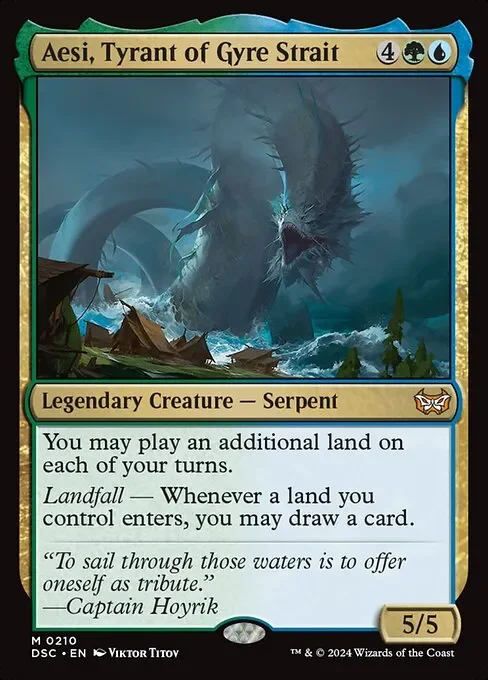
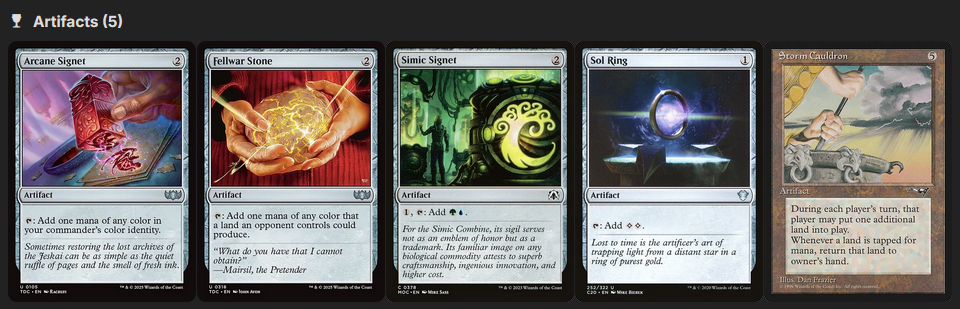
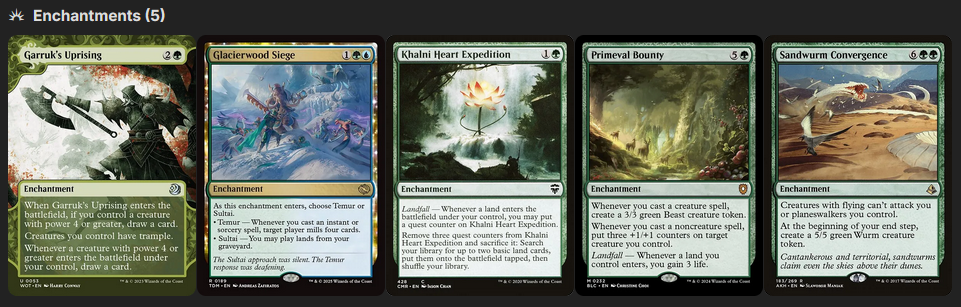
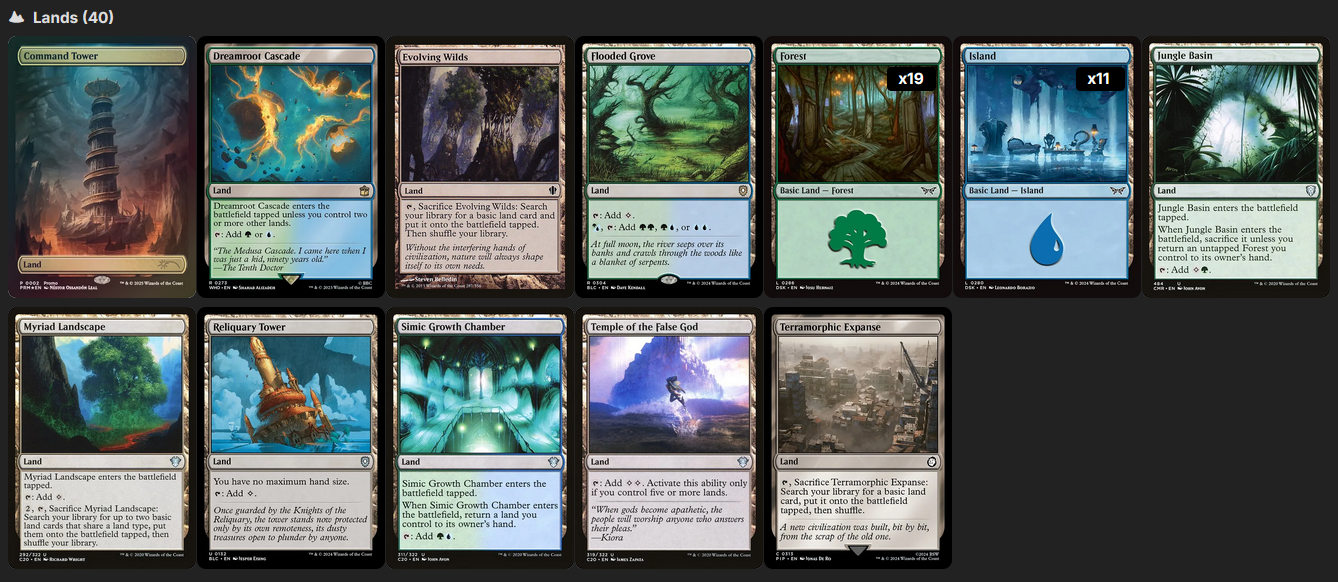
Aesi, Tyrant of Gyre Strait leads a Simic Commander deck focused on accelerating land development, converting land drops into sustained card advantage, and scaling naturally into overwhelming board presence. The deck is built around the commander’s ability to play additional lands while drawing cards from each landfall trigger, allowing the strategy to maintain steady momentum through ramp, recursion, and value-based creature pressure.
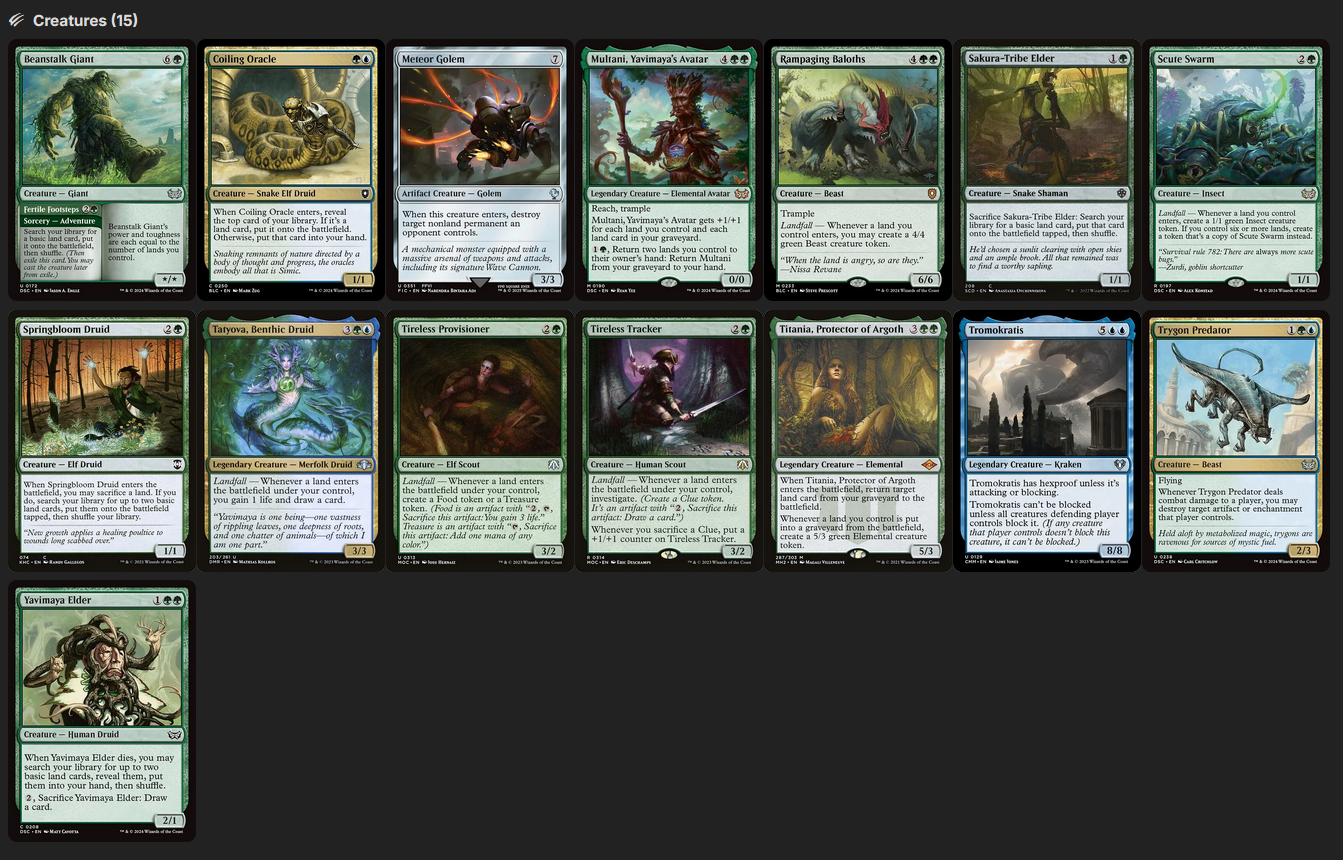
This build emphasizes the classic Simic landfall engine: develop mana quickly, keep cards flowing, and turn repeated land entries into tokens, resources, and large finishers. Cards such as Scute Swarm, Rampaging Baloths, Tireless Tracker, Tireless Provisioner, Tatyova, Benthic Druid, and Titania, Protector of Argoth give the deck multiple ways to convert its mana base into a layered advantage engine.
This is a Simic Landfall Ramp and Value Engine deck designed to use lands as both acceleration and payoff. Aesi serves as the central draw engine, ensuring that ramp spells, fetch lands, bounce lands, and land-search effects continue replacing themselves while building toward a dominant board state.
The deck blends traditional ramp with landfall token generation, card draw, and scalable threats. Multani, Yavimaya’s Avatar, Beanstalk Giant, Tromokratis, Sandwurm Convergence, and Biomass Mutation provide closing power, while utility pieces such as Krosan Grip, Beast Within, Reality Shift, Meteor Golem, and River’s Rebuke allow the deck to interact cleanly without compromising its primary game plan.
Aesi, Tyrant of Gyre Strait turns every land entry into card flow, allowing the deck to chain ramp spells and land drops into a sustained resource advantage. Tatyova, Benthic Druid adds redundancy to this engine, while Tireless Tracker generates Clue tokens that keep the deck stocked with additional cards over longer games.
Scute Swarm and Rampaging Baloths transform landfall triggers into board presence, creating a scalable creature base that grows naturally as the deck executes its core plan. Primeval Bounty further rewards spellcasting and land development, adding life, counters, and tokens as the deck advances.
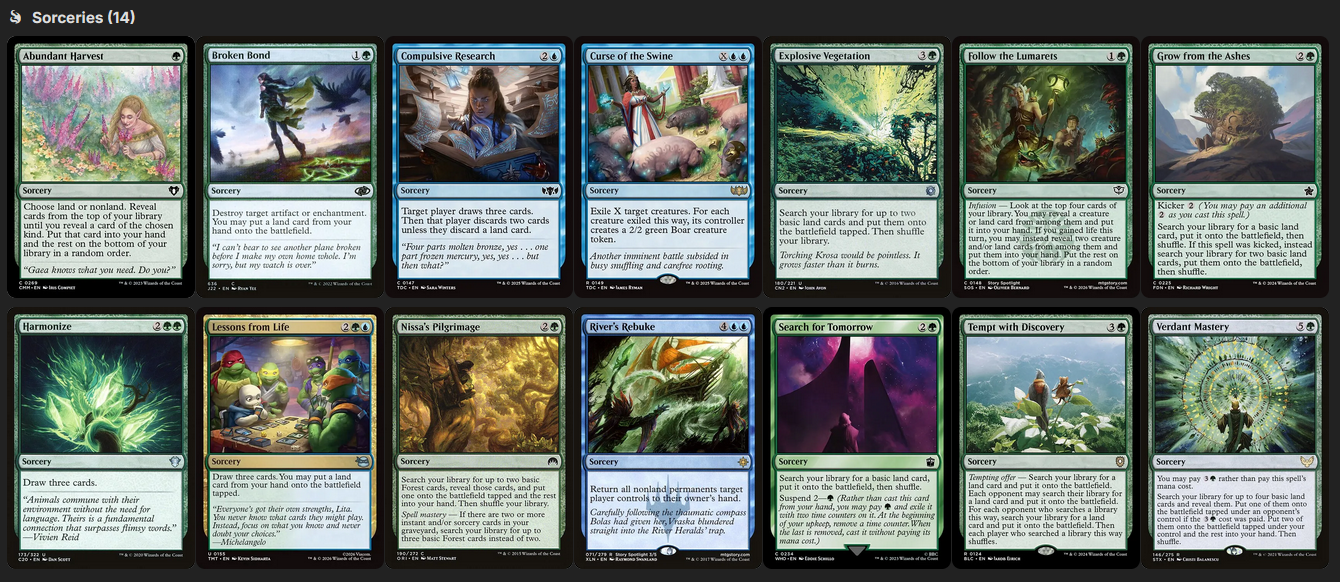
The ramp suite is dense and purpose-built, allowing the deck to reach Aesi reliably and then continue expanding beyond the normal land-per-turn restriction. Search for Tomorrow, Sakura-Tribe Elder, Yavimaya Elder, Springbloom Druid, Harrow, Nissa’s Pilgrimage, Grow from the Ashes, Explosive Vegetation, Verdant Mastery, and Tempt with Discovery all support repeated landfall triggers while improving long-term mana access.
Growth Spiral, Eureka Moment, Coiling Oracle, and Embrace the Paradox provide additional ways to place lands onto the battlefield while maintaining card velocity. Simic Growth Chamber, Jungle Basin, Evolving Wilds, Terramorphic Expanse, and Myriad Landscape create extra landfall sequencing lines that become especially strong once Aesi or Tatyova is active.
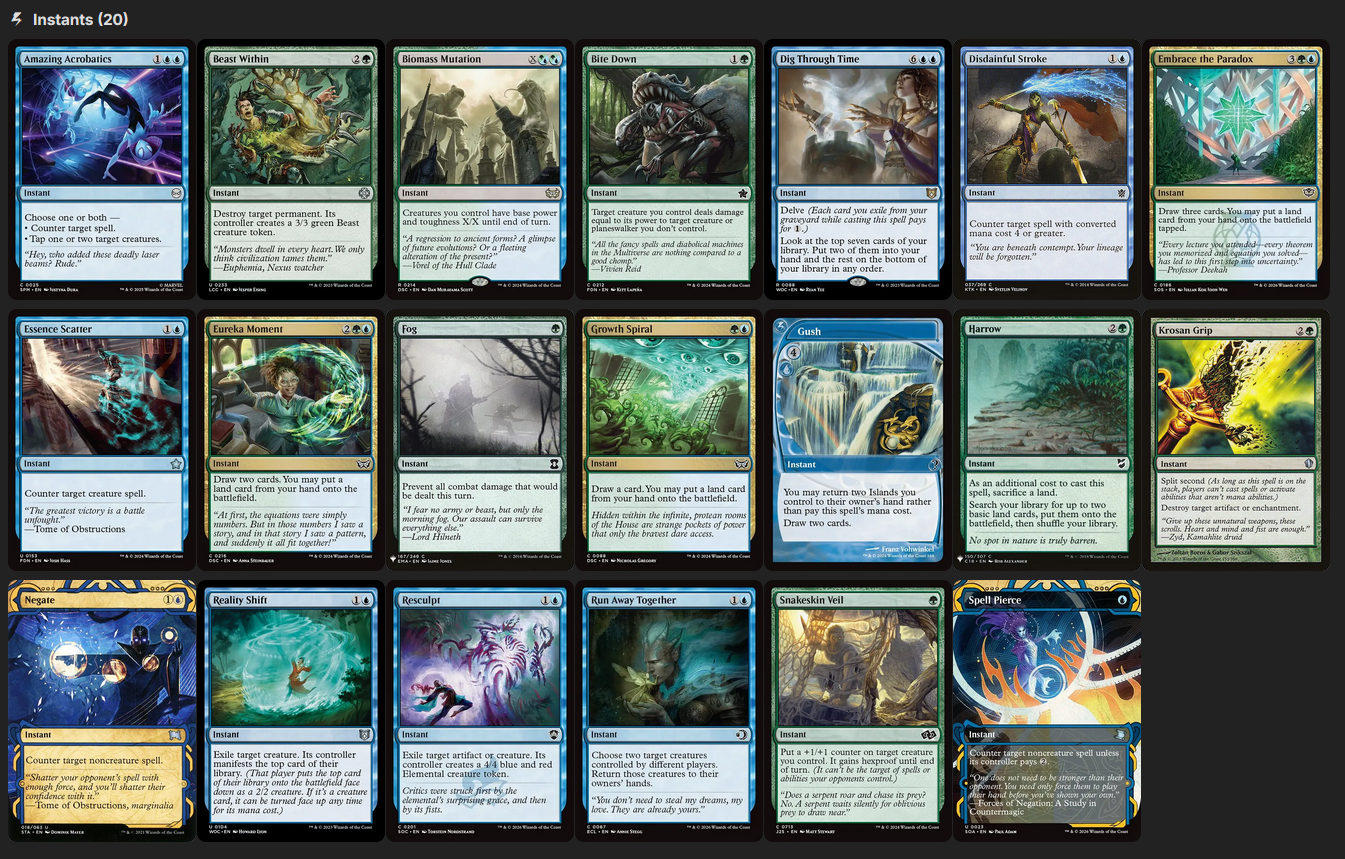
The deck includes flexible answers that allow it to maintain tempo while developing its engine. Beast Within, Broken Bond, Krosan Grip, Trygon Predator, Resculpt, Reality Shift, Curse of the Swine, and Meteor Golem give the deck access to artifact, enchantment, creature, and permanent removal across multiple card types.
Countermagic such as Negate, Spell Pierce, Disdainful Stroke, Essence Scatter, and Amazing Acrobatics helps protect key turns or prevent opposing threats from resolving. River’s Rebuke provides a major tempo reset, often clearing the way for a decisive attack after the deck has built a large board.
Aesi’s built-in card draw makes the deck naturally resilient against attrition, as each land drop can rebuild resources after interaction. Multani, Yavimaya’s Avatar adds graveyard-based staying power by returning itself to hand through land recursion, while Titania, Protector of Argoth turns sacrificed or destroyed lands into meaningful board presence.
Snakeskin Veil offers direct protection for important creatures, while Sandwurm Convergence creates a defensive shield against flying threats and steadily produces large bodies. Storm Cauldron adds a distinctive high-synergy utility piece, allowing additional land replay patterns while pressuring opponents who are less prepared to benefit from repeated land sequencing.
The deck closes by converting land-based advantage into overwhelming board pressure. Scute Swarm and Rampaging Baloths can rapidly create wide boards, while Primeval Bounty and Sandwurm Convergence add steady creature production over time.
Large individual threats such as Multani, Beanstalk Giant, Tromokratis, and Titania’s Elemental tokens give the deck a strong combat presence. Biomass Mutation provides a scalable finisher, turning a developed board of tokens and utility creatures into a decisive attack.
This deck is constructed to give Aesi a consistent and purposeful engine, with every card supporting land development, card advantage, interaction, or a reliable path to victory. The ramp package is intentionally deep, ensuring smooth mana sequencing while maximizing the commander’s landfall draw ability.
The build balances acceleration, payoff density, and interaction so the deck can establish its engine without becoming overly dependent on a single line of play. Its Simic color base supports steady development, efficient ramp turns, and repeated landfall triggers that create meaningful pressure throughout the game.
100-card singleton Commander deck, legal for EDH
All cards in Near Mint to Lightly Played condition
Professionally sleeved and ready to play
Built for consistent performance and strategic depth
Enjoy Simic landfall decks built around ramp, card draw, and board development
Prefer Commander strategies that turn land drops into sustained value and scalable threats
Appreciate cohesive, professionally constructed decks with strong sequencing and resource engines
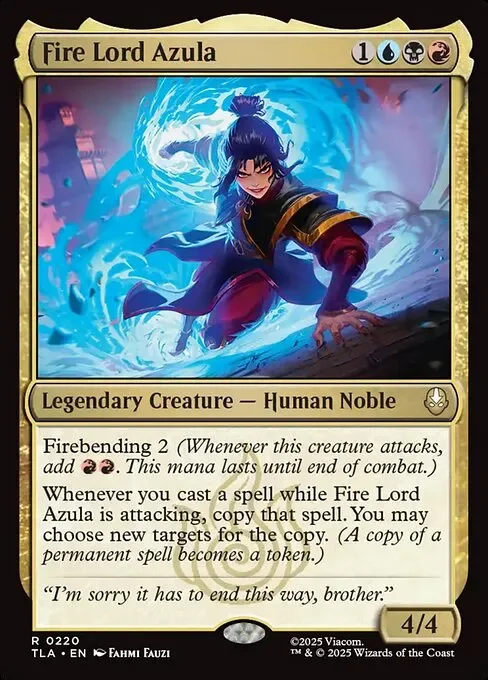
Fire Lord Azula leads a Grixis spellslinger deck built around combat-speed spell copying, efficient interaction, and layered damage pressure. Rather than functioning as a traditional storm commander, Azula turns the attack step into a tactical spellcasting window, generating red mana through Firebending and rewarding carefully timed instants, tricks, removal, and flash-based effects. The result is a focused tempo deck that pressures the table through combat while converting each spell into additional value.
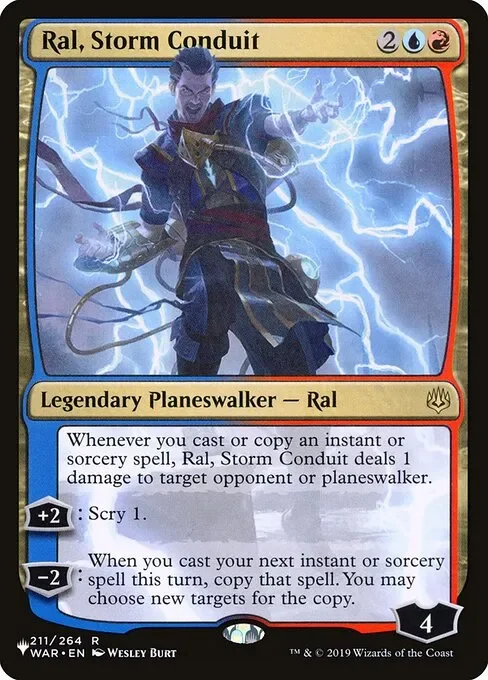
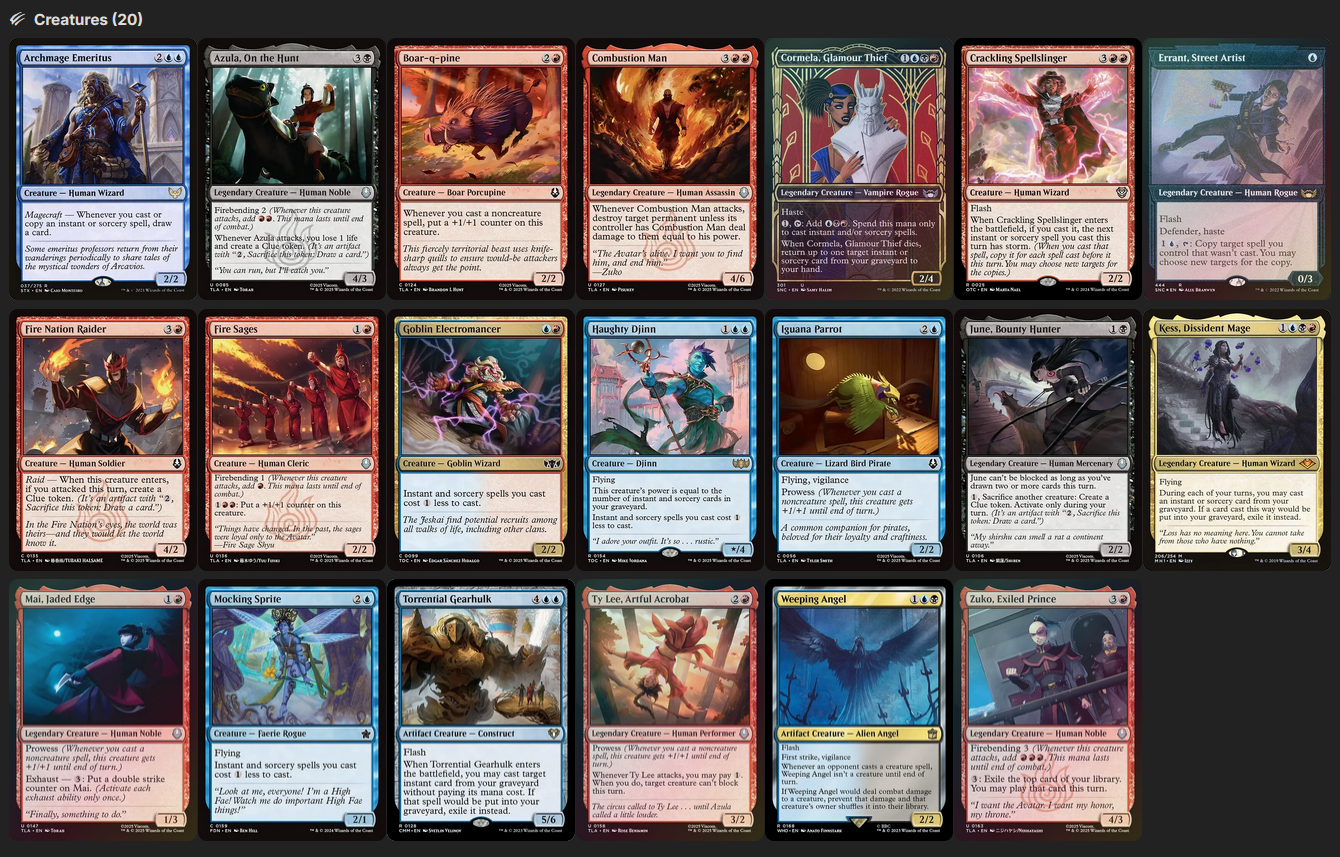
This build combines spell-copy synergy, combat manipulation, and Avatar-themed mechanical cohesion. Cards such as Ral, Storm Conduit, Archmage Emeritus, Kess, Dissident Mage, Torrential Gearhulk, and Crackling Spellslinger give the deck strong secondary engines, while cards like Mai, Jaded Edge, Ty Lee, Artful Acrobat, Zuko, Exiled Prince, Azula, On the Hunt, and Dai Li Indoctrination reinforce the deck’s flavor without sacrificing strategic purpose.
This is a Grixis Combat Spellslinger / Spell-Copy Tempo deck designed to make the combat phase matter as much as the main phase. Fire Lord Azula’s attack trigger provides the mana needed to cast key red spells mid-combat, while her copy ability turns targeted interaction, draw spells, and combat tricks into amplified exchanges.
The deck’s strongest turns come from attacking with Azula, casting a spell during combat, and using the copied spell to gain tempo, remove blockers, draw cards, or push damage. Ral, Storm Conduit adds a damage-based payoff for both casting and copying spells, while Archmage Emeritus converts the deck’s instant and sorcery density into sustained card advantage. Kess, Dissident Mage and Torrential Gearhulk provide recursion, allowing the deck to reuse key spells and continue applying pressure into the midgame.
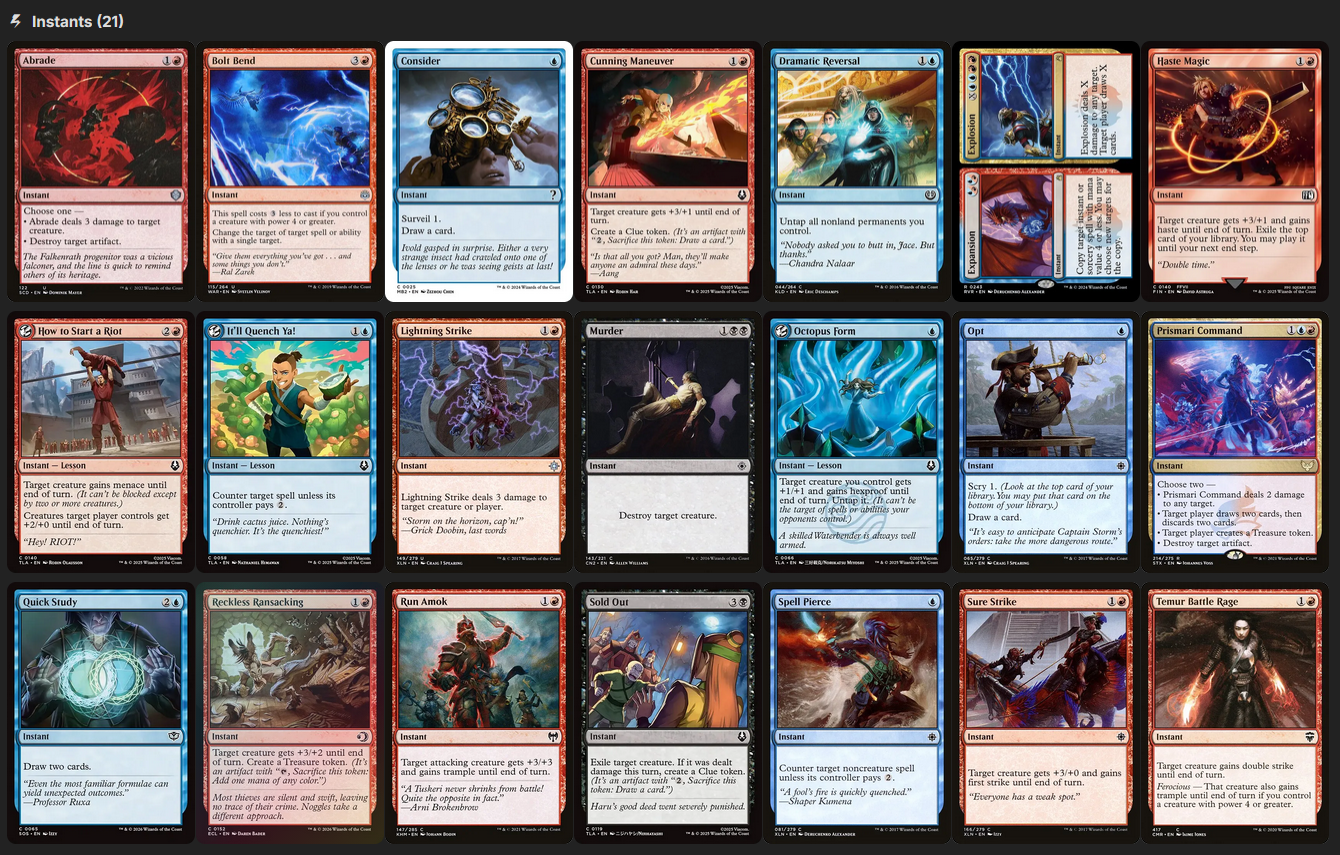
Fire Lord Azula’s central role is to make combat a productive spellcasting phase. Her Firebending 2 trigger supplies red mana when she attacks, enabling combat-speed plays such as Abrade, Lightning Strike, Cunning Maneuver, Run Amok, Sure Strike, Temur Battle Rage, and Haste Magic.
Because Azula copies spells cast while she is attacking, even modest effects become significantly more impactful. A copied removal spell can clear multiple blockers or threats, while a copied combat trick can turn a single attacker into a lethal source of pressure. Expansion // Explosion, Prismari Command, Crackling Spellslinger, and Errant, Street Artist further expand the deck’s copy infrastructure, giving the list multiple ways to generate extra value from well-timed spells.
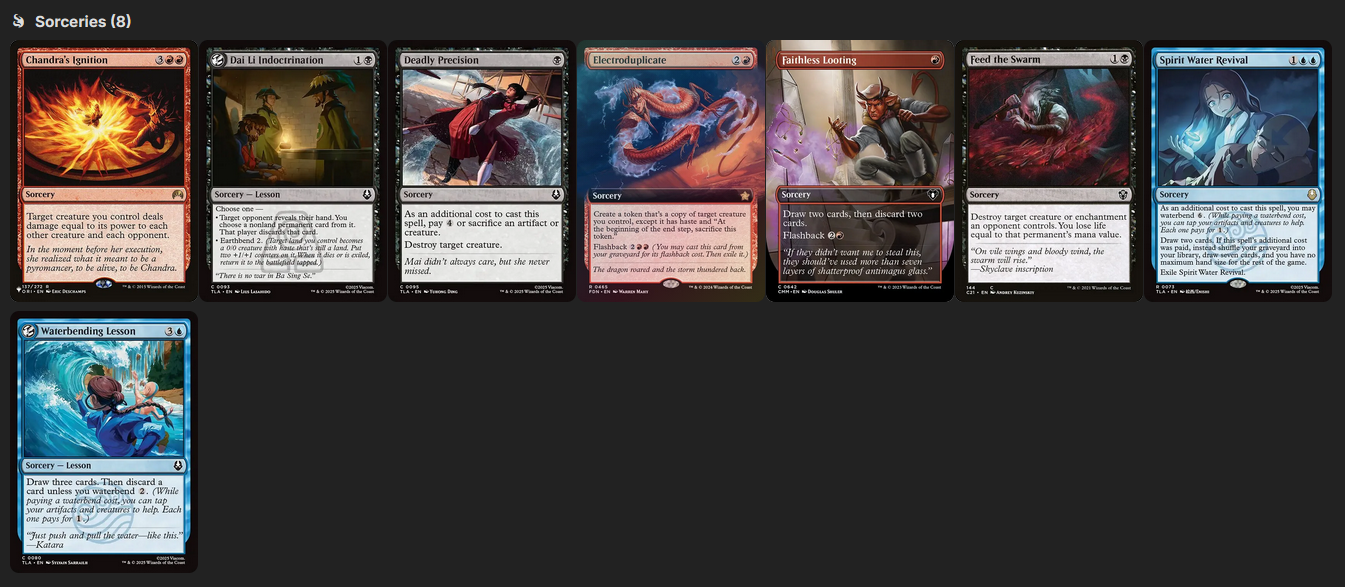
The deck uses a dense package of low-cost cantrips, draw spells, and filtering effects to keep cards moving. Opt, Consider, Quick Study, Waterbending Lesson, Faithless Looting, and Reckless Ransacking help sculpt the hand, stock the graveyard, and maintain access to relevant interaction.
Archmage Emeritus is one of the deck’s most important value engines, turning each instant or sorcery into additional card draw. Goblin Electromancer, Mocking Sprite, Haughty Djinn, and Fire Sages help reduce spell costs, making it easier to cast multiple spells in a single turn or hold up mana for interaction during combat. This gives the deck a smooth tempo profile while keeping Azula’s attack turns efficient and purposeful.
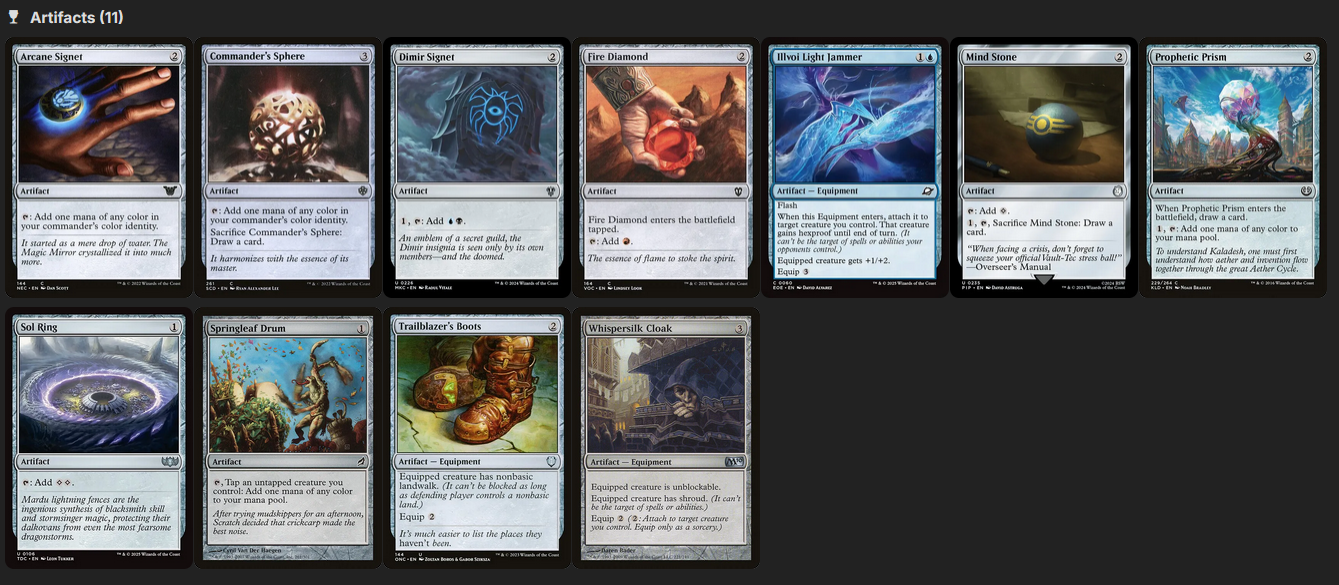
Since Fire Lord Azula’s strongest ability requires her to attack, the deck includes dedicated tools to help her survive combat and connect through crowded boards. Whispersilk Cloak and Trailblazer’s Boots provide reliable evasion, while Illvoi Light Jammer offers protection against opposing removal or combat disruption.
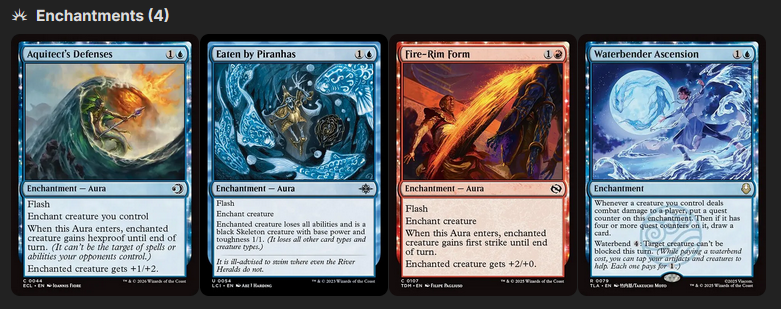
The deck also uses flexible defensive spells such as Aquitect’s Defenses, Eaten by Piranhas, Bolt Bend, and Octopus Form to protect key creatures, redirect interaction, or neutralize opposing threats. These pieces are especially important because they allow Azula to keep attacking while maintaining access to her spell-copy engine.
The interaction suite is built to support a proactive tempo plan. Abrade, Feed the Swarm, Murder, Lightning Strike, Deadly Precision, and Prismari Command give the deck answers to creatures, artifacts, enchantments, and utility threats. Spell Pierce and It’ll Quench Ya provide efficient stack interaction, helping protect key turns or stop opposing plays before they develop.
The deck also includes disruption with strong thematic and mechanical relevance. Dai Li Indoctrination attacks an opponent’s hand and can create additional board presence, while How to Start a Riot and Sold Out manipulate combat in ways that fit the deck’s tempo-oriented identity. These cards allow the deck to stay interactive without abandoning its combat-focused plan.
This deck closes games through layered pressure rather than a single deterministic combo line. Ral, Storm Conduit converts spell-copy sequences into repeated damage, while copied burn spells and combat tricks allow Azula and other attackers to pressure life totals efficiently. Temur Battle Rage, Sure Strike, Run Amok, and Fire-Rim Form can turn a single attack into a major damage swing.
The deck also has larger finishers and payoff threats. Chandra’s Ignition can convert a developed creature into a table-wide damage event, while Haughty Djinn, Fire Nation Raider, Zuko, Exiled Prince, and Torrential Gearhulk provide meaningful board presence. Over multiple turns, the deck builds advantage through copied spells, recurring interaction, and combat pressure until opponents are forced out of stable positions.
This Fire Lord Azula deck is built around a clear mechanical identity: attack with the commander, generate mana, and use the combat step to copy impactful spells. Each card supports that plan through spell velocity, cost reduction, protection, recursion, interaction, or evasive pressure.
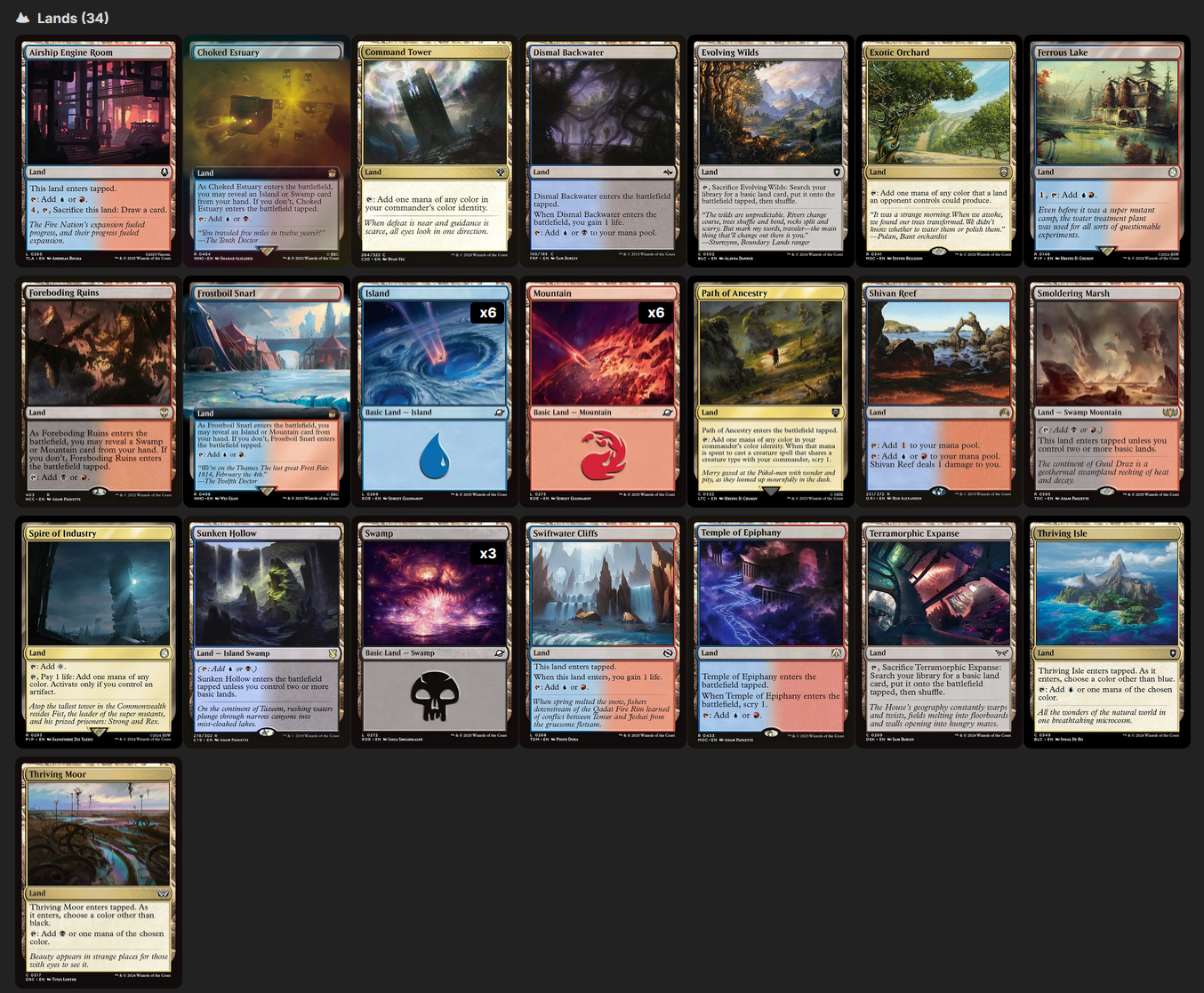
The mana base is structured to support Grixis sequencing while keeping access to the red mana required for Azula’s combat turns. Ramp pieces such as Sol Ring, Arcane Signet, Dimir Signet, Fire Diamond, Mind Stone, Commander's Sphere, Springleaf Drum, and Prophetic Prism help stabilize early development and support multicolor casting. The result is a cohesive, professionally tuned Commander deck with a distinct play pattern and strong thematic integration.
100-card singleton Commander deck, legal for EDH
All cards in Near Mint to Lightly Played condition
Professionally sleeved and ready to play
Built for consistent performance and strategic depth
Enjoy Grixis spellslinger decks with combat-focused sequencing and tactical spell timing
Prefer Commander builds that combine recognizable flavor with functional mechanical depth
Appreciate spell-copy strategies that use tempo, protection, and incremental damage to control the pace of the game
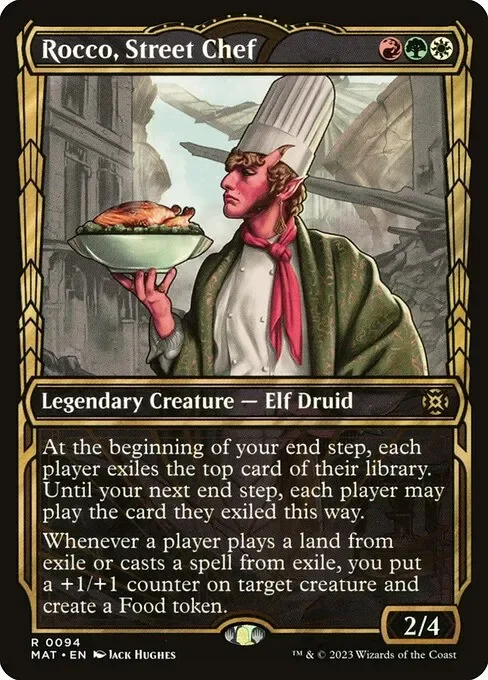
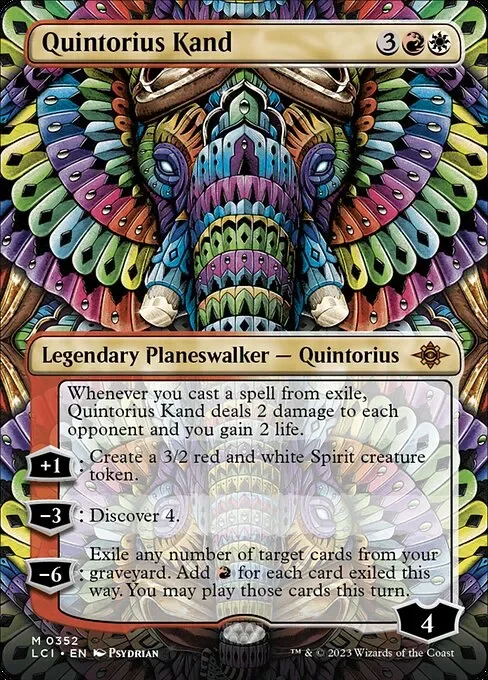
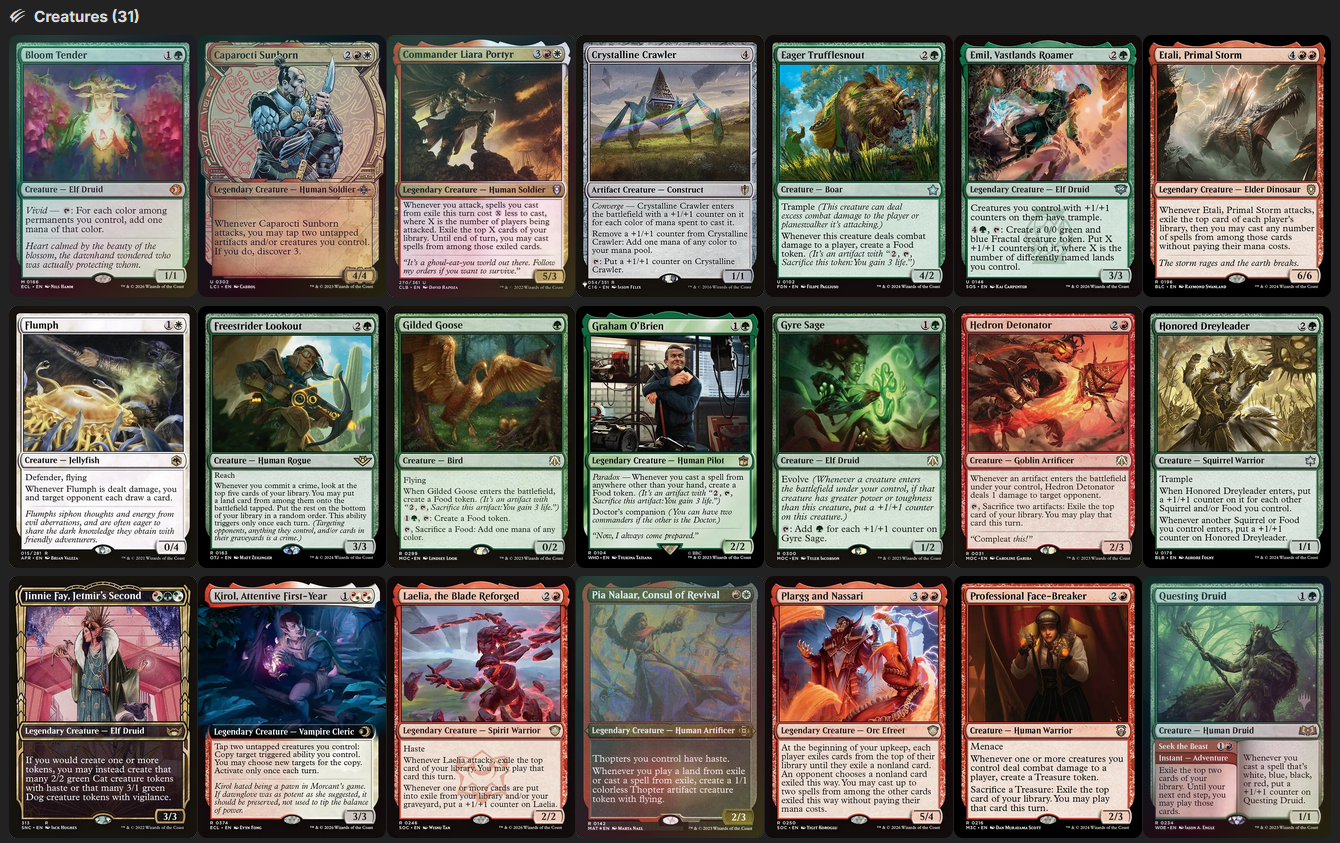
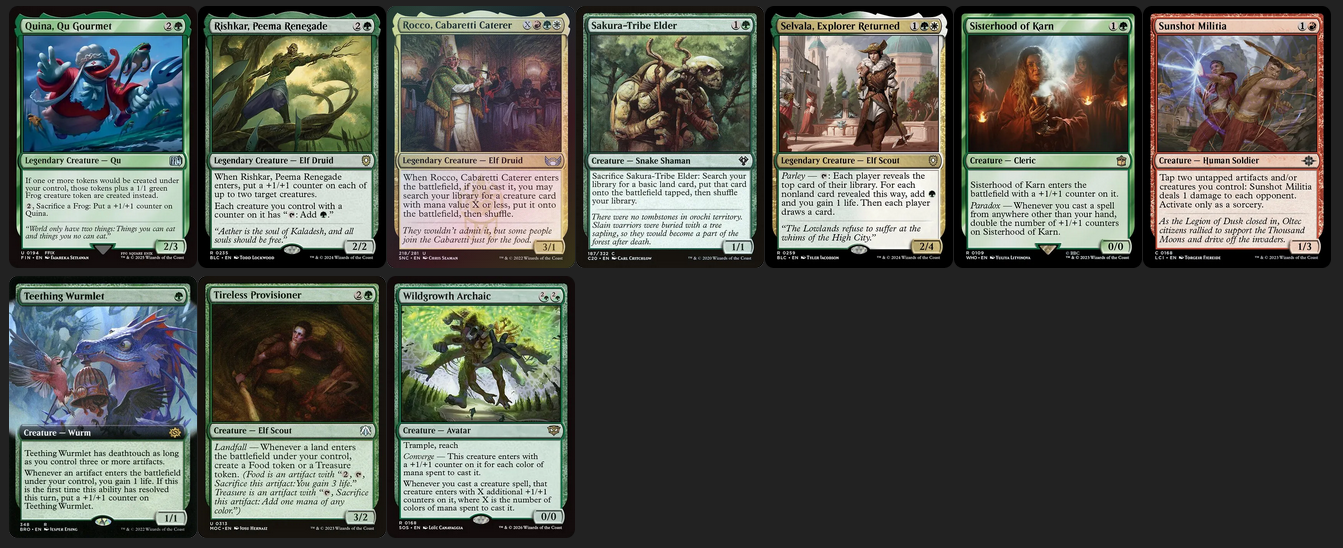
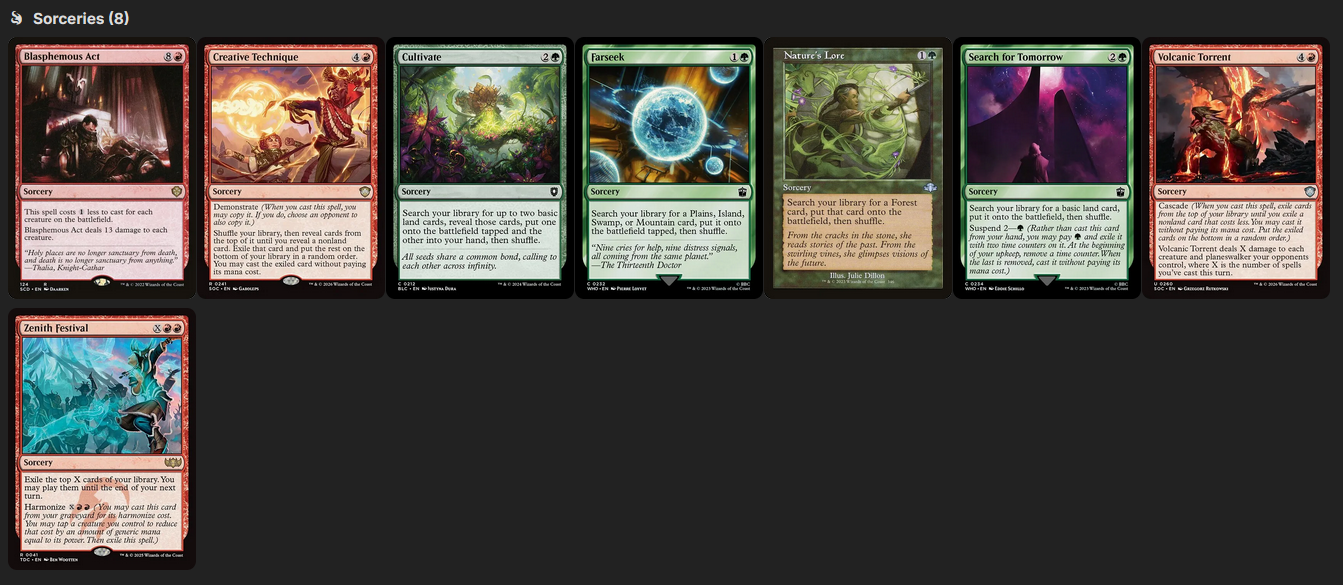
Rocco, Street Chef leads a Naya Commander deck built around exile-based card advantage, Food production, +1/+1 counter scaling, and incremental board development. The deck uses Rocco’s end-step trigger to keep resources flowing while rewarding every land or spell played from exile with permanent board growth. The result is a layered midrange strategy that turns temporary access into lasting battlefield presence.
This build combines exile casting, Food-token utility, artifact synergy, and creature-based pressure into a cohesive Flagship Commander list. Cards like Quintorius Kand, Pia Nalaar, Consul of Revival, Laelia, the Blade Reforged, Hedron Detonator, and Professional Face-Breaker reinforce the deck’s central play pattern: generate value from exile, convert that value into tokens or counters, and steadily advance toward a decisive board state.
This is a Naya Exile Value, Food Token, and +1/+1 Counter Commander deck with a strong artifact subtheme. Rocco provides the primary engine by giving each player access to exiled cards, then rewarding you whenever those cards are played. The deck is designed to turn shared exile effects into asymmetric advantage through payoffs that care about Food, artifacts, tokens, and combat-ready creatures.
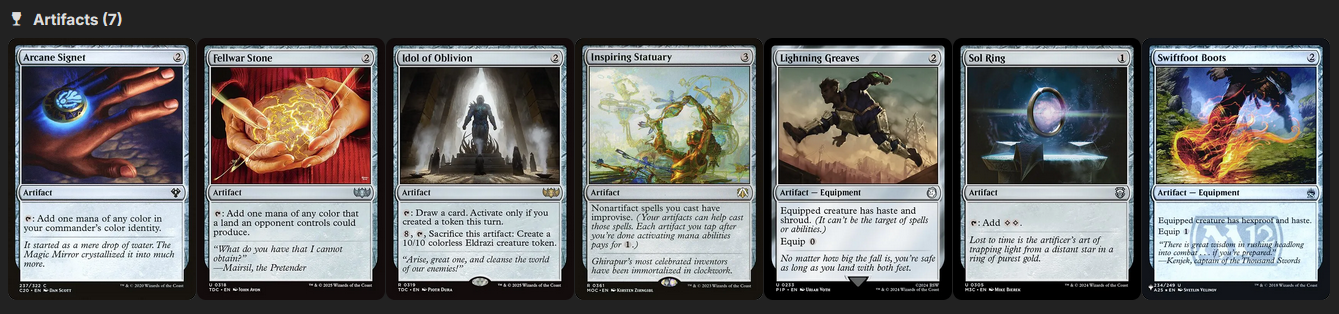
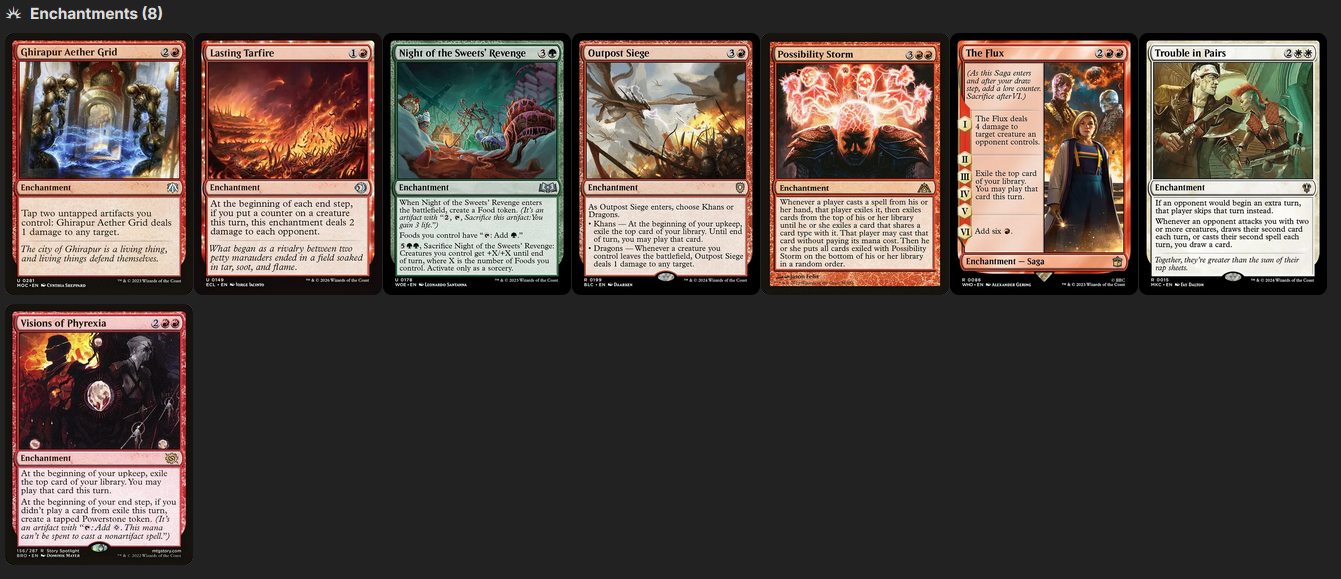
The strategy is supported by a broad suite of efficient ramp, flexible removal, and resilient value pieces. Night of the Sweets’ Revenge, Tireless Provisioner, Gilded Goose, and Honored Dreyleader give the deck a strong Food-token identity, while Inspiring Statuary, Ghirapur Aether Grid, and Hedron Detonator turn those artifacts into mana, damage, and additional card access.
Rocco’s core strength is its ability to keep cards moving through exile and reward players for casting from that zone. Quintorius Kand, Laelia, the Blade Reforged, Questing Druid, Outpost Siege, Visions of Phyrexia, and The Flux all provide additional exile-based access, ensuring the deck continues to find action throughout the game.
Pia Nalaar, Consul of Revival and Hedron Detonator give the deck meaningful payoffs for playing from exile, creating additional material and converting temporary resources into permanent advantage. Creative Technique, Plargg and Nassari, Possibility Storm, Volcanic Torrent, and Zenith Festival expand this theme further, allowing the deck to generate large turns through alternative casting patterns and discover-style sequencing.
Food tokens are not just incidental value in this build. Gilded Goose, Tireless Provisioner, Eager Trufflesnout, Night of the Sweets’ Revenge, Quina, Qu Gourmet, and Rocco, Cabaretti Caterer provide a deep Food package that supports life gain, mana production, combat development, and token scaling.
The artifact subtheme gives those tokens additional purpose. Inspiring Statuary turns noncreature spells into more efficient plays, while Ghirapur Aether Grid allows spare artifacts to become repeatable removal or reach. Idol of Oblivion rewards the deck’s consistent token production with card draw, and Jinnie Fay, Jetmir’s Second can convert token creation into a more aggressive board presence.
Rocco’s trigger naturally places +1/+1 counters on creatures as players use exiled cards, allowing the deck to build pressure without overcommitting. Gyre Sage, Rishkar, Peema Renegade, Crystalline Crawler, Sisterhood of Karn, and Wildwood Scourge all benefit from or enhance the counter-based structure of the list.
This gives the deck a strong scaling profile. Early creatures can become mana sources, token producers can become combat threats, and otherwise utility-focused creatures can grow into legitimate finishers. Inspiring Call further supports this plan by protecting counter-heavy boards while also refilling the hand.
The mana base and ramp package are constructed to support smooth Naya sequencing across all stages of the game. Sol Ring, Arcane Signet, Fellwar Stone, Bloom Tender, Cultivate, Farseek, Nature’s Lore, Search for Tomorrow, and Sakura-Tribe Elder give the deck reliable acceleration and color fixing.
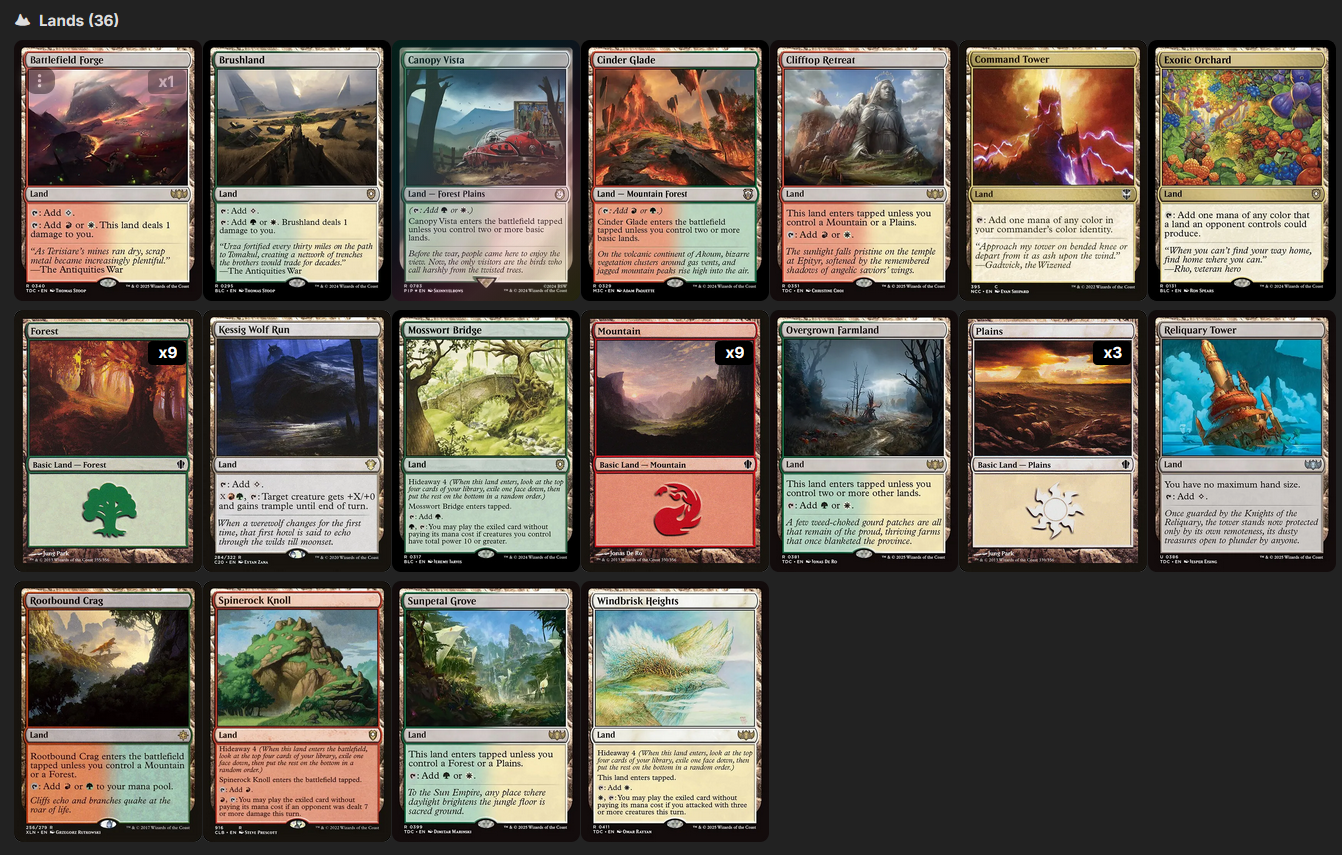
The land base includes efficient multicolor support through Command Tower, Exotic Orchard, Battlefield Forge, Brushland, Rootbound Crag, Clifftop Retreat, Sunpetal Grove, Cinder Glade, Canopy Vista, and Overgrown Farmland. Utility lands such as Kessig Wolf Run, Mosswort Bridge, Spinerock Knoll, Windbrisk Heights, and Reliquary Tower add late-game value without compromising the deck’s core mana requirements.
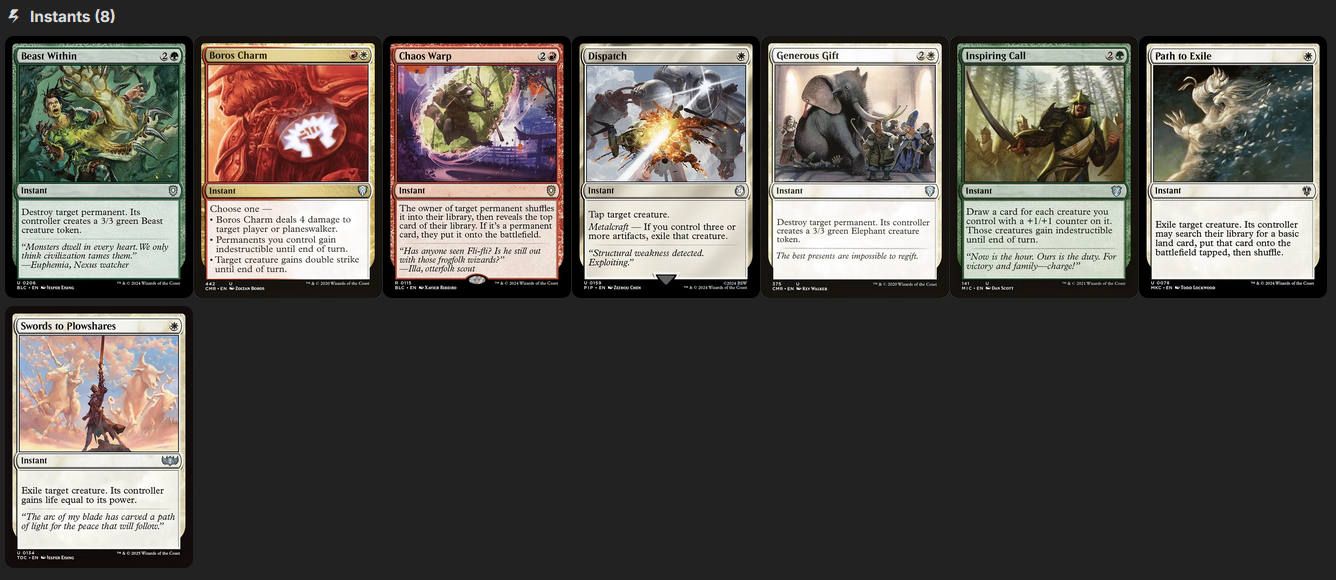
This list includes a strong suite of flexible interaction to manage opposing threats while maintaining its own development. Swords to Plowshares, Path to Exile, Beast Within, Generous Gift, Chaos Warp, and Dispatch provide efficient answers across multiple permanent types.
For wider board states, Blasphemous Act and Volcanic Torrent offer reset potential while still aligning with the deck’s high-impact spell plan. Boros Charm, Lightning Greaves, Swiftfoot Boots, and Inspiring Call help preserve key engines and protect developed boards from removal.
The deck closes games by converting accumulated value into a wide or oversized battlefield. Jinnie Fay, Jetmir’s Second, Quina, Qu Gourmet, Honored Dreyleader, Wildwood Scourge, and Kessig Wolf Run allow the deck to turn incremental tokens and counters into combat pressure.
Large exile-driven turns from Creative Technique, Etali, Primal Storm, Plargg and Nassari, Zenith Festival, and The Flux can create sudden shifts in board position. Once the deck has established a base of Food, artifacts, and counter-enhanced creatures, it can transition from value engine to lethal combat threat with minimal wasted movement.
This Flagship build is designed around synergy density, consistent sequencing, and meaningful cross-card interaction. Every major package supports the commander’s core identity: exile access, Food and artifact production, +1/+1 counter development, and value-based pressure.
The deck is tuned to produce layered decision points without relying on a single narrow combo line. Its ramp package, interaction suite, and mana base are balanced to support early development, midgame resource conversion, and late-game closing power.
100-card singleton Commander deck, legal for EDH
All cards in Near Mint to Lightly Played condition
Professionally sleeved in premium Dragon Shield sleeves and ready to play
Built for consistent performance and strategic depth
Enjoy exile-based Commander decks with layered value engines and flexible sequencing
Prefer Naya strategies that combine Food tokens, artifacts, counters, and combat pressure
Appreciate cohesive, professionally constructed decks with strong mechanical identity
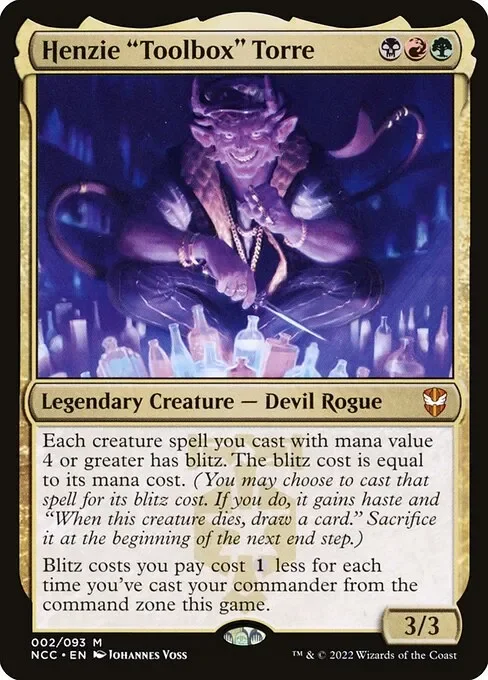
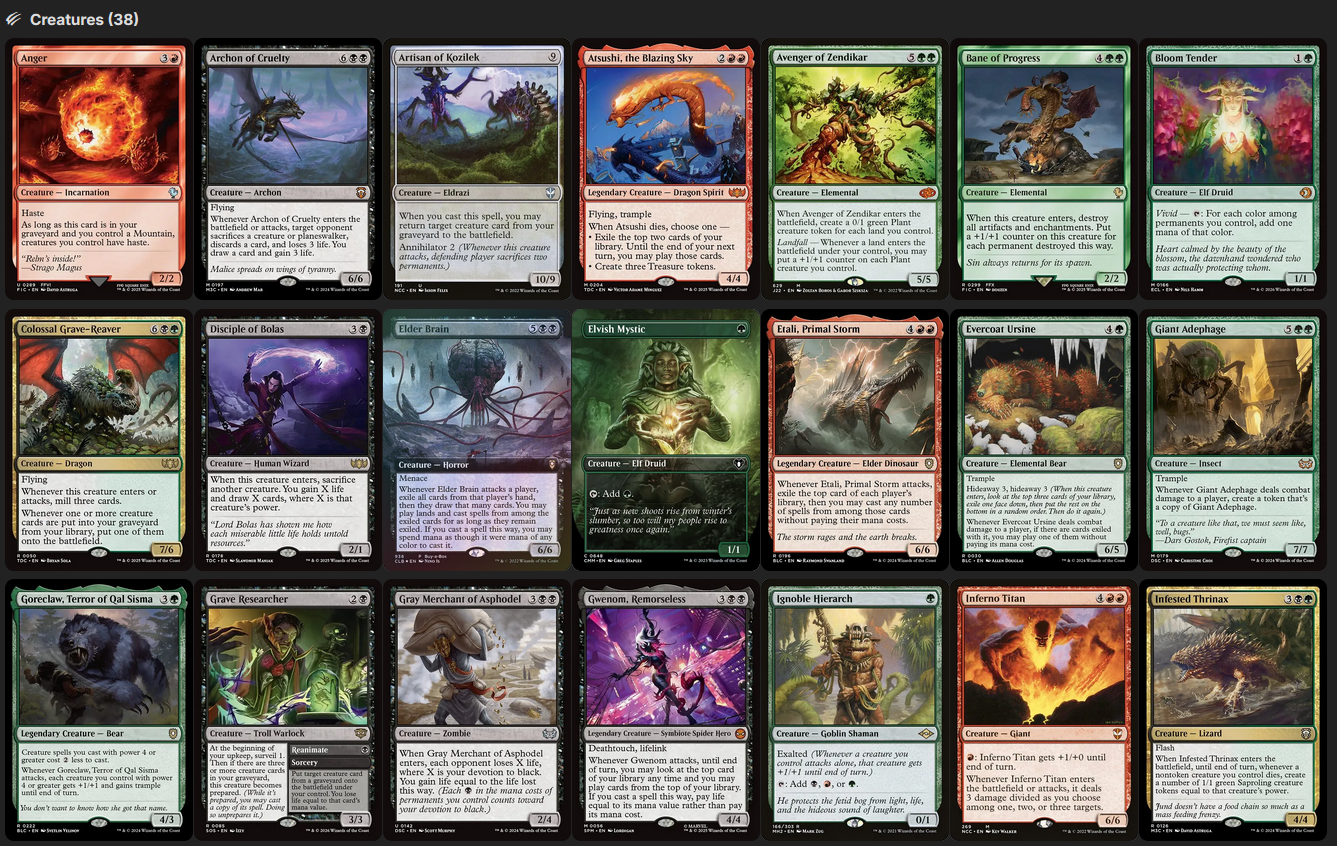
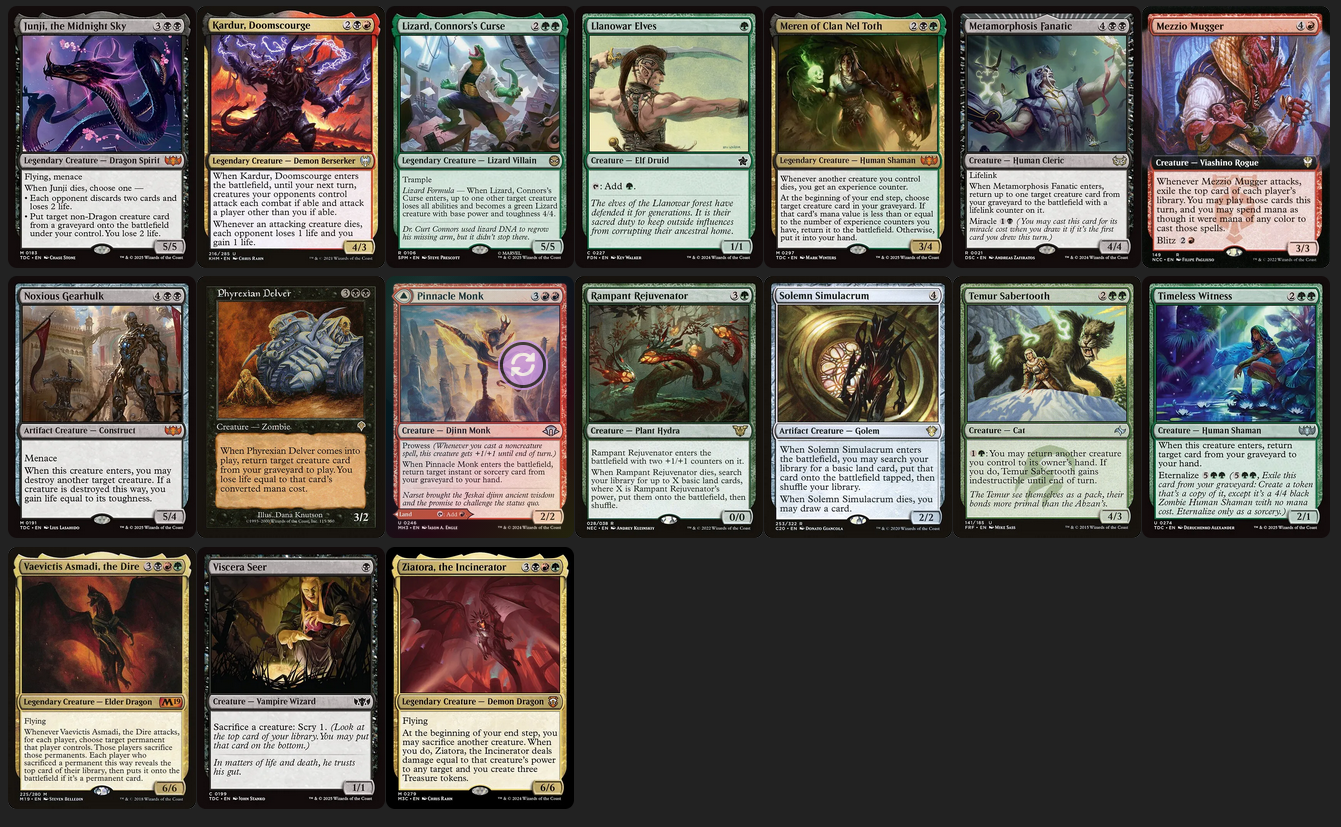
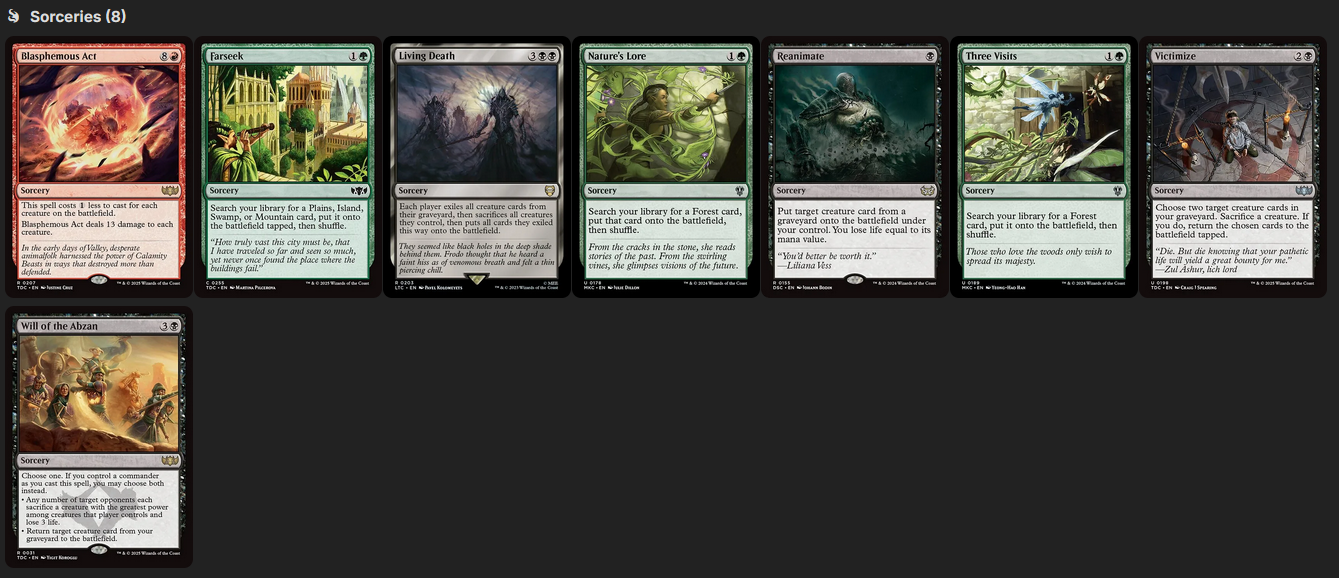
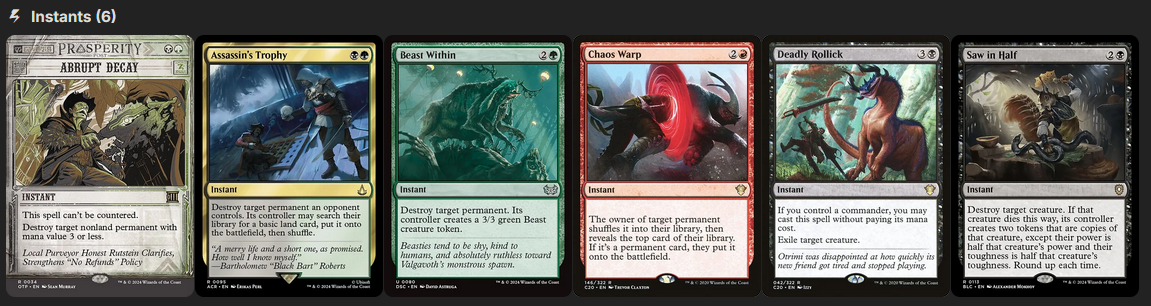
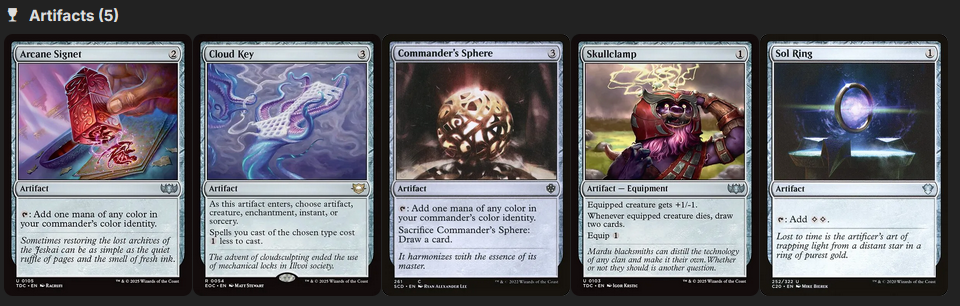
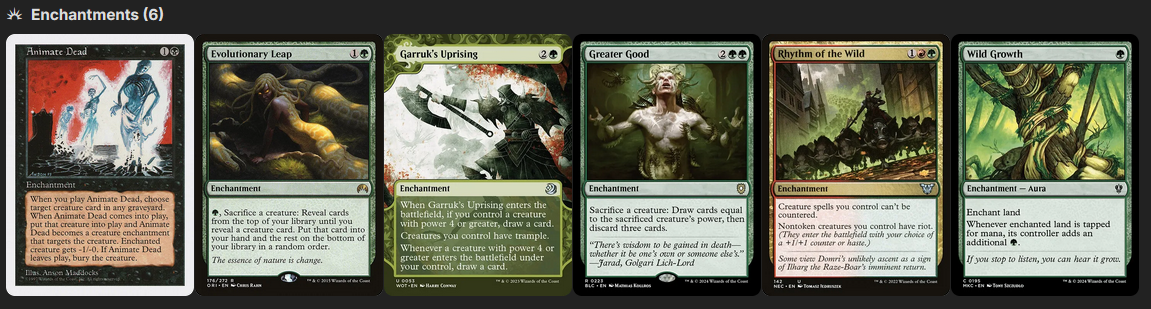
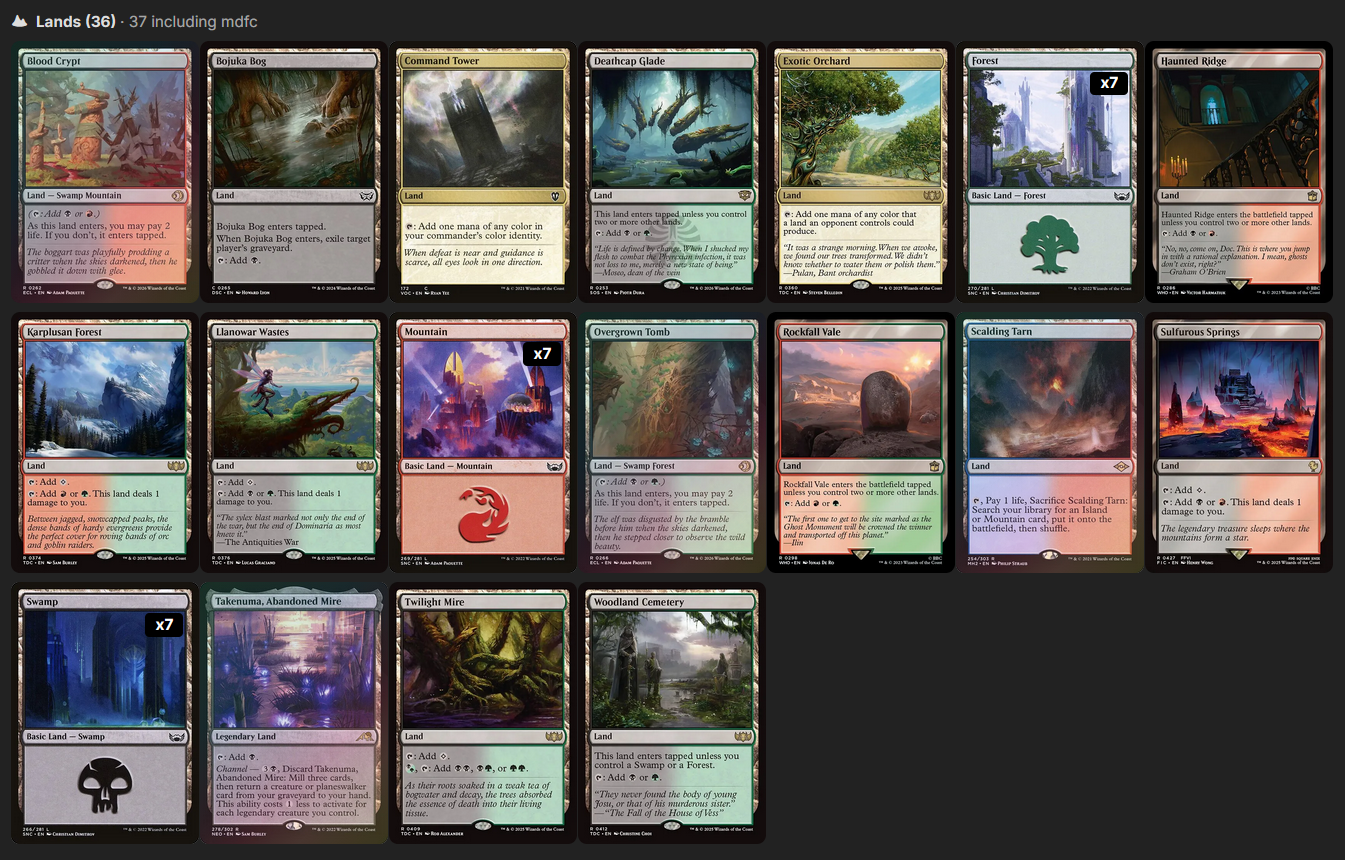
Henzie “Toolbox” Torre leads a Jund Commander deck built around blitz pressure, sacrifice value, and graveyard recursion. The deck uses Henzie to turn high-impact creatures into temporary threats that generate immediate battlefield impact, attack with haste, and replace themselves when sacrificed at end step. Rather than relying on a single linear plan, this build is constructed as a layered midrange engine, using powerful enters-the-battlefield effects, death triggers, and mass recursion to maintain pressure across every stage of the game.
This is a Jund Blitz Reanimator and Sacrifice Value deck designed to convert large creatures into repeated sources of removal, card advantage, mana development, and closing pressure. Henzie enables cards such as Archon of Cruelty, Etali, Primal Storm, Inferno Titan, Noxious Gearhulk, and Avenger of Zendikar to operate as fast, high-impact plays while still feeding the graveyard for later recursion.
The deck’s identity is centered on controlled impermanence. Creatures are meant to enter, generate immediate value, attack, die profitably, and return later through effects like Living Death, Victimize, Animate Dead, Reanimate, Phyrexian Delver, Timeless Witness, and Meren of Clan Nel Toth. This creates a play pattern where every large threat advances multiple zones at once: battlefield, graveyard, hand, and board presence.
Henzie turns mana value four-or-greater creatures into flexible blitz threats, allowing the deck to apply pressure without overcommitting permanently to the board. Archon of Cruelty, Junji, the Midnight Sky, Atsushi, the Blazing Sky, Elder Brain, and Etali, Primal Storm all create immediate advantage when deployed this way, either disrupting opponents, drawing cards, generating mana, or stealing resources.
Support pieces such as Goreclaw, Terror of Qal Sisma, Cloud Key, and Rhythm of the Wild improve the efficiency of the creature suite. Rhythm also gives the deck resilience against counterspells while allowing non-blitzed creatures to enter with haste or additional board presence.
The deck includes a strong sacrifice package to ensure creatures can be converted into value on demand rather than only at the end of turn. Viscera Seer, Greater Good, Evolutionary Leap, Skullclamp, Disciple of Bolas, and Ziatora, the Incinerator allow temporary creatures to become cards, selection, damage, Treasures, or future creature access.
This gives the deck significant control over its own pacing. A blitzed creature can attack, trigger its effect, then be sacrificed before end step for an additional payoff. Greater Good is especially important, turning the deck’s large bodies into deep card selection while loading the graveyard for later reanimation.
The graveyard is treated as a second hand. Living Death serves as one of the deck’s strongest reset and finishing tools, especially after several blitzed creatures have accumulated in the graveyard. Victimize, Reanimate, Animate Dead, and Phyrexian Delver provide efficient ways to bring back high-impact creatures ahead of curve, while Meren of Clan Nel Toth and Timeless Witness support longer attrition games.
The recursion package also gives the deck strong recovery after board wipes. Since many of the deck’s creatures are intended to die naturally, removal often advances the deck’s larger plan rather than fully disrupting it.
This build uses a broad suite of interaction across multiple permanent types. Abrupt Decay, Assassin’s Trophy, Beast Within, Chaos Warp, and Deadly Rollick provide flexible spot removal, while Blasphemous Act offers a clean board reset when the table develops too quickly.
Creature-based control is also built directly into the threat package. Noxious Gearhulk, Inferno Titan, Bane of Progress, Archon of Cruelty, Vaevictis Asmadi, the Dire, and Kardur, Doomscourge all influence the battlefield while still supporting Henzie’s larger blitz and recursion structure.
The deck closes games by stacking repeated combat pressure with overwhelming reanimation turns. Large threats such as Artisan of Kozilek, Giant Adephage, Avenger of Zendikar, Etali, Primal Storm, and Archon of Cruelty can quickly shift the table when deployed ahead of curve or returned through recursion.
Living Death is the central late-game pivot, turning a stocked graveyard into a decisive battlefield swing. Ziatora, the Incinerator, Gray Merchant of Asphodel, Inferno Titan, and Vaevictis Asmadi, the Dire provide additional reach, allowing the deck to convert creature advantage into direct damage, life swings, and permanent disruption.
This Flagship build is constructed to emphasize Henzie’s unique ability to turn expensive creatures into efficient, disposable engines. Every major creature inclusion is selected for immediate impact, death value, recursion potential, or synergy with sacrifice outlets. The deck is tuned to create meaningful decisions throughout the game, balancing aggressive tempo with graveyard setup and long-game inevitability.
The mana base supports smooth Jund sequencing with efficient ramp, color fixing, and utility lands. Cards such as Bloom Tender, Ignoble Hierarch, Farseek, Nature’s Lore, Three Visits, Sol Ring, Arcane Signet, and Wild Growth help accelerate into Henzie and the deck’s larger threats while maintaining consistent access to all three colors.
100-card singleton Commander deck, legal for EDH
All cards in Near Mint to Lightly Played condition
Professionally sleeved in premium Dragon Shield sleeves and ready to play
Built as part of the Flagship Commander line
Built for consistent performance and strategic depth
Enjoy Jund decks built around sacrifice, recursion, and high-impact creature sequencing
Prefer Commander decks with layered graveyard value and flexible midrange lines
Appreciate professionally constructed builds with cohesive synergy and deliberate card selection
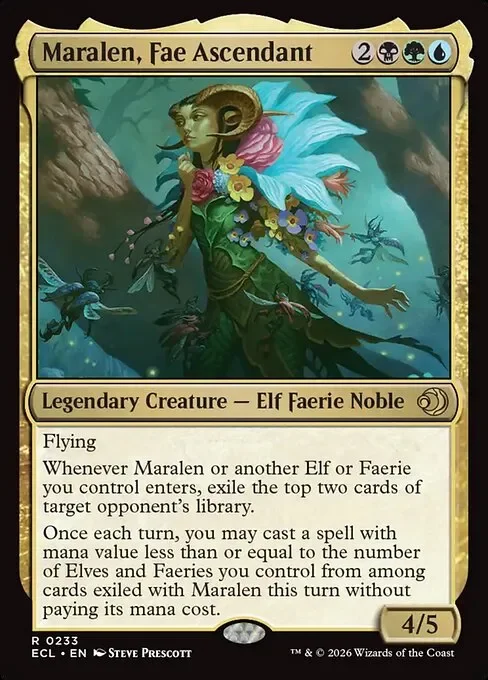
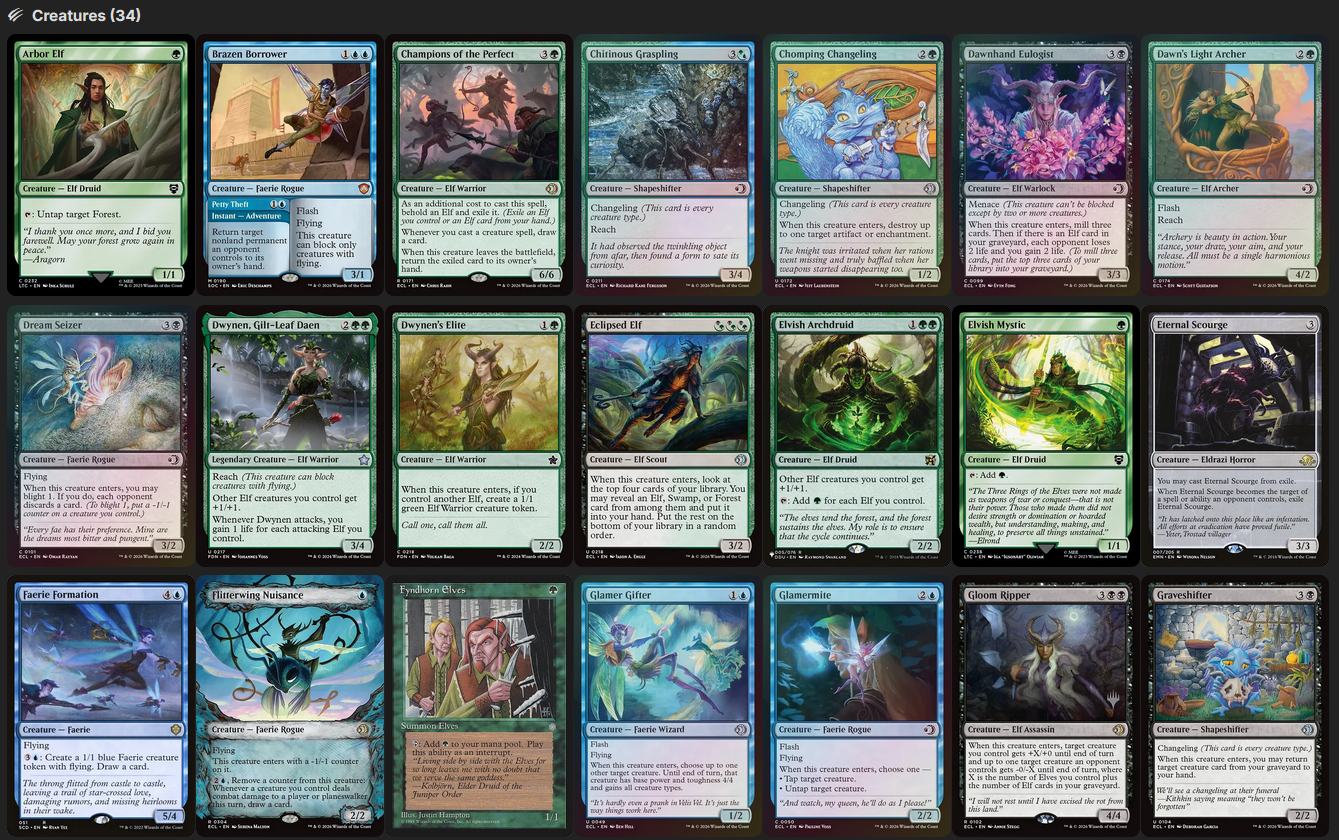
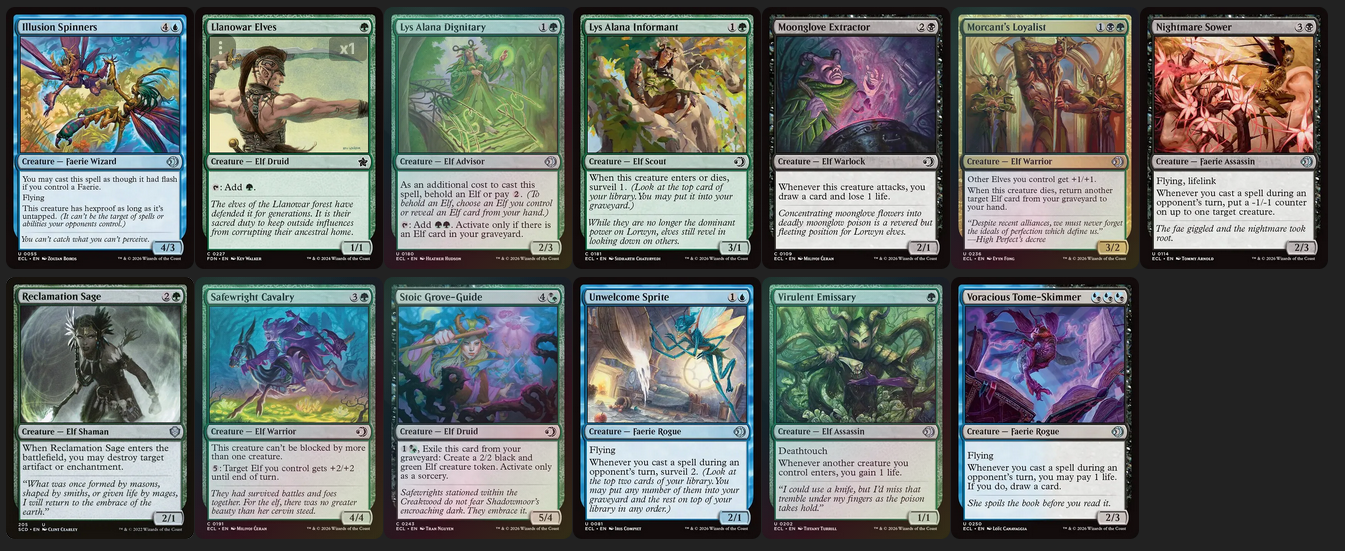
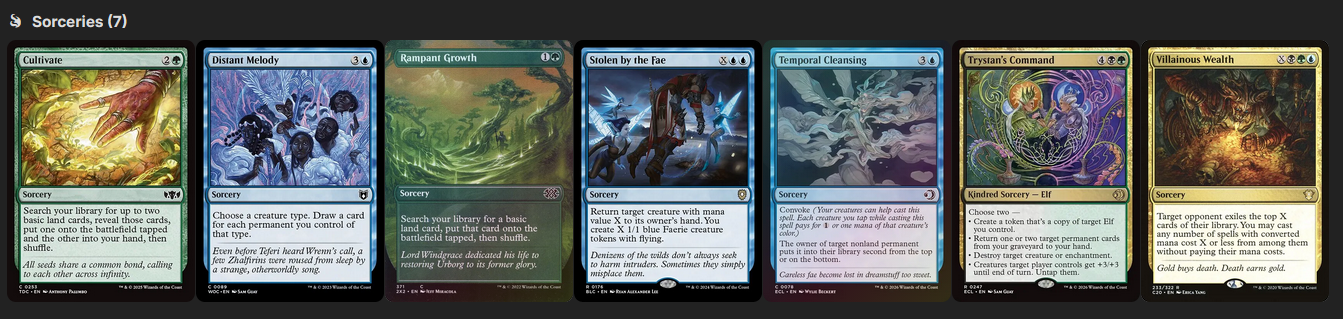
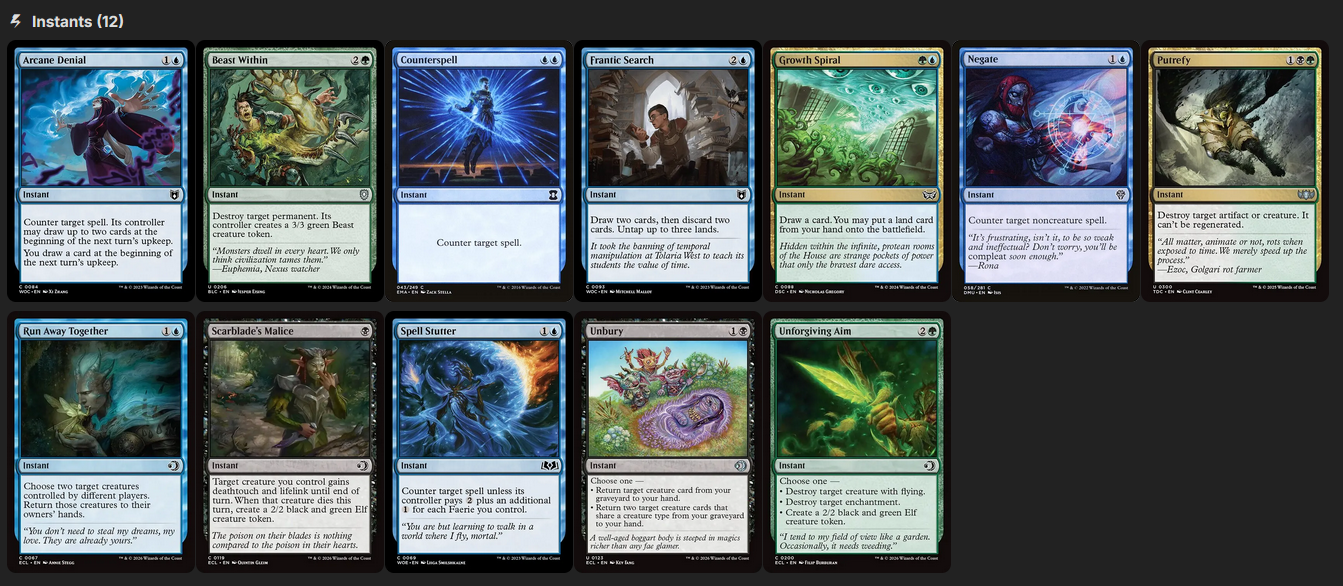
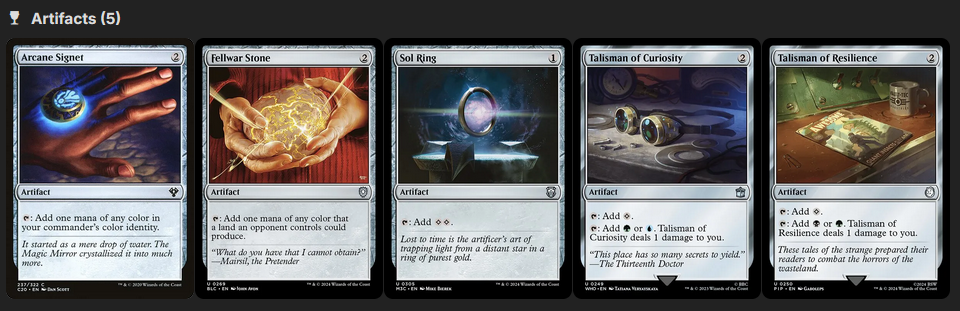
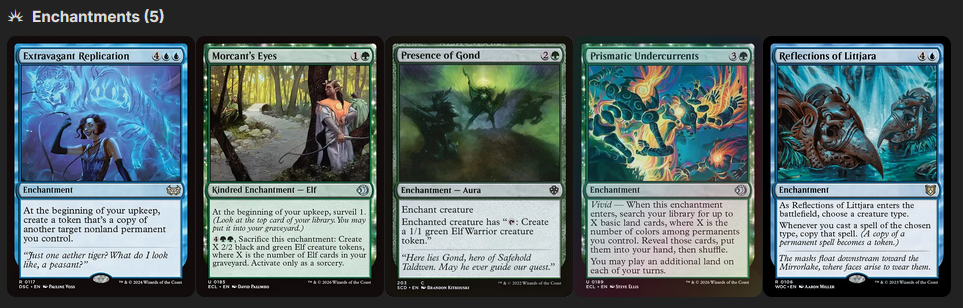
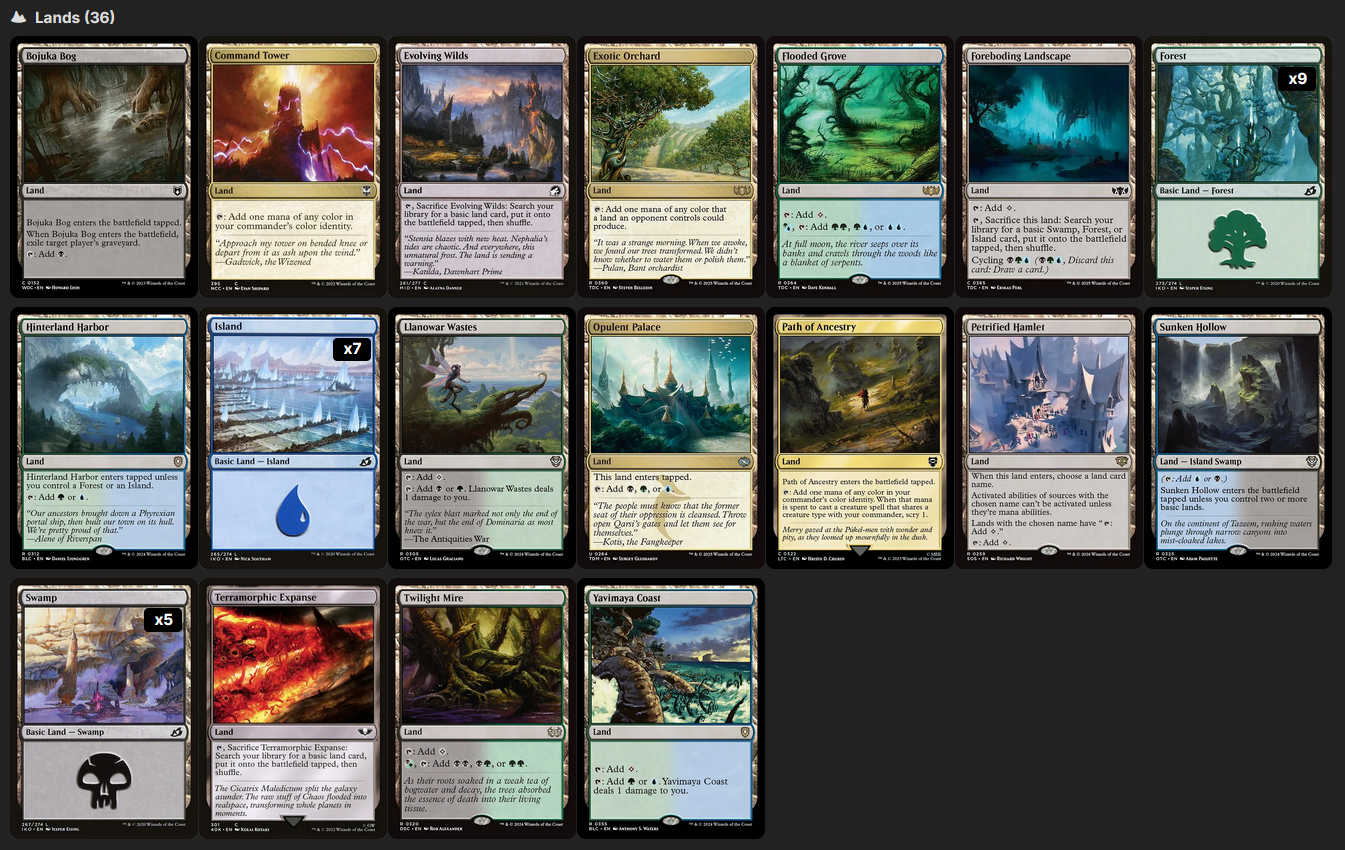
Maralen, Fae Ascendant leads a Sultai creature-based value deck built around Elf and Faerie density, repeatable exile access, and layered tribal synergy. The deck uses Maralen’s enter-the-battlefield trigger to convert a steady stream of small creatures into access to opponents’ libraries, then turns that advantage into free spells through a growing board of Elves and Faeries. The result is a flexible midrange shell that balances ramp, evasive pressure, tribal scaling, and disruptive interaction.
This build functions as an Elves and Faeries value engine with a Sultai midrange structure. Early mana creatures such as Arbor Elf, Llanowar Elves, Fyndhorn Elves, and Elvish Mystic support efficient development, while tribal payoffs like Elvish Archdruid, Dwynen, Gilt-Leaf Daen, Champions of the Perfect, and Reflections of Littjara reinforce the deck’s creature-based plan.
The Faerie side of the deck provides evasion, tempo, and card access through cards such as Dream Seizer, Faerie Formation, Glamer Gifter, Unwelcome Sprite, and Voracious Tome-Skimmer. Together, the two tribes give Maralen a steady flow of triggers while maintaining pressure through both wide boards and evasive threats.
Maralen rewards consistent Elf and Faerie deployment, and this list is built to keep those triggers active across the game. Low-cost creatures such as Dwynen’s Elite, Lys Alana Dignitary, Lys Alana Informant, and Glamermite help establish board presence while feeding Maralen’s exile-based spell access. Changeling creatures such as Chomping Changeling, Chitinous Graspling, and Graveshifter broaden the tribal count and give the deck additional flexibility.
The deck’s ramp package supports both early commander deployment and larger late-game plays. Sol Ring, Arcane Signet, Fellwar Stone, Talisman of Curiosity, and Talisman of Resilience provide reliable fixing, while Cultivate, Rampant Growth, and Growth Spiral help stabilize the three-color mana base. Creature-based ramp from Elvish Archdruid and the one-mana Elves also helps turn a wide board into meaningful resource acceleration.
Maralen creates access to opponents’ libraries, but the deck also includes independent card flow to maintain consistency. Distant Melody can convert a developed tribal board into a major draw effect, while Faerie Formation, Frantic Search, Prismatic Undercurrents, and Voracious Tome-Skimmer help keep cards moving. Extravagant Replication and Reflections of Littjara add long-game value by multiplying key permanents and creature casts.
The list includes a measured suite of disruption to protect its board and answer problematic threats. Arcane Denial, Counterspell, Negate, and Spell Stutter provide stack interaction, while Beast Within, Putrefy, Reclamation Sage, Scarblade’s Malice, and Trystan’s Command give the deck answers across multiple permanent types. Bojuka Bog adds graveyard pressure without taking up a spell slot.
Several cards help the deck maintain tempo while preserving access to key pieces. Brazen Borrower, Run Away Together, Temporal Cleansing, and Stolen by the Fae can reset opposing threats or create favorable board states. Unbury, Graveshifter, Morcant’s Loyalist, and Eternal Scourge provide recursion or repeatable utility, allowing the deck to recover after removal and continue developing its tribal engine.
The deck closes through accumulated board advantage, evasive pressure, and large resource swings. Elvish Archdruid, Champions of the Perfect, Dwynen, Gilt-Leaf Daen, and Morcant’s Loyalist strengthen the creature base, while Faeries chip in through the air. Larger finishers and advantage pieces such as Villainous Wealth, Extravagant Replication, Faerie Formation, and Nightmare Sower give the deck multiple ways to convert mana and board presence into a decisive endgame.
This Evergreen build is designed as a cohesive Sultai tribal-value Commander deck with Maralen serving as both engine and payoff. The card selection emphasizes creature density, tribal overlap, efficient ramp, flexible interaction, and repeatable card advantage. Every inclusion supports the deck’s central plan of developing Elves and Faeries, triggering Maralen consistently, and turning incremental value into sustained board control.
The mana base is built to support smooth three-color sequencing through a blend of fixing lands, utility lands, ramp spells, and mana rocks. The deck is tuned for consistent performance and strategic depth while preserving the thematic identity of Maralen’s Elf and Faerie alliance.
100-card singleton Commander deck, legal for EDH
All cards in Near Mint to Lightly Played condition
Professionally sleeved and ready to play
Built for consistent performance and strategic depth
Enjoy Sultai Commander decks built around tribal synergy and flexible value engines
Prefer creature-based strategies with evasive pressure, ramp, and interactive control tools
Appreciate cohesive, professionally constructed decks with clear mechanical identity
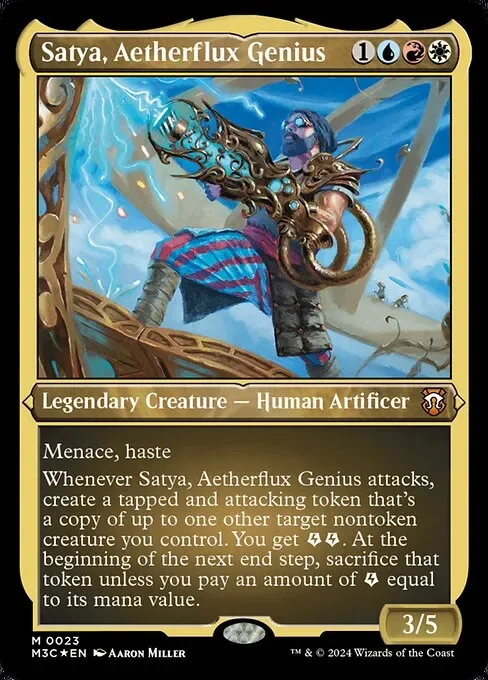
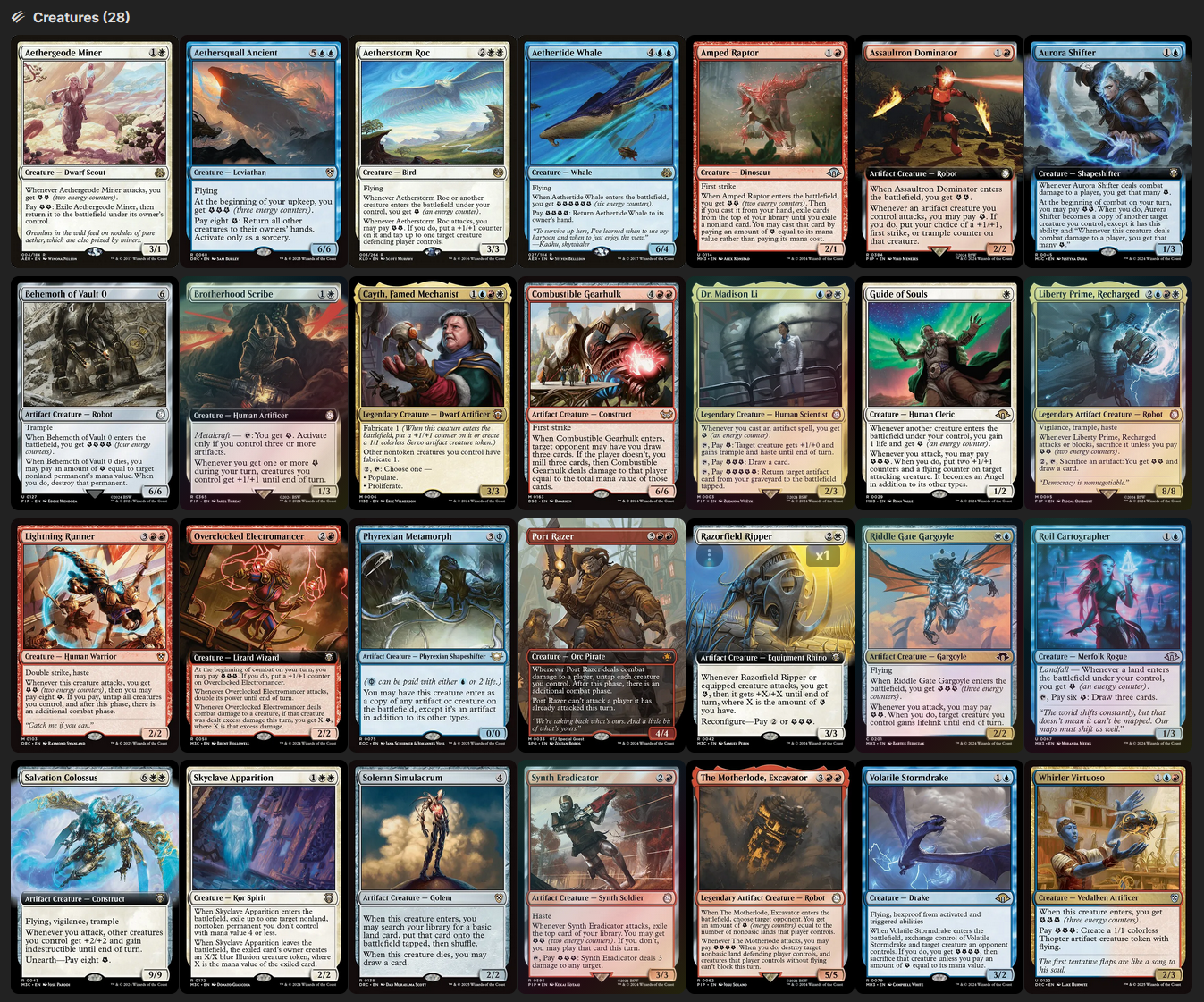
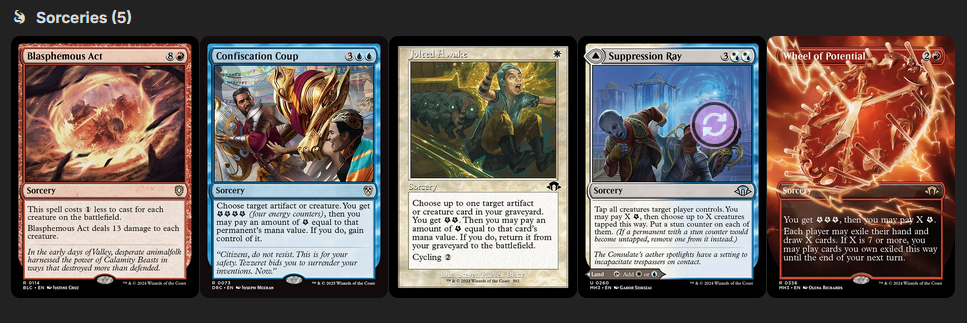
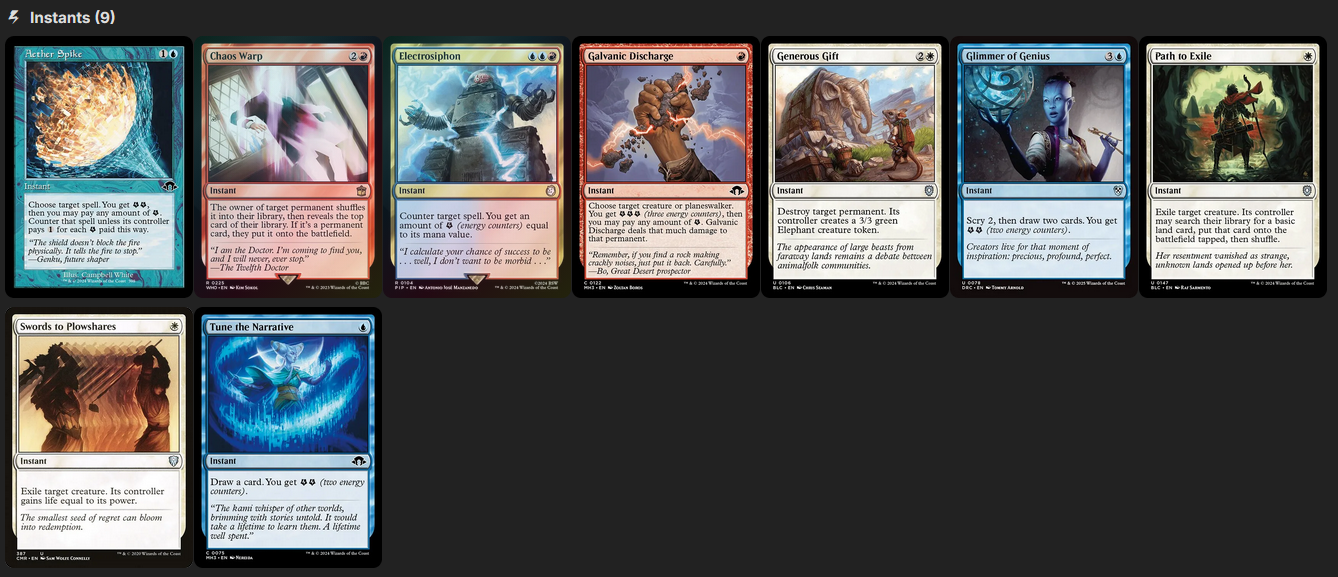
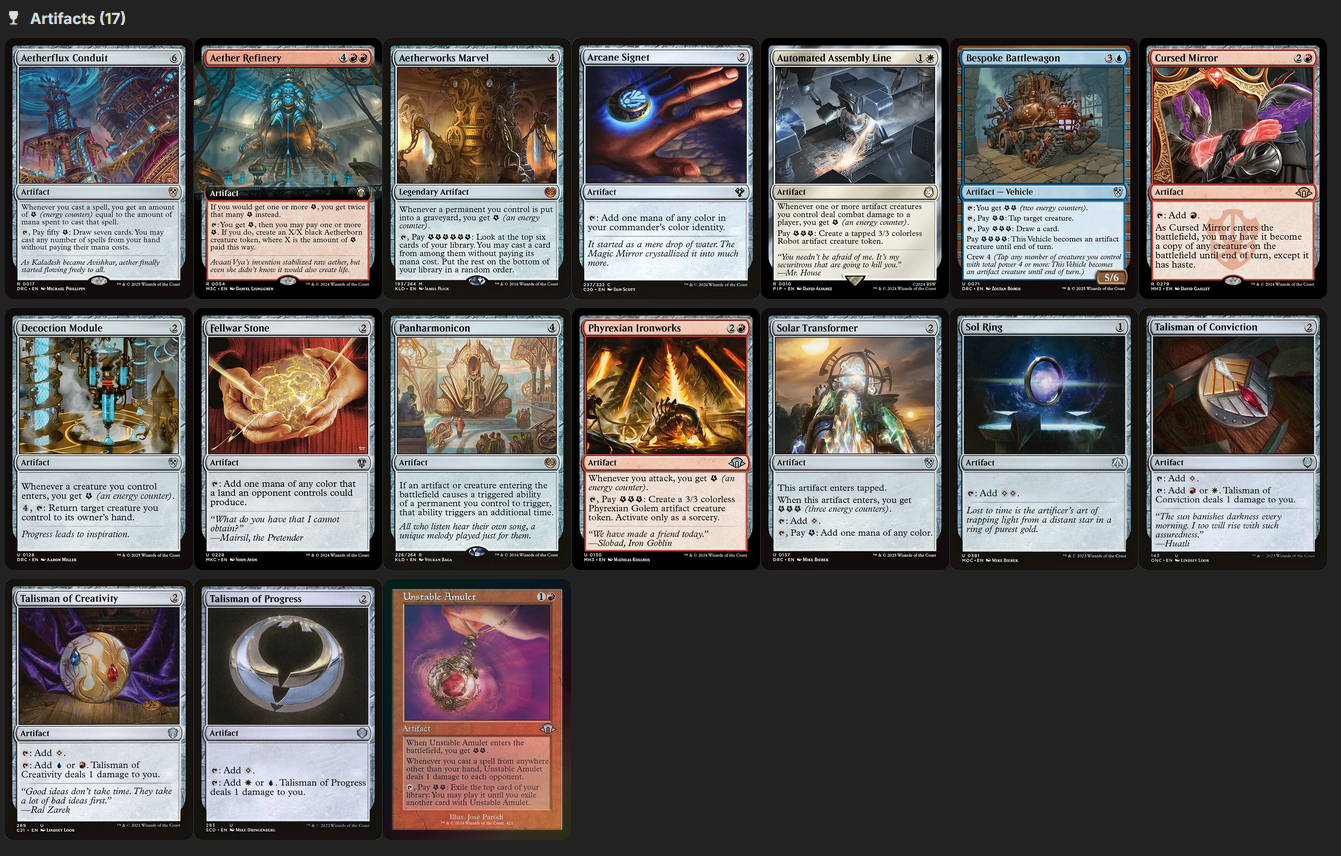
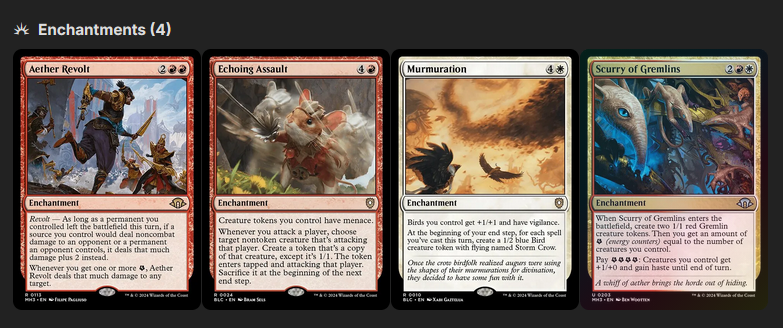
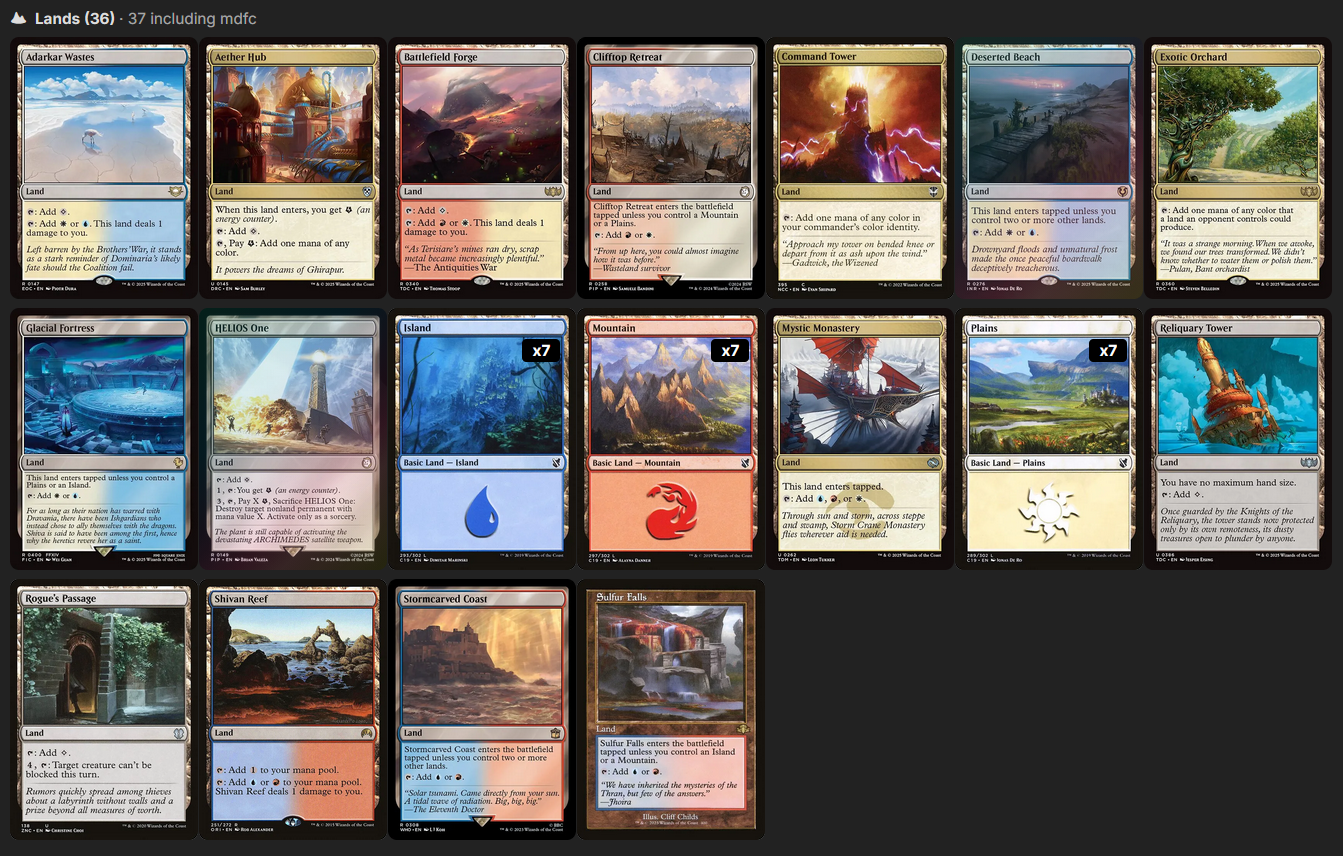
Built around Satya, Aetherflux Genius, this Jeskai Commander deck is designed as a tightly coordinated energy and artifact value engine. Satya turns combat into a resource amplifier, creating temporary copies of key creatures to multiply enter-the-battlefield effects, pressure opposing boards, and convert stored energy into meaningful advantage. The deck plays as a layered midrange engine, developing steadily through artifacts, copied threats, and scalable energy payoffs before turning that advantage into decisive combat steps.
Rather than relying on a single linear line, the list is structured to reward sequencing and board development. Energy production, artifact synergies, and high-impact creatures all reinforce one another, giving the deck a consistent identity across a wide range of multiplayer games.
This build operates as an artifact-centric Jeskai value shell with energy as its core supporting resource. Cards such as Aether Hub, Aether Revolt, Glimmer of Genius, Electrosiphon, and Tune the Narrative keep energy flowing, while payoffs like Aethersquall Ancient, Aethertide Whale, Whirler Virtuoso, Aetherflux Conduit, and Aetherworks Marvel convert that resource into board presence, card selection, and pressure.
Satya’s attack trigger gives the deck an additional layer of scaling by copying creatures that already provide immediate value. Solemn Simulacrum, Skyclave Apparition, Combustible Gearhulk, Roil Cartographer, Behemoth of Vault 0, and Phyrexian Metamorph all become stronger when their impact can be repeated through combat. The result is a deck that feels carefully tuned around repeated value generation rather than isolated plays.
Energy is the deck’s central engine, and the list is built to produce it from multiple angles without sacrificing tempo. Early enablers like Aether Hub and Tune the Narrative help establish the resource base, while midgame pieces such as Aether Revolt, Glimmer of Genius, Electrosiphon, Dr. Madison Li, and HELIOS One keep the deck supplied as the battlefield develops.
That energy is then converted into real advantage through cards that matter at every stage of the game. Whirler Virtuoso produces evasive artifact bodies, Aethersquall Ancient and Aethertide Whale reward stockpiling energy, and Aetherworks Marvel, Aetherflux Conduit, and The Motherlode, Excavator give the deck meaningful ways to turn accumulated resources into board control and momentum.
The artifact shell gives the deck much of its structural consistency. Arcane Signet, Fellwar Stone, Sol Ring, the Talismans, Automated Assembly Line, Bespoke Battlewagon, Cursed Mirror, Solar Transformer, and Phyrexian Ironworks all contribute to ramp, board presence, or utility while reinforcing the broader artifact plan.
That foundation becomes much stronger alongside ETB-focused creatures and support pieces. Panharmonicon is one of the deck’s most important synergy cards, substantially increasing the value of creatures such as Solemn Simulacrum, Skyclave Apparition, Combustible Gearhulk, Roil Cartographer, Amped Raptor, and Guide of Souls. Satya extends that same concept into combat, letting the deck convert attack steps into additional triggers and temporary battlefield duplication.
The interaction package gives the deck a polished Jeskai control element without distracting from the main engine. Swords to Plowshares, Path to Exile, Generous Gift, Chaos Warp, Galvanic Discharge, Confiscation Coup, and Volatile Stormdrake provide flexible answers across multiple permanent types, allowing the deck to keep opposing threats in check while continuing to advance its own board.
Blasphemous Act adds an efficient reset button when the battlefield becomes crowded, while Skyclave Apparition and Behemoth of Vault 0 provide interaction attached to creatures that still work with Satya’s copying plan. This makes the deck resilient in longer games, since many of its answers remain useful even when folded into the broader value engine.
Token generation is an important secondary layer in the build, especially where it overlaps with artifacts and copied creatures. Whirler Virtuoso, Automated Assembly Line, Scurry of Gremlins, Cayth, Famed Mechanist, and Brotherhood Scribe all help widen the battlefield while also supporting the deck’s artifact count and energy payoffs.
These cards give the list a strong board-building plan even when Satya is not the only focus. Tokens help pressure life totals, support combat sequencing, and provide a steady battlefield presence for cards like Assaultron Dominator, Liberty Prime, Recharged, and Bespoke Battlewagon to capitalize on.
The deck closes games by turning incremental value into overwhelming combat pressure. Satya’s copied attackers, artifact token development, and repeated ETB triggers allow the board to scale quickly once the engine is online. Port Razer gives the list a particularly strong finishing element, letting a developed board turn one successful combat into a chain of increasingly dangerous attacks.
Top-end threats such as Combustible Gearhulk, Salvation Colossus, Liberty Prime, Recharged, Synth Eradicator, and Behemoth of Vault 0 ensure the deck does not stall once it reaches the late game. Instead, it transitions cleanly from setup into pressure, using energy and artifact synergies to maintain momentum until opponents are forced into unfavorable exchanges or fall to repeated combat steps.
This deck is built around synergy, consistency, and layered value. Every major inclusion supports one or more of the list’s core plans: generating energy, enhancing artifact density, creating meaningful ETB triggers, or providing high-impact copy targets for Satya. The result is a cohesive Jeskai Commander deck that rewards sequencing and board development while still offering strong interaction and reliable closing power.
The mana base is balanced to support smooth access across all three colors, while the artifact ramp package helps the deck progress efficiently into its most important engines and payoff creatures. The overall construction emphasizes purposeful card selection and consistent performance rather than scattered standalone effects.
100-card singleton Commander deck, legal for EDH
All cards in Near Mint to Lightly Played condition
Professionally sleeved and ready to play
Built for consistent performance and strategic depth
Enjoy artifact-based Commander decks with layered engines and repeatable value
Prefer Jeskai builds that combine interaction, ETB synergy, and combat pressure
Appreciate cohesive, professionally constructed decks with a clear strategic identity
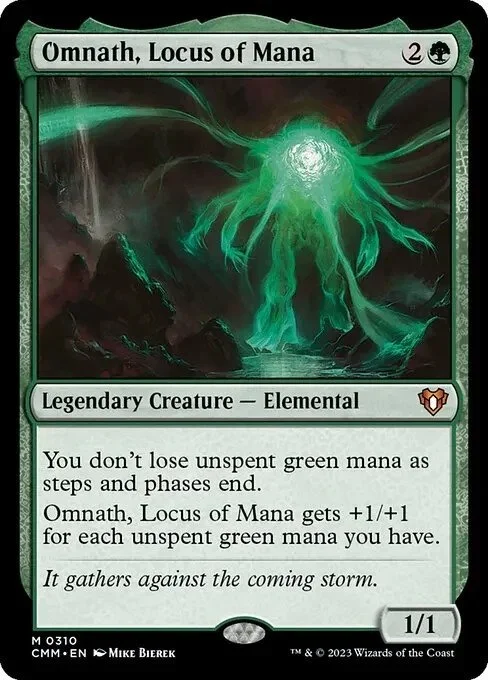
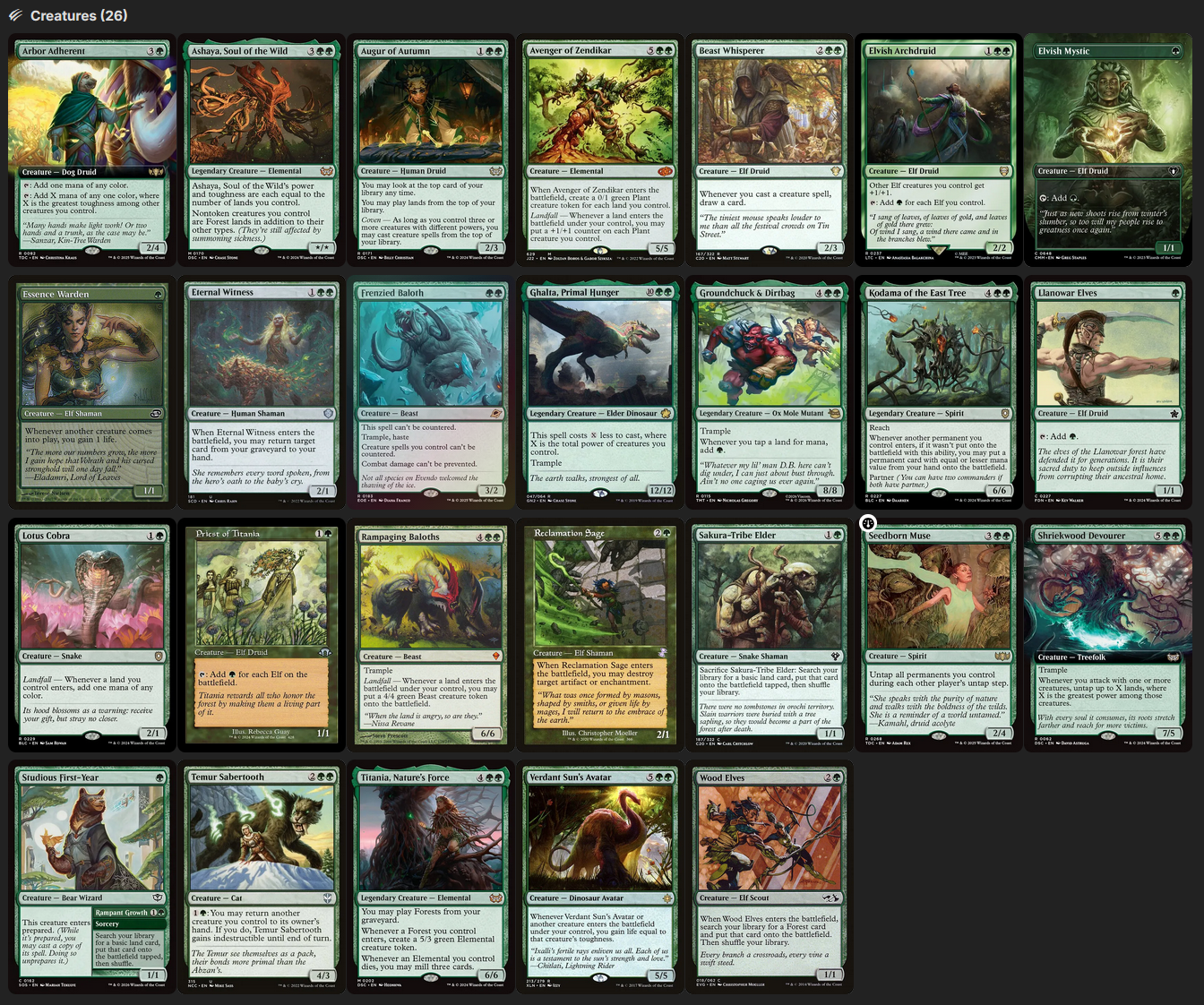
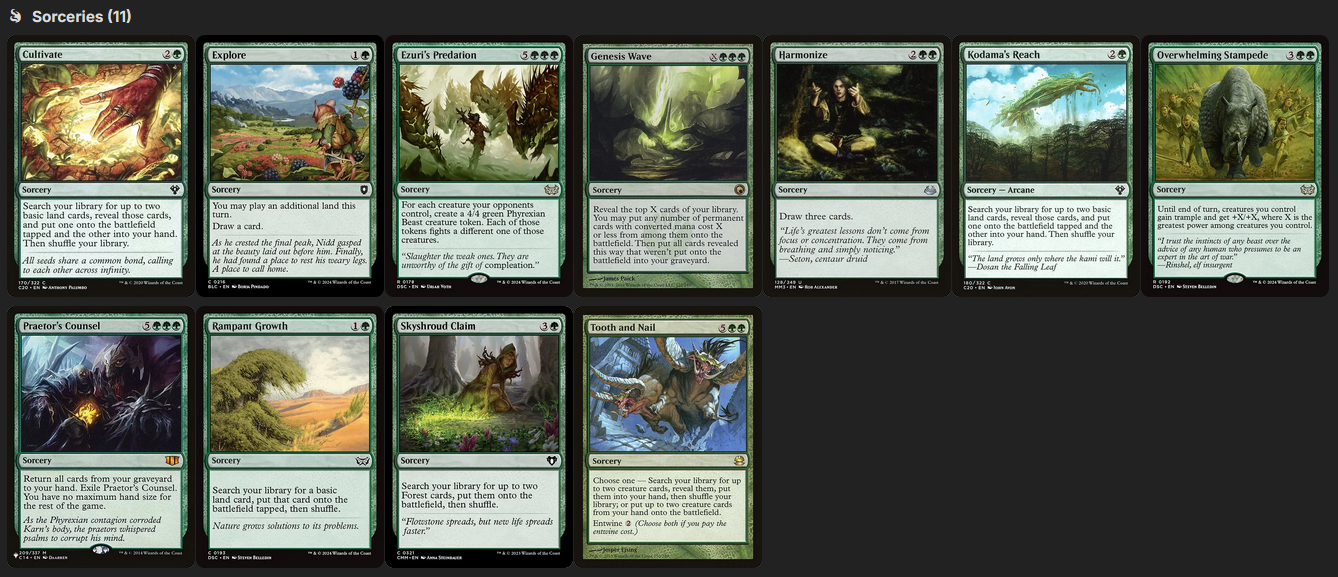
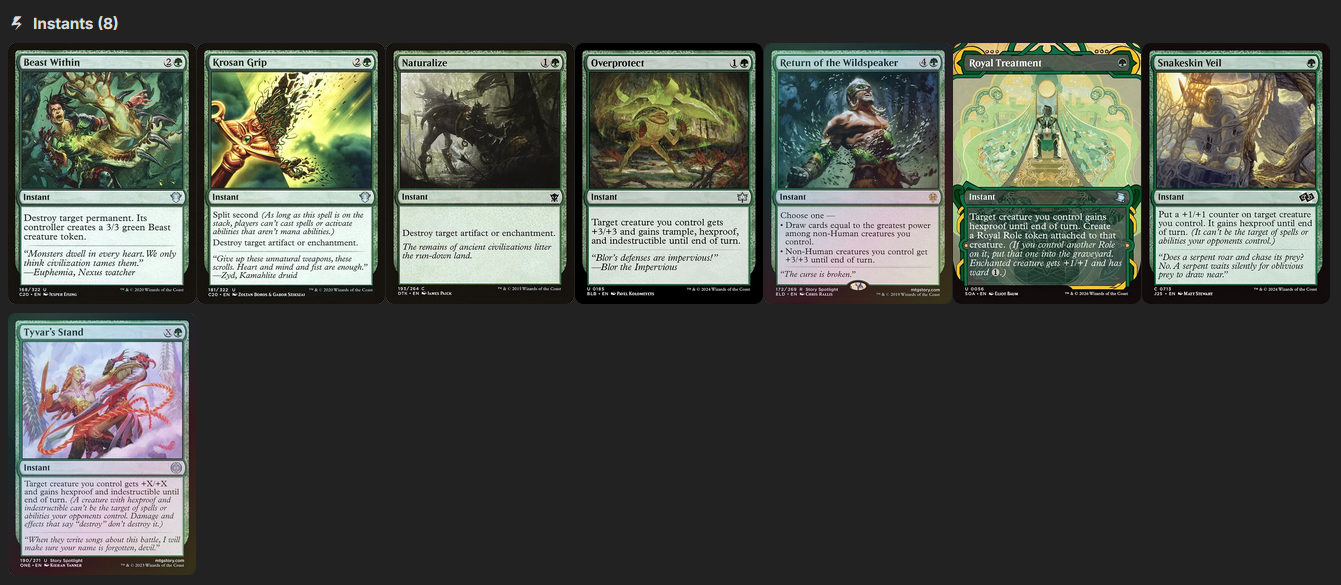
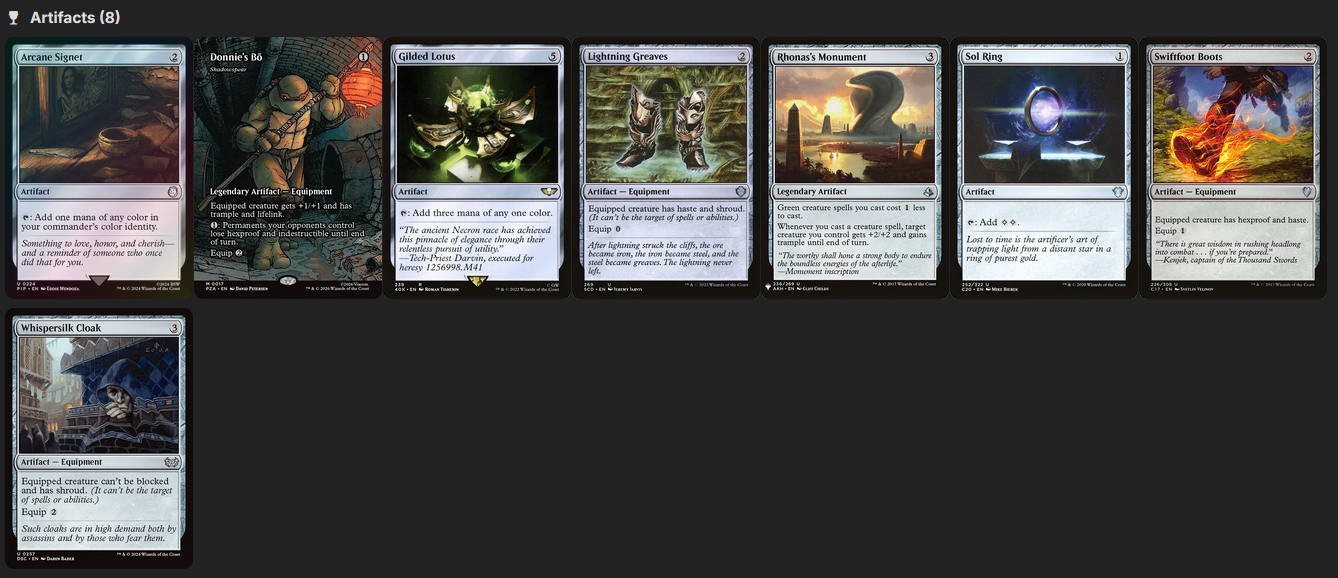
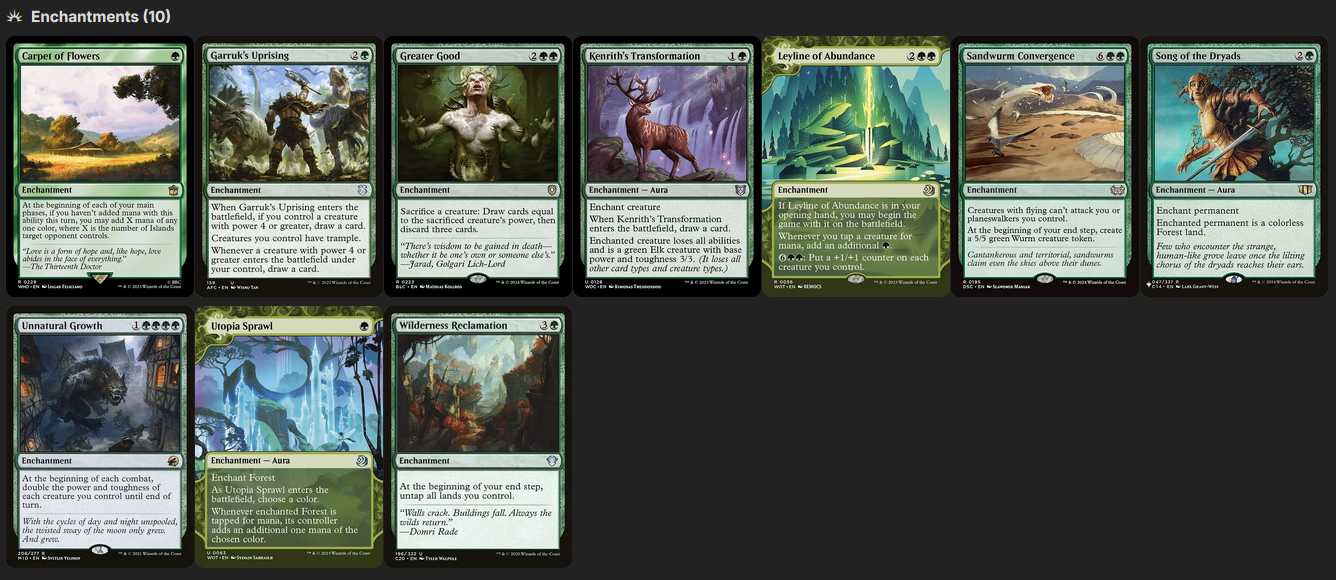
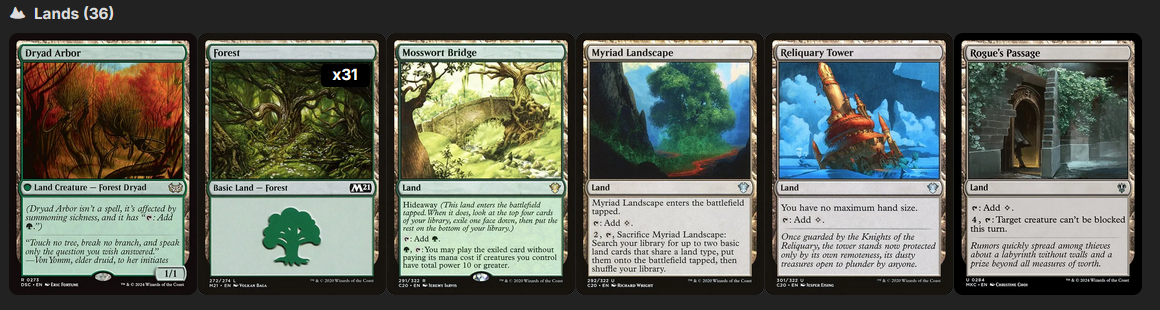
This Omnath, Locus of Mana Commander deck is built around sustained mana production and the efficient conversion of that resource advantage into overwhelming battlefield presence. By retaining unspent green mana, Omnath enables flexible sequencing across turns, allowing the deck to scale naturally from early development into dominant mid- and late-game positions. The strategy emphasizes consistency, layered ramp, and board states that expand incrementally before closing decisively.
The list blends traditional mono-green ramp with landfall-driven token generation and creature-based value engines. Mana acceleration fuels both continuous development and high-impact threats, while Elemental synergies and scalable effects ensure that each stage of the game contributes to a cohesive and reliable endgame.
The deck is anchored by a dense ramp package that combines creature, spell, and enchantment-based acceleration. Early development is driven by Llanowar Elves, Elvish Mystic, Priest of Titania, Lotus Cobra, and Carpet of Flowers, establishing strong tempo and mana efficiency.
Land-based ramp from Cultivate, Kodama’s Reach, Skyshroud Claim, and Rampant Growth ensures consistent land drops, while enchantments such as Utopia Sprawl and Leyline of Abundance enhance long-term output. Seedborn Muse and Wilderness Reclamation extend mana availability across turns, allowing Omnath to store and leverage resources with precision.
Land-driven board development remains central to the deck’s structure. Avenger of Zendikar, Rampaging Baloths, and Titania, Nature’s Force convert land drops into meaningful battlefield presence, generating scalable token boards that grow throughout the game.
Additional support from Kodama of the East Tree enables extended sequences of permanent deployment, reinforcing the deck’s ability to translate mana and land development directly into board advantage. These interactions ensure that incremental growth consistently compounds into a dominant position.
The deck maintains momentum through a mix of continuous and burst card advantage. Beast Whisperer, Garruk’s Uprising, and Greater Good provide repeatable draw tied to creature development, while Harmonize, Return of the Wildspeaker, and Praetor’s Counsel offer larger resource swings.
Utility creatures such as Augur of Autumn, Eternal Witness, and Studious First-Year contribute to sustained value, ensuring the deck can continue advancing its plan while maintaining access to key pieces.
Interaction is integrated to maintain board presence without disrupting the deck’s primary game plan. Beast Within, Krosan Grip, Song of the Dryads, and Kenrith’s Transformation provide flexible answers to a wide range of permanents.
Protective elements such as Swiftfoot Boots, Lightning Greaves, Tyvar’s Stand, Snakeskin Veil, and Royal Treatment allow key threats to remain in play, preserving momentum through removal and interaction.
The deck closes through scalable combat damage and board-wide amplification. Large threats such as Ghalta, Primal Hunger, Groundchuck & Dirtbag, and Verdant Sun’s Avatar apply consistent pressure, while Unnatural Growth and Overwhelming Stampede convert established boards into decisive attacks.
Evasion tools including Rogue’s Passage and Whispersilk Cloak ensure that key creatures can connect, while Tooth and Nail and Genesis Wave provide powerful endgame plays that fully leverage accumulated mana.
This list is constructed with a focus on cohesion, repeatable value, and consistent performance. Ramp, landfall synergies, and scalable threats are integrated to ensure smooth progression from early development into late-game dominance. Each card contributes to maintaining board presence, amplifying mana production, or converting that advantage into reliable win conditions.
100-card singleton Commander deck, legal for EDH
All cards in Near Mint to Lightly Played condition
Professionally sleeved and ready to play
Built for consistent performance and strategic depth
Prefer mono-green Commander decks centered on ramp and land-based synergies
Enjoy building wide battlefield states that scale into powerful combat phases
Appreciate cohesive, professionally constructed decks with deliberate strategy
This five-color Spider-Verse Commander deck is built around Cosmic Spider-Man, uniting Spider heroes from across the multiverse into a cohesive tribal strategy. The deck develops a wide board of Spider creatures before transforming them into a devastating combat force through the commander’s universal combat keyword ability. Once assembled, the Spider-Verse becomes a fast, evasive army capable of delivering decisive attacks while stabilizing life totals through lifelink.
The deck blends tribal synergy, +1/+1 counter scaling, and tempo-driven casting mechanics to maintain consistent board pressure. Iconic Spider characters such as Miles Morales, Spider-Man 2099, and Spider-Man Noir contribute powerful combat and value engines, while support characters like Madame Web and Mary Jane Watson provide card advantage and resource flow. Together they create a layered strategy that rewards careful sequencing and board development.
This Temur Commander deck is built around Xyris, the Writhing Storm as a central value engine that converts shared card draw into sustained board presence. By encouraging all players to draw additional cards, the deck steadily generates Snake tokens while advancing multiple parallel win conditions. The result is a strategy that applies pressure through both combat and noncombat avenues without relying on fragile, all-in lines.
The deck’s construction emphasizes consistency and table awareness, combining group draw effects, efficient interaction, and scalable finishers. Its play pattern rewards deliberate sequencing and strong threat assessment, maintaining relevance throughout the game rather than spiking in isolated turns.
This list represents a Group Draw Tokens and Spells-Matter Hybrid. Xyris anchors the strategy, while additional draw engines and wheel effects ensure a steady flow of cards and token production. Secondary payoff creatures and spell-based damage sources allow the deck to capitalize on high draw volume even when combat stalls.
The deck blends creature pressure with spell synergy, creating a flexible game plan that adapts to board state and pod composition. Flavor and mechanics align closely, with opponent card draw serving as both incentive and liability.
This Commander deck is built around Yoriko’s signature blend of evasive pressure, incremental card advantage, and life-draining top-deck manipulation. The list emphasizes disciplined tempo play, rewarding precise sequencing and combat decisions rather than explosive, all-in lines. The overall experience is measured and surgical, steadily converting small advantages into inevitability.
Designed as a Ninja-forward control shell, the deck balances evasive creatures with interaction, recursion, and selective top-deck influence to ensure Yoriko consistently generates value while disrupting opposing game plans.
This build represents a Ninja Tempo and Control hybrid, combining unblockable or evasive creatures with a layered interaction suite. Core Ninjas such as Mist-Syndicate Naga, Okiba-Gang Shinobi, Walker of Secret Ways, and Skullsnatcher exemplify the deck’s ability to pressure life totals while attacking hands, graveyards, and board states simultaneously.
Higher mana-value spells like Stormtide Leviathan, Temporal Trespass, and Rune-Scarred Demon are deliberately included to amplify Yoriko’s triggered damage while remaining functionally relevant when drawn or reanimated.
No results match your search. Try removing a few filters.

