Judith, Carnage Connoisseur leads a Rakdos Commander deck built around instant and sorcery sequencing, damage amplification, sacrifice value, and disposable creature pressure. Judith turns every spell into a flexible tool, either adding deathtouch and lifelink to damage-based interaction or producing Imp tokens that fuel the deck’s sacrifice, drain, and recursion engines. The result is a tightly focused spellslinger-aristocrats hybrid that converts small spells and expendable bodies into sustained pressure.
This build blends Rakdos sacrifice mechanics with spell-based board control, allowing cards like Dual Shot, Twin Bolt, Fire Magic, Anger of the Gods, and Chain Reaction to scale dramatically under Judith’s static spell-modifying ability. At the same time, token generators, death triggers, and sacrifice outlets create a secondary engine that keeps resources flowing through cards such as Pitiless Plunderer, Mirkwood Bats, Morbid Opportunist, Ophiomancer, and Viscera Seer.
Deck Overview
This is a Rakdos Spellslinger Aristocrats deck with a strong emphasis on damage-based control, sacrifice value, and incremental life-total pressure. Judith allows small burn and sweep effects to become highly efficient removal tools, while also creating Imp tokens that naturally support the sacrifice package.
The deck’s creature suite reinforces this structure with payoff pieces like Firebrand Archer, Thermo-Alchemist, Kaervek the Merciless, Raphael, Fiendish Savior, and Kuja, Genome Sorcerer. These cards reward frequent spellcasting, creature deaths, and token production while keeping the deck’s pressure distributed across multiple angles of attack.
Spell-Based Control
Judith’s deathtouch mode turns low-damage spells into premium removal. Effects such as Dual Shot, Twin Bolt, Shock, Lightning Strike, Barrage of Boulders, and Boiling Earth become far more efficient when they can remove larger creatures through deathtouch.
Larger sweepers like Anger of the Gods, Chain Reaction, Jaya’s Immolating Inferno, and Fireball give the deck access to scalable board control and late-game reach. This allows the deck to regulate creature-heavy boards while preserving the ability to convert damage spells into closing pressure.
Token Production and Sacrifice Value
Judith’s Imp token mode gives the deck a steady supply of expendable creatures. These tokens work naturally with Viscera Seer, Village Rites, Deadly Dispute, Costly Plunder, Bone Splinters, Final Vengeance, and Worthy Cost, turning temporary board presence into cards, mana, removal, and selection.
Pitiless Plunderer and Mirkwood Bats provide strong payoff layers for the sacrifice plan. Treasures generated through sacrifice help support larger plays, while drain effects punish opponents as creatures and tokens leave the battlefield.
Card Advantage and Resource Flow
The deck includes several ways to maintain access to cards across longer games. Morbid Opportunist, Greed, Theater of Horrors, Faithless Looting, Risky Research, Seize the Spoils, and Diabolic Tutor provide draw, filtering, or card selection at different points on the curve.
Charmbreaker Devils and Victimize add recursion to the deck’s resource plan, allowing key creatures or spells to remain relevant after removal. Lich’s Mastery gives the deck a high-risk, high-reward card advantage engine that pairs especially well with lifelink-enabled spells from Judith.
Board Presence and Resilience
The deck is built to continue functioning through attrition. Ophiomancer creates repeatable bodies, Yahenni, Undying Partisan provides a durable sacrifice outlet, and Fake Your Own Death, Unlikely Aid, Rush of Vitality, Professor’s Warning, and Masterful Flourish help protect or leverage key creatures during combat and removal exchanges.
Brash Taunter and Combustion Man give the deck additional damage-based pressure while making combat and removal decisions more difficult for opponents. These pieces help the deck maintain relevance even when the battlefield becomes unstable.
Closing the Game
The deck closes through layered pressure rather than relying on a single finish. Repeated spellcasting with Firebrand Archer, Thermo-Alchemist, Kuja, Genome Sorcerer, and Kaervek the Merciless steadily reduces opposing life totals, while Imp death triggers, Mirkwood Bats, and Raphael, Fiendish Savior reward the deck for sacrificing or losing creatures.
Large damage spells such as Fireball and Jaya’s Immolating Inferno provide direct finishing potential once the deck has developed enough mana through Sol Ring, Arcane Signet, Talisman of Indulgence, Gilded Lotus, Everflowing Chalice, and Treasure production.
Build Philosophy
This Judith build is designed as a cohesive Rakdos engine deck that uses every spell as either interaction, token production, or direct pressure. The list balances removal, sacrifice outlets, token production, recursion, and mana acceleration to ensure the commander’s abilities are consistently relevant throughout the game.
The mana base supports smooth Rakdos sequencing through cards such as Blood Crypt, Dragonskull Summit, Smoldering Marsh, Foreboding Ruins, Temple of Malice, Command Tower, Exotic Orchard, and Rakdos Carnarium. Each inclusion supports the central plan of turning small spells, expendable creatures, and death triggers into cumulative advantage.
Technical Details
100-card singleton Commander deck, legal for EDH
All cards in Near Mint to Lightly Played condition
Professionally sleeved and ready to play
Built for consistent performance and strategic depth
Ideal For Players Who:
Enjoy Rakdos decks that combine spellcasting, sacrifice value, and incremental damage
Prefer aristocrats-style engines with strong removal and board control tools
Appreciate Commander decks built around layered synergy and deliberate sequencing
Judith, Carnage Connoisseur leads a Rakdos Commander deck built around instant and sorcery sequencing, damage amplification, sacrifice value, and disposable creature pressure. Judith turns every spell into a flexible tool, either adding deathtouch and lifelink to damage-based interaction or producing Imp tokens that fuel the deck’s sacrifice, drain, and recursion engines. The result is a tightly focused spellslinger-aristocrats hybrid that converts small spells and expendable bodies into sustained pressure.
This build blends Rakdos sacrifice mechanics with spell-based board control, allowing cards like Dual Shot, Twin Bolt, Fire Magic, Anger of the Gods, and Chain Reaction to scale dramatically under Judith’s static spell-modifying ability. At the same time, token generators, death triggers, and sacrifice outlets create a secondary engine that keeps resources flowing through cards such as Pitiless Plunderer, Mirkwood Bats, Morbid Opportunist, Ophiomancer, and Viscera Seer.
Deck Overview
This is a Rakdos Spellslinger Aristocrats deck with a strong emphasis on damage-based control, sacrifice value, and incremental life-total pressure. Judith allows small burn and sweep effects to become highly efficient removal tools, while also creating Imp tokens that naturally support the sacrifice package.
The deck’s creature suite reinforces this structure with payoff pieces like Firebrand Archer, Thermo-Alchemist, Kaervek the Merciless, Raphael, Fiendish Savior, and Kuja, Genome Sorcerer. These cards reward frequent spellcasting, creature deaths, and token production while keeping the deck’s pressure distributed across multiple angles of attack.
Spell-Based Control
Judith’s deathtouch mode turns low-damage spells into premium removal. Effects such as Dual Shot, Twin Bolt, Shock, Lightning Strike, Barrage of Boulders, and Boiling Earth become far more efficient when they can remove larger creatures through deathtouch.
Larger sweepers like Anger of the Gods, Chain Reaction, Jaya’s Immolating Inferno, and Fireball give the deck access to scalable board control and late-game reach. This allows the deck to regulate creature-heavy boards while preserving the ability to convert damage spells into closing pressure.
Token Production and Sacrifice Value
Judith’s Imp token mode gives the deck a steady supply of expendable creatures. These tokens work naturally with Viscera Seer, Village Rites, Deadly Dispute, Costly Plunder, Bone Splinters, Final Vengeance, and Worthy Cost, turning temporary board presence into cards, mana, removal, and selection.
Pitiless Plunderer and Mirkwood Bats provide strong payoff layers for the sacrifice plan. Treasures generated through sacrifice help support larger plays, while drain effects punish opponents as creatures and tokens leave the battlefield.
Card Advantage and Resource Flow
The deck includes several ways to maintain access to cards across longer games. Morbid Opportunist, Greed, Theater of Horrors, Faithless Looting, Risky Research, Seize the Spoils, and Diabolic Tutor provide draw, filtering, or card selection at different points on the curve.
Charmbreaker Devils and Victimize add recursion to the deck’s resource plan, allowing key creatures or spells to remain relevant after removal. Lich’s Mastery gives the deck a high-risk, high-reward card advantage engine that pairs especially well with lifelink-enabled spells from Judith.
Board Presence and Resilience
The deck is built to continue functioning through attrition. Ophiomancer creates repeatable bodies, Yahenni, Undying Partisan provides a durable sacrifice outlet, and Fake Your Own Death, Unlikely Aid, Rush of Vitality, Professor’s Warning, and Masterful Flourish help protect or leverage key creatures during combat and removal exchanges.
Brash Taunter and Combustion Man give the deck additional damage-based pressure while making combat and removal decisions more difficult for opponents. These pieces help the deck maintain relevance even when the battlefield becomes unstable.
Closing the Game
The deck closes through layered pressure rather than relying on a single finish. Repeated spellcasting with Firebrand Archer, Thermo-Alchemist, Kuja, Genome Sorcerer, and Kaervek the Merciless steadily reduces opposing life totals, while Imp death triggers, Mirkwood Bats, and Raphael, Fiendish Savior reward the deck for sacrificing or losing creatures.
Large damage spells such as Fireball and Jaya’s Immolating Inferno provide direct finishing potential once the deck has developed enough mana through Sol Ring, Arcane Signet, Talisman of Indulgence, Gilded Lotus, Everflowing Chalice, and Treasure production.
Build Philosophy
This Judith build is designed as a cohesive Rakdos engine deck that uses every spell as either interaction, token production, or direct pressure. The list balances removal, sacrifice outlets, token production, recursion, and mana acceleration to ensure the commander’s abilities are consistently relevant throughout the game.
The mana base supports smooth Rakdos sequencing through cards such as Blood Crypt, Dragonskull Summit, Smoldering Marsh, Foreboding Ruins, Temple of Malice, Command Tower, Exotic Orchard, and Rakdos Carnarium. Each inclusion supports the central plan of turning small spells, expendable creatures, and death triggers into cumulative advantage.
Technical Details
100-card singleton Commander deck, legal for EDH
All cards in Near Mint to Lightly Played condition
Professionally sleeved and ready to play
Built for consistent performance and strategic depth
Ideal For Players Who:
Enjoy Rakdos decks that combine spellcasting, sacrifice value, and incremental damage
Prefer aristocrats-style engines with strong removal and board control tools
Appreciate Commander decks built around layered synergy and deliberate sequencing


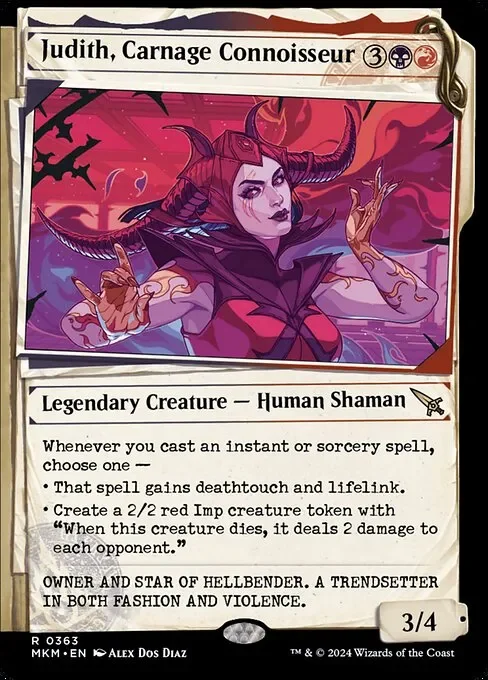 Image 1 of 7
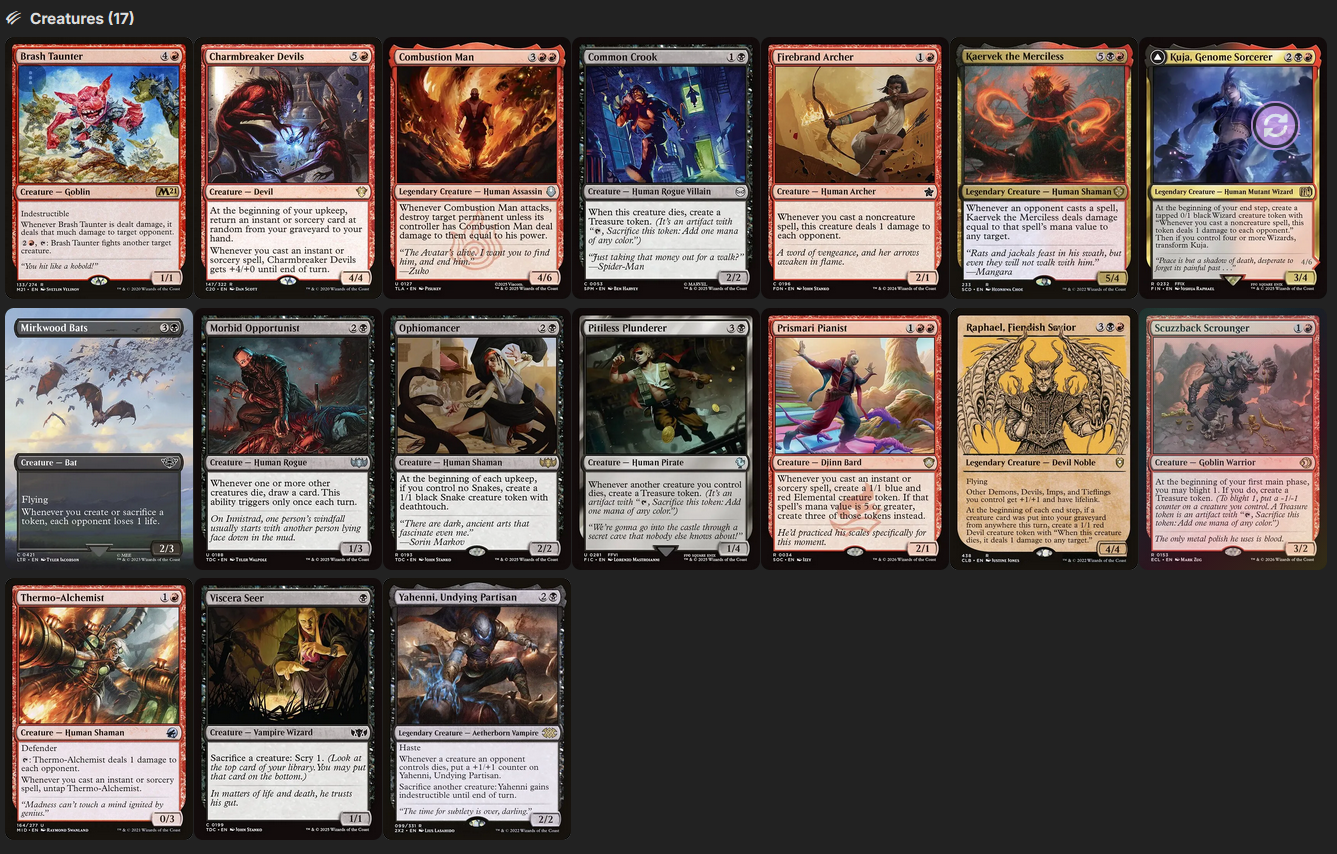 Image 2 of 7
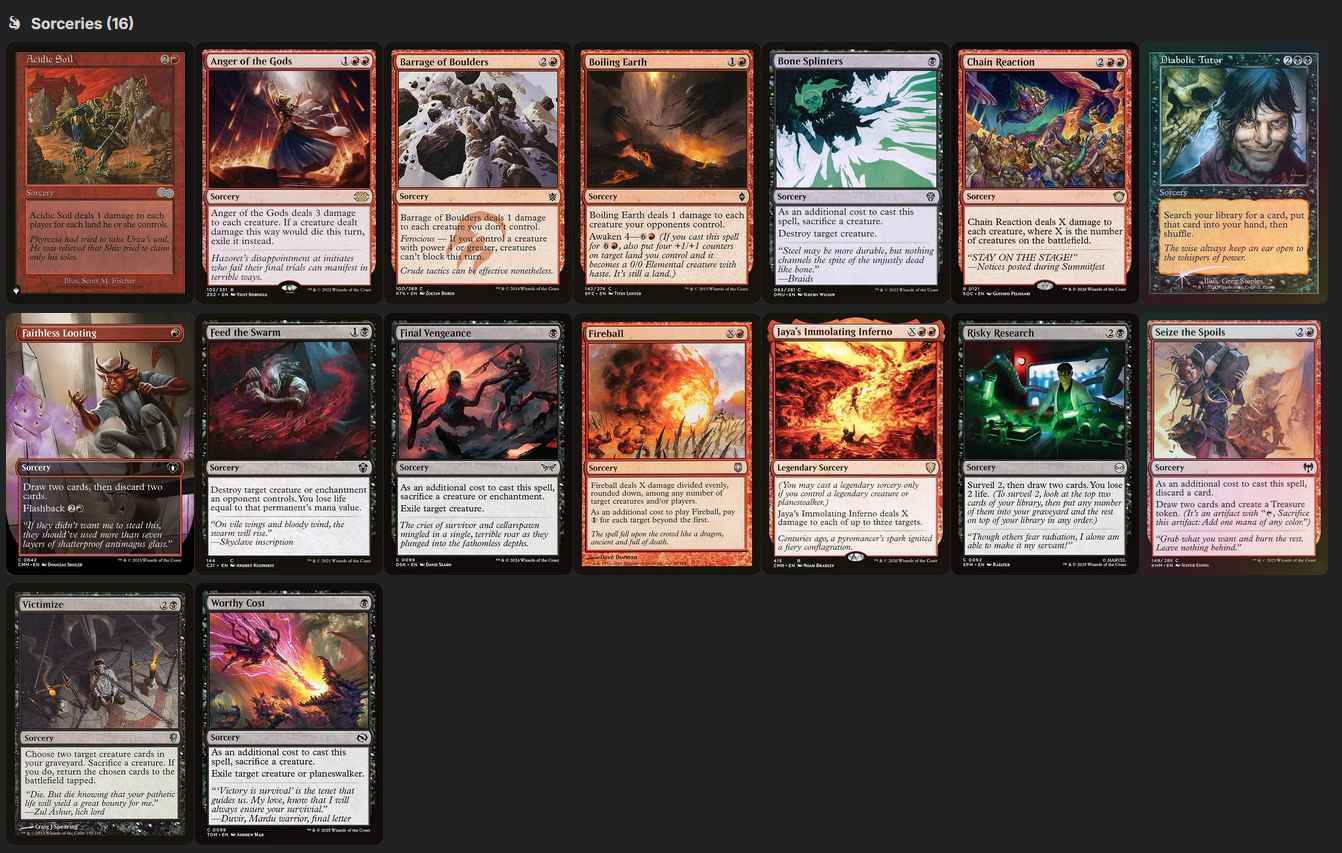 Image 3 of 7
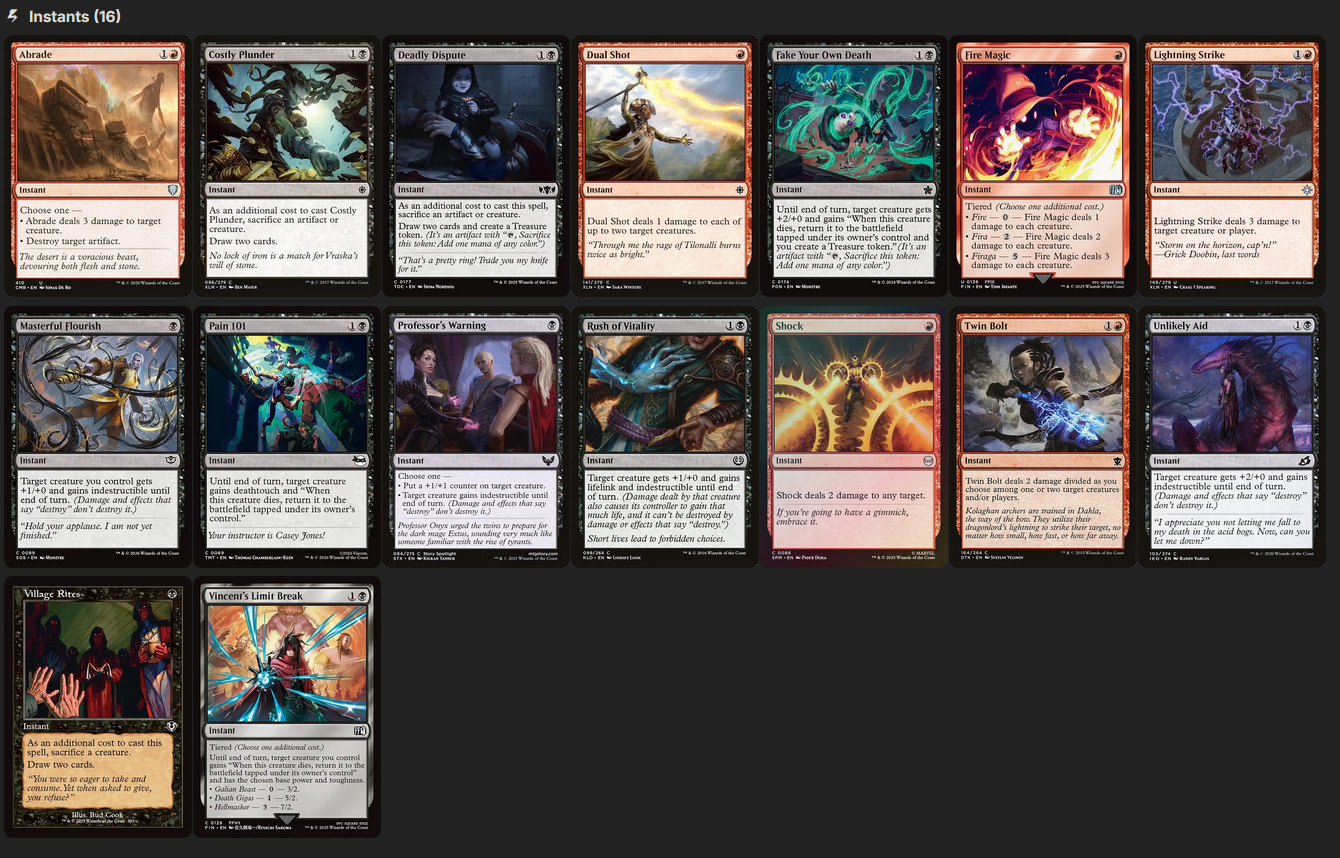 Image 4 of 7
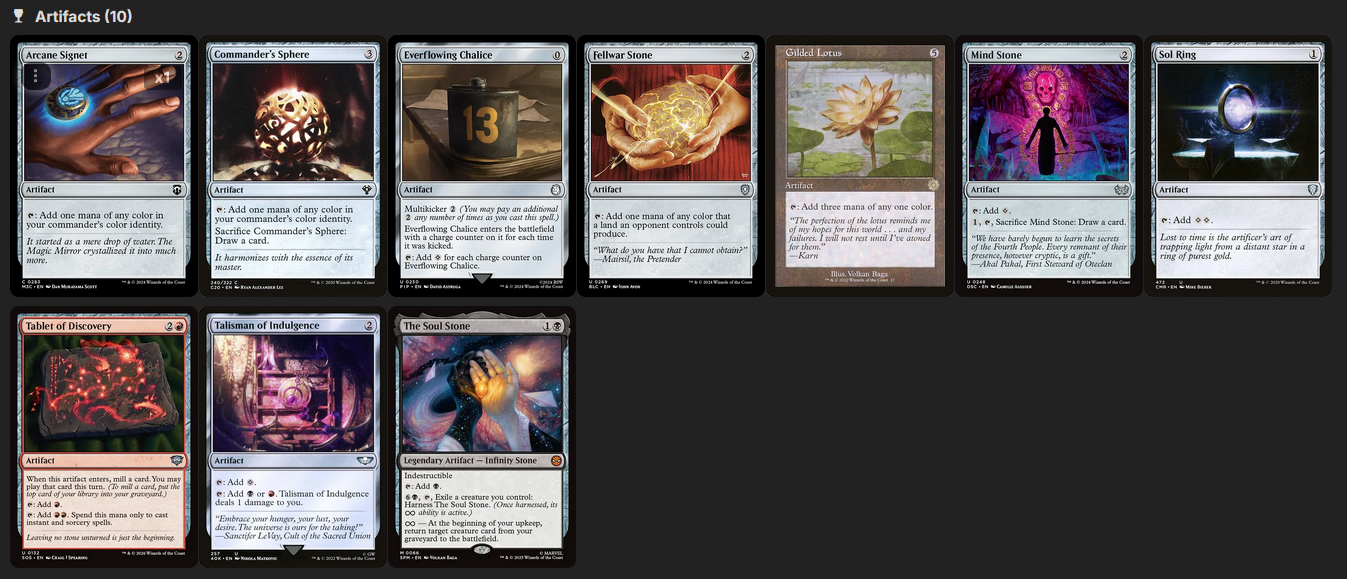 Image 5 of 7
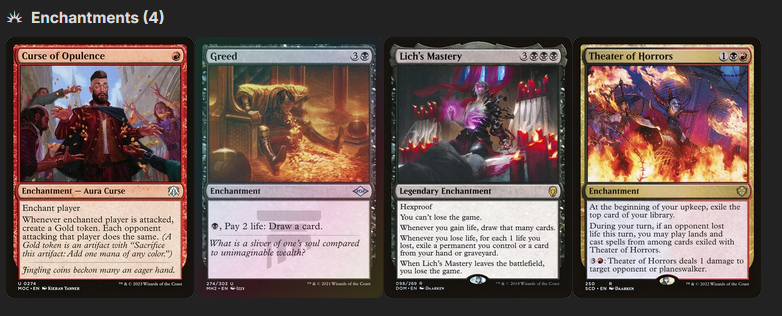 Image 6 of 7
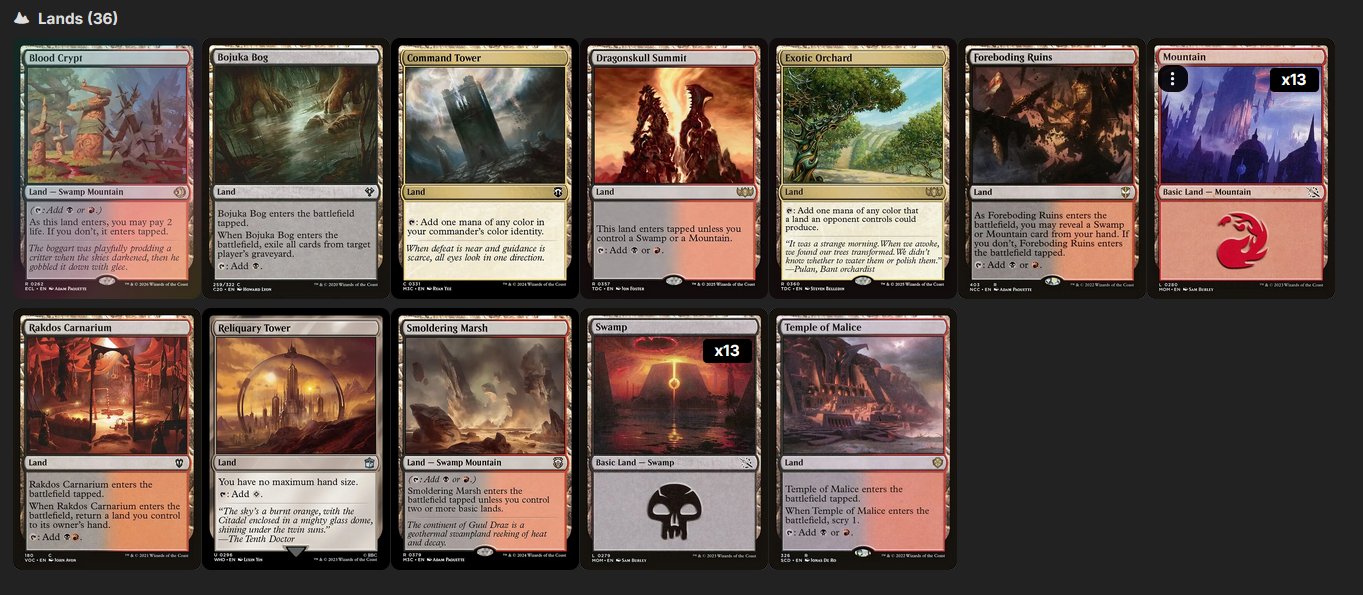 Image 7 of 7