Blech, Loafing Pest leads a Golgari creature deck built around repeated lifegain, +1/+1 counters, and an unusually broad typal package spanning Pests, Bats, Insects, Snakes, and Spiders. Rather than relying on a single creature type, the deck fills the battlefield with creatures that naturally qualify for Blech’s ability while using incremental lifegain to develop the entire board at once.
The result is a layered creature strategy that combines token production, sacrifice value, graveyard recursion, and scalable combat pressure. Individual lifegain triggers become permanent board development, allowing otherwise modest utility creatures and tokens to grow into meaningful threats over the course of the game.
Deck Overview
Blech rewards frequency rather than quantity: each instance of gaining life places a +1/+1 counter on every Pest, Bat, Insect, Snake, and Spider under your control. Prosperous Innkeeper, Bogwater Lumaret, Bontu’s Monument, Dina, Soul Steeper, and several Pest-based effects provide recurring lifegain while the deck steadily expands its qualifying creature base.
The typal package is intentionally diverse. Ophiomancer supplies Snakes, Spider Spawning rebuilds with Spider tokens, Hornet Nest produces Insects, and creatures such as Deep-Cavern Bat, Attercop, Great Fierce Bee, Skyfisher Spider, Haywire Mite, and Caustic Caterpillar contribute utility without stepping outside Blech’s supported creature types.
Lifegain and Counter Development
The commander converts routine lifegain into permanent power across the battlefield. Prosperous Innkeeper and Bogwater Lumaret reward creatures entering play, while Bontu’s Monument turns black creature spells into additional life swings. Dina, Soul Steeper adds another layer of pressure by converting lifegain into opponent life loss.
Pest Mascot independently rewards the same lifegain plan, while Training Regimen provides another avenue for building +1/+1 counters. These effects allow the deck to establish threats gradually without committing entirely to one large creature.
Tokens and Creature Density
Token production gives Blech multiple bodies to enhance from a single trigger. Ophiomancer continually generates Snake tokens, Hornet Nest can create a substantial Insect presence, and Hooded Hydra leaves behind Snakes when it dies.
Spider Spawning provides one of the deck’s strongest rebuilding tools, turning a stocked graveyard into a new board of qualifying creatures. Pest-producing cards throughout the list further reinforce the commander while supporting the deck’s sacrifice and lifegain engines.
Sacrifice, Recursion, and Resilience
The deck is structured to extract value when creatures leave the battlefield rather than simply losing its accumulated board. Viscera Seer and High Market provide sacrifice outlets, while Bastion of Remembrance and Zulaport Cutthroat convert creature deaths into additional life swings.
Victimize, Oracle’s Restoration, and Living Death provide meaningful recovery from removal. Living Death is particularly well suited to a creature-dense strategy, allowing the deck to transition from a developed graveyard back into a populated battlefield. Elixir of Immortality adds another layer of long-game recursion when necessary.
Interaction and Board Control
The removal suite covers creatures, artifacts, enchantments, graveyards, and larger battlefield problems without interfering with the primary creature plan. Casualties of War, Putrefy, Bitter Triumph, Feed the Swarm, Tear Asunder, and Binding the Old Gods provide broad answers across permanent types.
Utility creatures such as Caustic Caterpillar, Haywire Mite, and Skyfisher Spider contribute interaction while simultaneously fitting Blech’s typal requirements. Bojuka Bog supplies incidental graveyard disruption from the mana base.
Closing the Game
Blech naturally creates a battlefield where multiple small creatures become progressively larger with every lifegain trigger. Once sufficient bodies have accumulated, Overrun and Overwhelming Stampede convert that distributed board advantage into a decisive combat step.
The deck therefore does not need to rely on a single oversized threat. Its strongest positions are created by developing several qualifying creatures, repeatedly triggering Blech, and eventually giving the entire board the power and evasion needed to finish the game.
Build Philosophy
This build treats Blech’s five supported creature types as a functional toolbox rather than a restrictive tribal requirement. Pests, Bats, Insects, Snakes, and Spiders are selected for the utility they contribute—token production, removal, sacrifice value, recursion, or card advantage—while still benefiting from the commander’s counters.
Ramp from Sol Ring, Arcane Signet, Golgari Signet, Talisman of Resilience, Cultivate, Explosive Vegetation, and Sakura-Tribe Elder supports consistent development, while the 36-land mana base provides a stable Golgari foundation. Every major package reinforces either the lifegain engine, creature density, graveyard plan, or the deck’s ability to convert incremental value into combat pressure.
Technical Details
100-card singleton Commander deck, legal for EDH
All cards in Near Mint to Lightly Played condition
Professionally sleeved and ready to play
Built for consistent performance and strategic depth
Ideal For Players Who:
Enjoy Golgari creature decks built around lifegain, counters, and sacrifice value
Prefer typal strategies that use several interconnected creature types rather than a single tribe
Appreciate Commander builds with recursion, token production, and scalable combat finishes
Blech, Loafing Pest leads a Golgari creature deck built around repeated lifegain, +1/+1 counters, and an unusually broad typal package spanning Pests, Bats, Insects, Snakes, and Spiders. Rather than relying on a single creature type, the deck fills the battlefield with creatures that naturally qualify for Blech’s ability while using incremental lifegain to develop the entire board at once.
The result is a layered creature strategy that combines token production, sacrifice value, graveyard recursion, and scalable combat pressure. Individual lifegain triggers become permanent board development, allowing otherwise modest utility creatures and tokens to grow into meaningful threats over the course of the game.
Deck Overview
Blech rewards frequency rather than quantity: each instance of gaining life places a +1/+1 counter on every Pest, Bat, Insect, Snake, and Spider under your control. Prosperous Innkeeper, Bogwater Lumaret, Bontu’s Monument, Dina, Soul Steeper, and several Pest-based effects provide recurring lifegain while the deck steadily expands its qualifying creature base.
The typal package is intentionally diverse. Ophiomancer supplies Snakes, Spider Spawning rebuilds with Spider tokens, Hornet Nest produces Insects, and creatures such as Deep-Cavern Bat, Attercop, Great Fierce Bee, Skyfisher Spider, Haywire Mite, and Caustic Caterpillar contribute utility without stepping outside Blech’s supported creature types.
Lifegain and Counter Development
The commander converts routine lifegain into permanent power across the battlefield. Prosperous Innkeeper and Bogwater Lumaret reward creatures entering play, while Bontu’s Monument turns black creature spells into additional life swings. Dina, Soul Steeper adds another layer of pressure by converting lifegain into opponent life loss.
Pest Mascot independently rewards the same lifegain plan, while Training Regimen provides another avenue for building +1/+1 counters. These effects allow the deck to establish threats gradually without committing entirely to one large creature.
Tokens and Creature Density
Token production gives Blech multiple bodies to enhance from a single trigger. Ophiomancer continually generates Snake tokens, Hornet Nest can create a substantial Insect presence, and Hooded Hydra leaves behind Snakes when it dies.
Spider Spawning provides one of the deck’s strongest rebuilding tools, turning a stocked graveyard into a new board of qualifying creatures. Pest-producing cards throughout the list further reinforce the commander while supporting the deck’s sacrifice and lifegain engines.
Sacrifice, Recursion, and Resilience
The deck is structured to extract value when creatures leave the battlefield rather than simply losing its accumulated board. Viscera Seer and High Market provide sacrifice outlets, while Bastion of Remembrance and Zulaport Cutthroat convert creature deaths into additional life swings.
Victimize, Oracle’s Restoration, and Living Death provide meaningful recovery from removal. Living Death is particularly well suited to a creature-dense strategy, allowing the deck to transition from a developed graveyard back into a populated battlefield. Elixir of Immortality adds another layer of long-game recursion when necessary.
Interaction and Board Control
The removal suite covers creatures, artifacts, enchantments, graveyards, and larger battlefield problems without interfering with the primary creature plan. Casualties of War, Putrefy, Bitter Triumph, Feed the Swarm, Tear Asunder, and Binding the Old Gods provide broad answers across permanent types.
Utility creatures such as Caustic Caterpillar, Haywire Mite, and Skyfisher Spider contribute interaction while simultaneously fitting Blech’s typal requirements. Bojuka Bog supplies incidental graveyard disruption from the mana base.
Closing the Game
Blech naturally creates a battlefield where multiple small creatures become progressively larger with every lifegain trigger. Once sufficient bodies have accumulated, Overrun and Overwhelming Stampede convert that distributed board advantage into a decisive combat step.
The deck therefore does not need to rely on a single oversized threat. Its strongest positions are created by developing several qualifying creatures, repeatedly triggering Blech, and eventually giving the entire board the power and evasion needed to finish the game.
Build Philosophy
This build treats Blech’s five supported creature types as a functional toolbox rather than a restrictive tribal requirement. Pests, Bats, Insects, Snakes, and Spiders are selected for the utility they contribute—token production, removal, sacrifice value, recursion, or card advantage—while still benefiting from the commander’s counters.
Ramp from Sol Ring, Arcane Signet, Golgari Signet, Talisman of Resilience, Cultivate, Explosive Vegetation, and Sakura-Tribe Elder supports consistent development, while the 36-land mana base provides a stable Golgari foundation. Every major package reinforces either the lifegain engine, creature density, graveyard plan, or the deck’s ability to convert incremental value into combat pressure.
Technical Details
100-card singleton Commander deck, legal for EDH
All cards in Near Mint to Lightly Played condition
Professionally sleeved and ready to play
Built for consistent performance and strategic depth
Ideal For Players Who:
Enjoy Golgari creature decks built around lifegain, counters, and sacrifice value
Prefer typal strategies that use several interconnected creature types rather than a single tribe
Appreciate Commander builds with recursion, token production, and scalable combat finishes


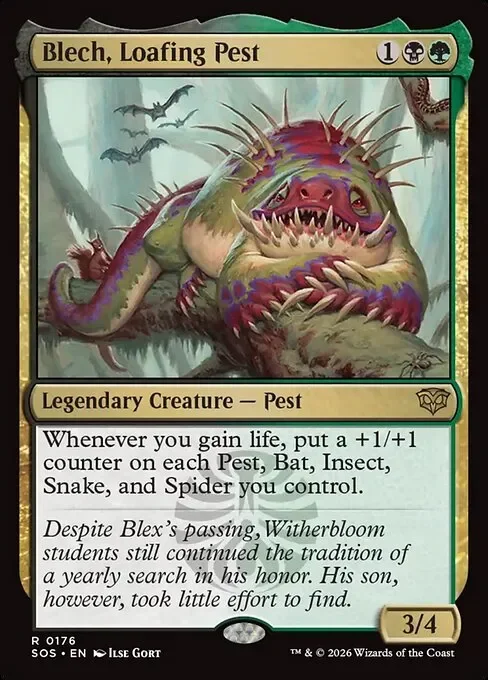 Image 1 of 8
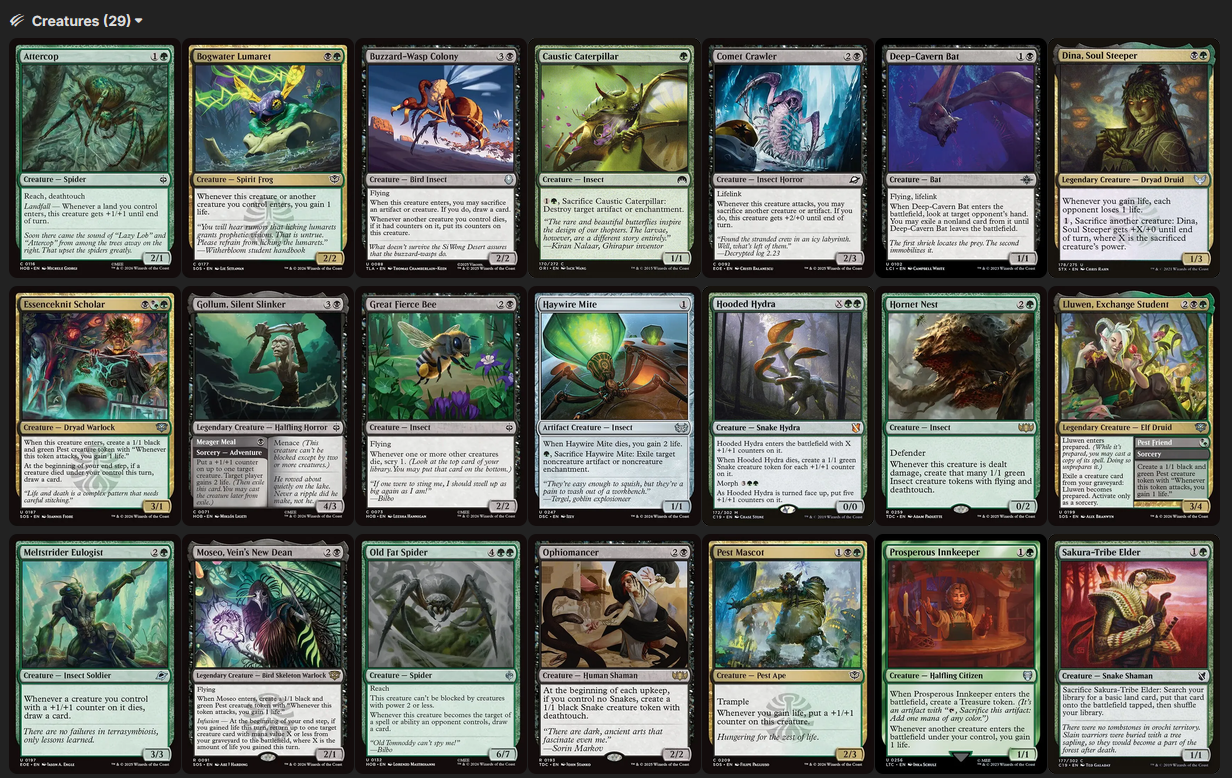 Image 2 of 8
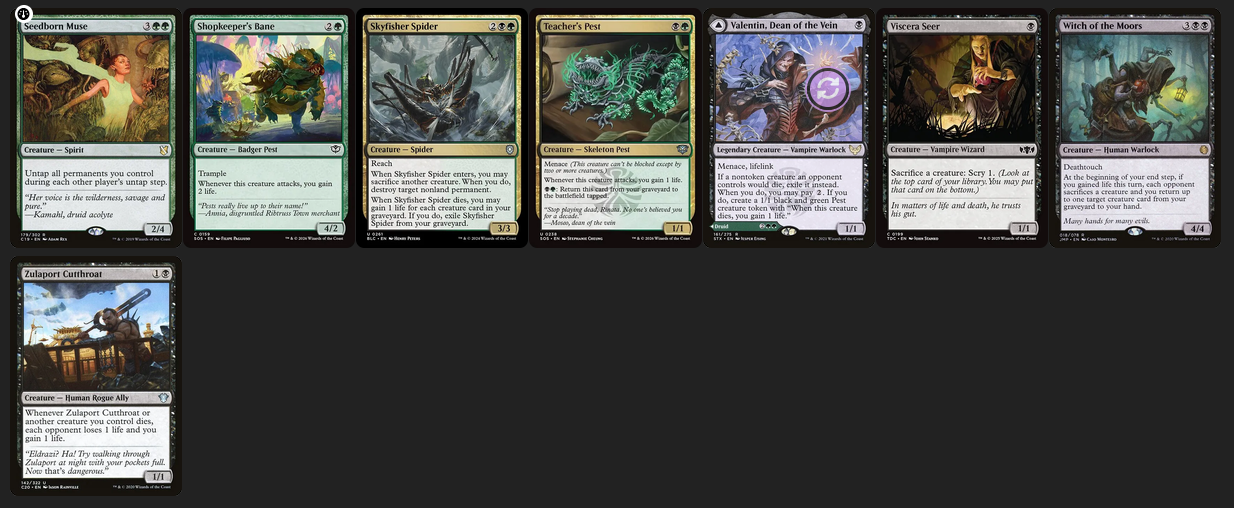 Image 3 of 8
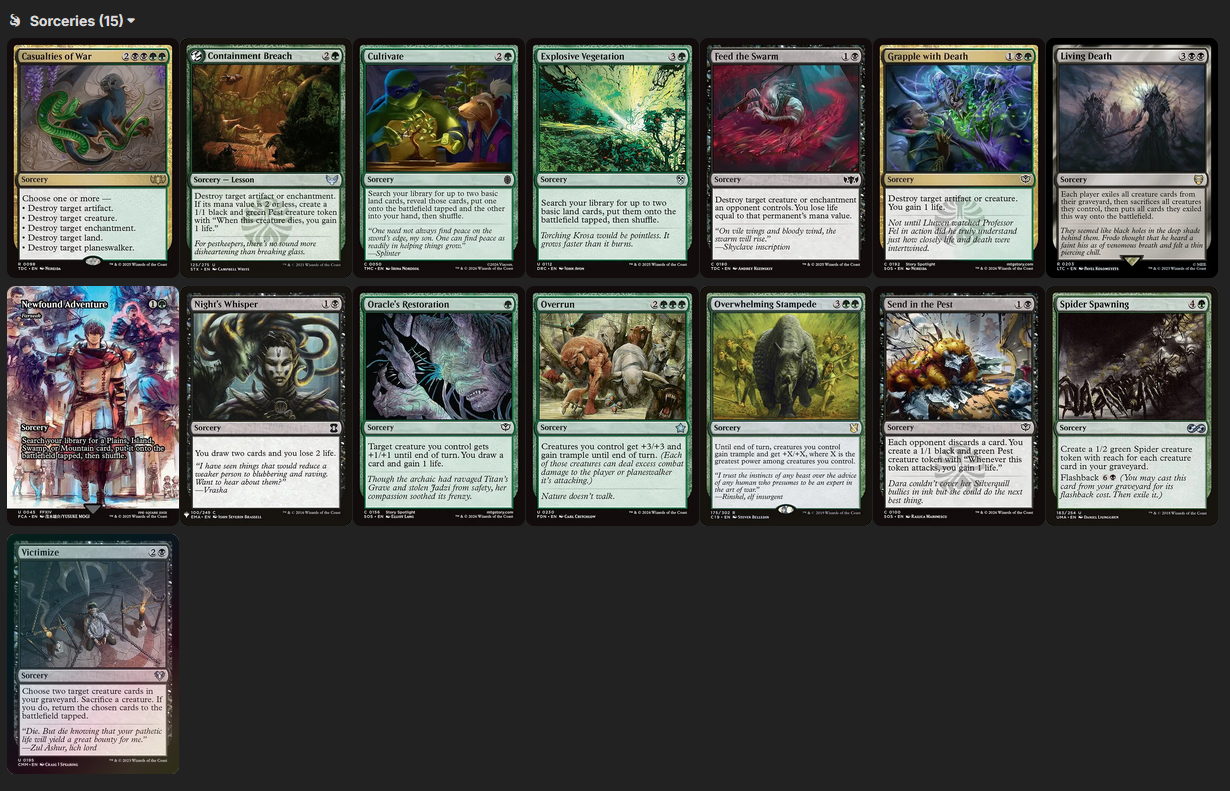 Image 4 of 8
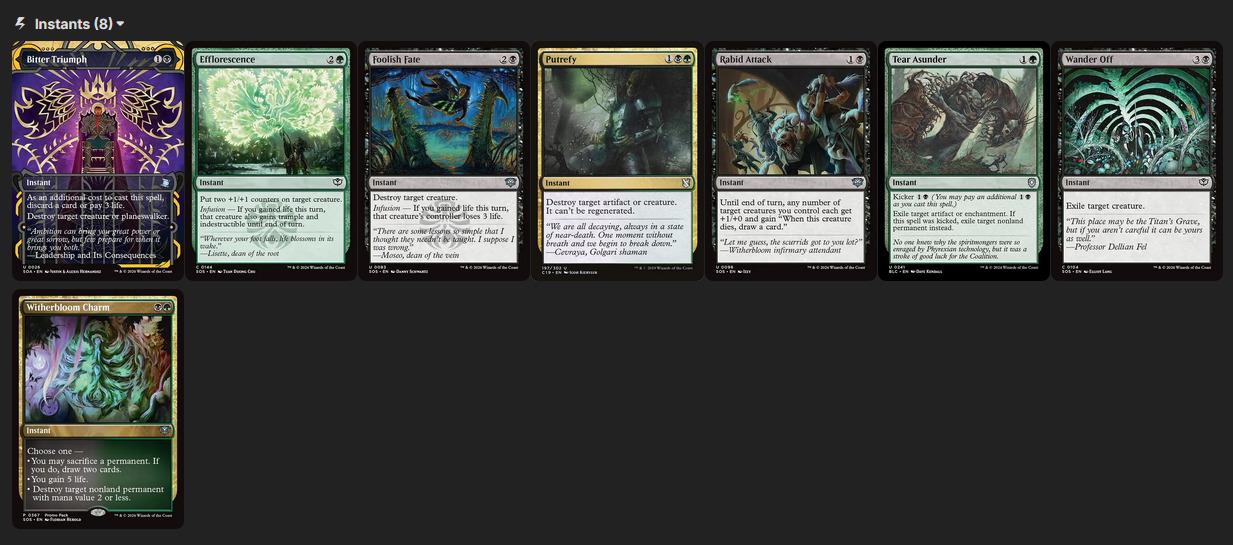 Image 5 of 8
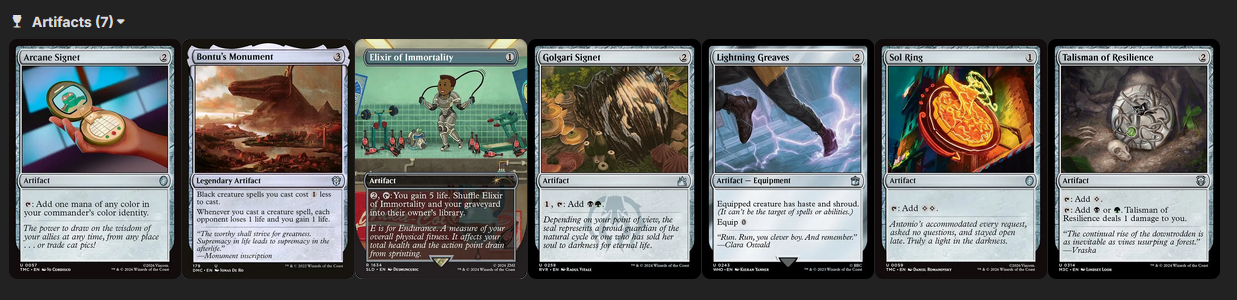 Image 6 of 8
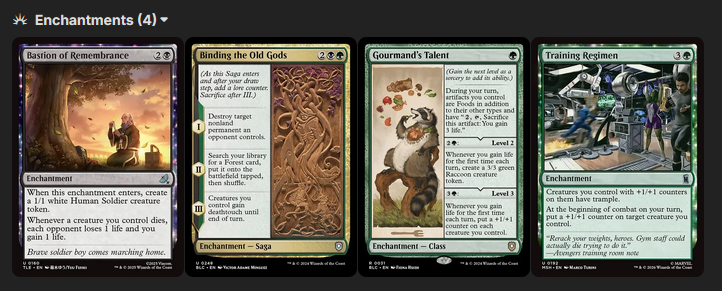 Image 7 of 8
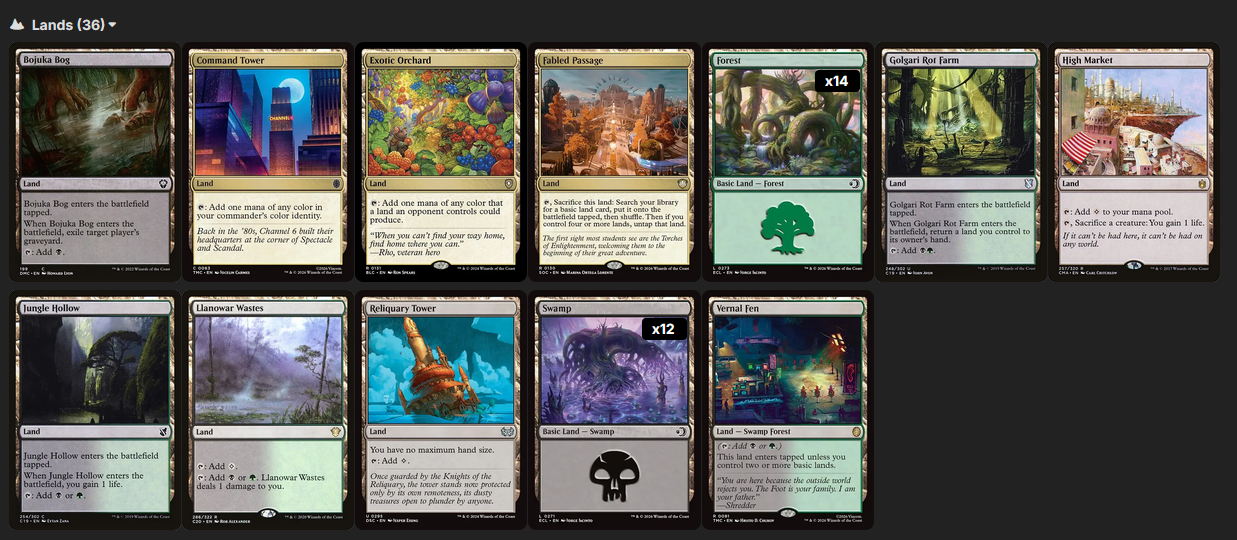 Image 8 of 8